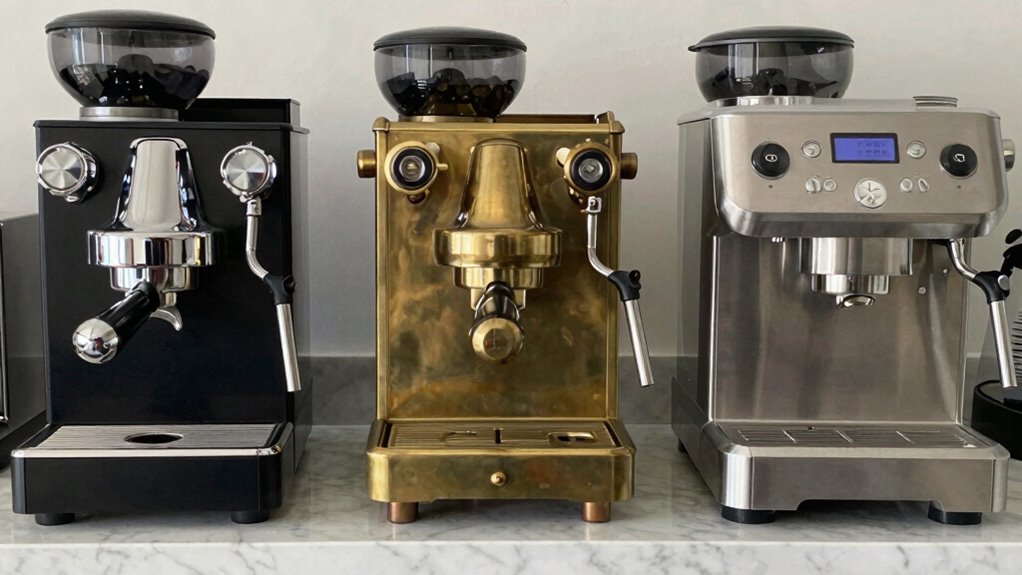

Many people confuse manual, semi-automatic, automatic, and super-automatic espresso machines, often overspending on features they don’t need. If you want control and are willing to learn, a manual or semi-automatic might be best. For convenience and quick results, fully or super-automatic machines work well. Knowing these differences helps avoid overpaying and guarantees you pick the right machine for your skill level and goals. Keep exploring to find out which type fits you best.
Key Takeaways
- Know the differences between manual, semi-automatic, fully automatic, and super-automatic machines to choose the right fit and avoid overspending.
- Understand that manual lever machines are more affordable but require skill; automated options cost more but offer convenience.
- Recognize that fully and super-automatic machines are often more expensive, but may be unnecessary for casual users or beginners.
- Match the machine type to your skill level and brewing goals to prevent paying for features you don’t need.
- Research features and prices carefully to avoid paying extra for complex machines that don’t align with your coffee-making needs.

Are you overwhelmed by the variety of espresso machines available? It’s a common feeling, especially when you’re trying to set up your home brewing station or investing in coffee shop equipment. With so many options, it’s easy to confuse different types and end up paying more for features you don’t need or, worse, choosing a machine that doesn’t match your skills or goals. Understanding the main espresso machine types can help you make smarter, more cost-effective decisions, saving you money and frustration in the long run.
First, there are manual espresso machines, often called lever machines. These are the most traditional, requiring you to control the entire brewing process by manually pulling a lever to force hot water through the coffee grounds. If you’re passionate about home brewing and want full control over your espresso, these machines offer a hands-on experience. However, they demand skill, patience, and some practice to produce consistent results. They’re usually the most affordable option upfront but can be costly in terms of time and effort if you’re aiming for quick, reliable coffee. They’re popular among enthusiasts who enjoy the ritual of making espresso and want a more authentic, barista-style experience at home or in small coffee shop setups.
On the other end of the spectrum are fully automatic espresso machines. These are designed for convenience and speed, perfect if you want great espresso without much fuss. Simply add your coffee grounds or beans, press a button, and the machine handles everything—from grinding to tamping, brewing, and even frothing milk. These machines are common in busy coffee shops because they maximize efficiency, but they’re also ideal for home use if you prefer consistency and ease. While they tend to be more expensive upfront, they save you time and effort, making them a smart investment if you want café-quality drinks with minimal hassle. Additionally, some models include advanced features like programmable settings and automatic cleaning, which can further simplify your brewing process.
Semi-automatic machines strike a balance between manual and automatic options. They usually feature an integrated grinder and allow you to control the extraction process, giving you some hands-on control while automating key steps like brewing. These are popular among home baristas who want to hone their skills without sacrificing convenience. They tend to be more flexible and versatile, letting you experiment with different techniques while maintaining control over the brewing process.
Finally, there are super-automatic espresso machines, which are like the fully automatic but often with extra features like programmable drink options and advanced milk frothing systems. They’re perfect for quick, consistent results and are often found in commercial settings but are increasingly popular among serious home baristas. Knowing the differences among these types helps you avoid overpaying for features you don’t need. Whether you’re just starting your home brewing journey or upgrading your coffee shop equipment, understanding how each machine works ensures you pick the right one, saving money and enhancing your espresso experience.
Frequently Asked Questions
Which Espresso Machine Type Is Easiest for Beginners?
You should choose a semi-automatic espresso machine if you’re a beginner. It offers a good balance of control and ease, letting you learn about coffee bean varieties and steaming techniques without overwhelming complexity. With a semi-automatic, you can experiment with grind size, shot timing, and steaming, making it perfect for learning while still enjoying great espresso. It’s a user-friendly option that helps you build skills gradually.
How Long Does Each Espresso Machine Type Typically Last?
On average, espresso machines last between 5 to 15 years, depending on the type. Manual machines often last longer due to fewer electronic parts, with a lifespan comparison showing up to 15 years of durability. Semi-automatic and super-automatic machines typically last around 5 to 10 years, but proper maintenance can extend their machine durability. Choose wisely based on how long you want your investment to serve you.
Are There Maintenance Differences Between Espresso Machine Types?
You’ll find maintenance requirements vary by espresso machine type. Manual machines need regular descaling and occasional part replacements, which keeps repair costs lower if you maintain them well. Semi-automatic and automatic machines often require more frequent cleaning and occasional technical checks, leading to potentially higher repair costs over time. Fully automatic machines might have complex parts that need professional servicing, so consider these maintenance differences to avoid unexpected expenses.
Can I Use Compatible Coffee Pods With All Machine Types?
Think of coffee pod compatibility as a universal language, but not all machines speak it fluently. You can’t assume that the same pods fit every machine type; confusion often arises here. Some machines, like Nespresso or Keurig, have proprietary systems, so using incompatible pods results in frustration. Always check your machine’s specific requirements to avoid brewing disappointment and guarantee your coffee experience flows smoothly, without the language barrier.
Which Espresso Machine Offers the Best Value for Money?
You’ll find that semi-automatic espresso machines often offer the best value for money, balancing affordability with quality. Look for models from reputable brands with solid reputations, as their pricing strategies tend to reflect durability and performance. By choosing a well-reviewed machine from a trusted brand, you avoid overpaying for features you don’t need, ensuring you get great espresso without breaking the bank.
Conclusion
Don’t let confusion about espresso machine types make you overpay. By understanding the differences, you can choose the right machine that fits your needs and budget. Some might think all espresso machines are the same, but knowing what features matter saves you money and frustration. So, take a moment to research, ask questions, and pick the best fit. You deserve that perfect cup without overspending—trust your knowledge and enjoy your coffee!