
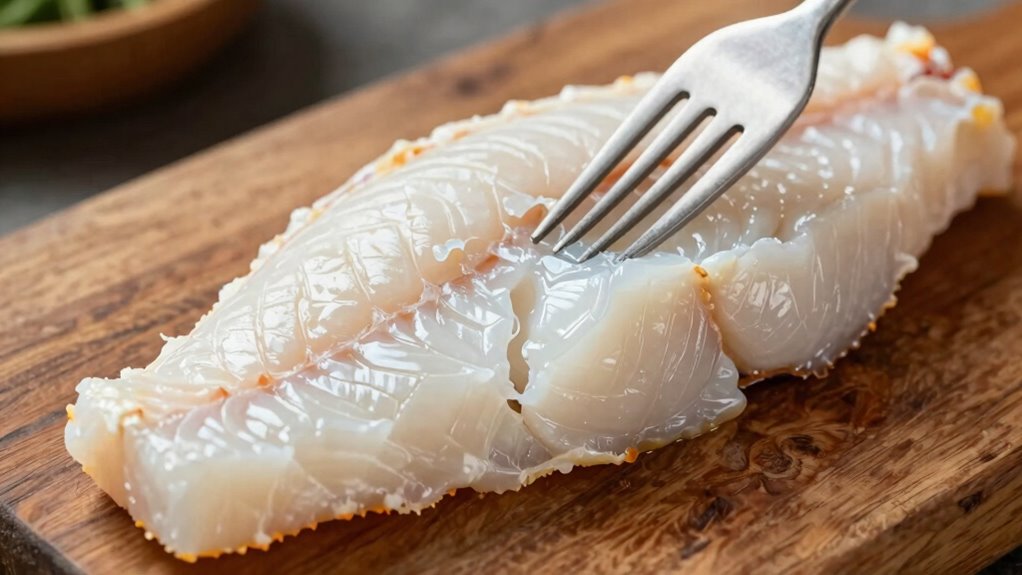
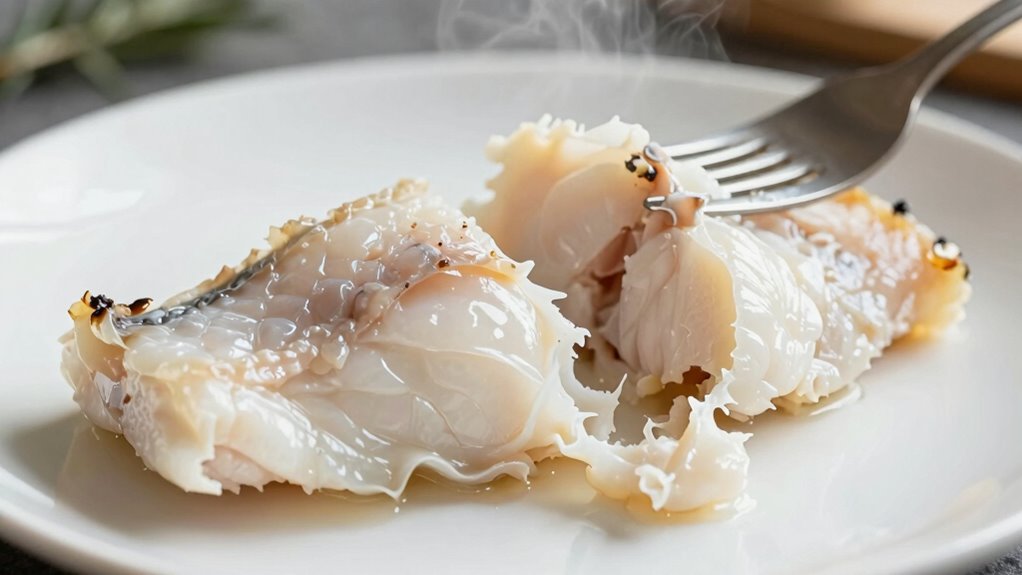
To avoid overcooking fish, rely on the flake test combined with temperature checks. Gently insert a fork at an angle into the thickest part of the fish, twist or press lightly, and look for moist, clean flakes that separate easily. The fish should turn opaque and feel firm but yield slightly. Residual heat continues to cook it after removing from heat, so understanding these cues helps you get perfect, tender results every time—keep going to learn more.
Key Takeaways
- Gently insert a fork at an angle into the thickest part of the fish and twist to check for clean, moist flakes.
- Properly cooked fish flakes easily into opaque, moist segments without falling apart or feeling mushy.
- Avoid pressing too hard or rushing; test when fish reaches an internal temperature of 145°F (63°C).
- Use the flake test alongside visual cues like opacity and moist appearance for accurate doneness.
- Remember residual heat continues cooking after removal, so consider removing fish slightly before fully flaky.
Why Checking Fish Doneness Matters for Perfect Cooking
Checking fish for doneness is essential because overcooking can ruin its delicate texture and flavor. When you cook fish too long or at too high a temperature, it becomes tough, dry, and loses its natural moistness. Maintaining the right cooking temperature ensures the fish stays tender and moist, preserving its ideal fish texture. By monitoring doneness, you prevent it from becoming rubbery or crumbly, which ruins the eating experience. Properly cooked fish should be just opaque and flaky, signaling it’s ready without being overdone. Knowing when to stop cooking based on temperature helps you achieve that perfect balance. Remember, fish cooks quickly, so paying attention to these details guarantees a delicious, well-textured dish every time.
How to Do the Flake Test: Easy Steps to Test Your Fish
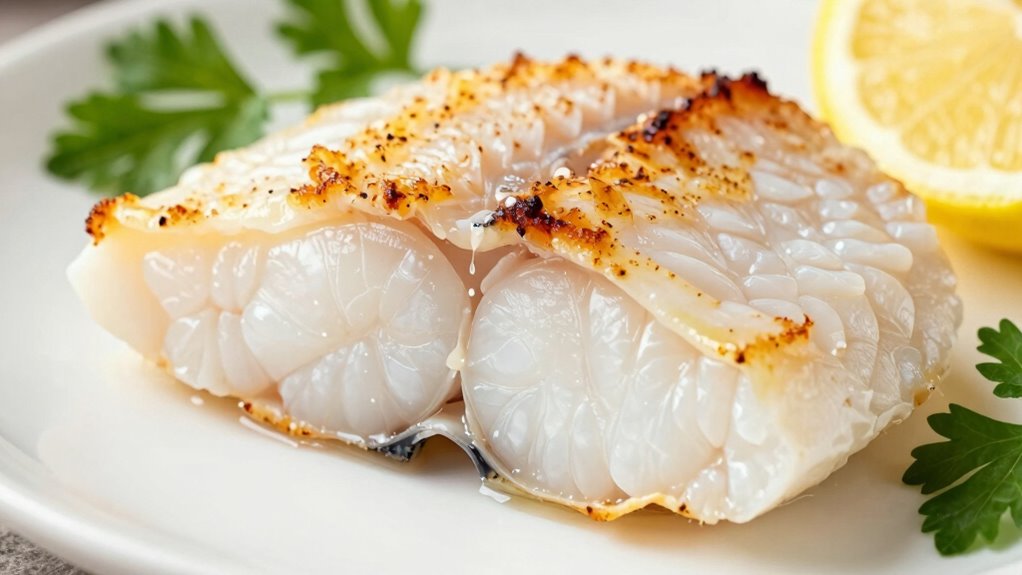
To do the flake test correctly, start by preparing your fish properly so it’s cooked evenly. Use a fork the right way—gently twist or press to see if the fish flakes easily. When it starts to separate into clean, moist flakes, you know it’s done without overcooking. Ensuring proper temperature control helps achieve optimal doneness and prevents overcooking.
Prepare the Fish Properly
Knowing when your fish is perfectly cooked can be tricky, but performing the flake test makes it simple. Before testing, guarantee your fish is prepared properly. Start with good fish storage—keep it refrigerated until ready to cook to prevent spoilage. When ready, use seasoning techniques that enhance flavor without overpowering the delicate fish. Lightly season just before cooking or during the final stages. Proper preparation also means removing excess moisture and patting it dry to promote even cooking. Handle the fish gently to avoid breaking the flesh before it’s cooked through. Once cooked, perform the flake test to confirm doneness. Preparing your fish correctly ensures even cooking, better flavor, and a reliable test, helping you avoid overcooking and enjoy tender, flaky fish every time.
Use a Fork Correctly
Using a fork correctly is the key to performing the flake test with confidence. Start by holding the fork with a proper grip—grip the handle firmly but comfortably, with your index finger resting along the side for control. When testing the fish, use a gentle cutting technique instead of pressing down hard; this allows you to see if the fish flakes easily. Position the fork at a slight angle and insert it gently into the thickest part of the fillet. Avoid applying excessive force, which could damage the delicate flesh. With a steady hand and the right fork grip, you can gently nudge the fish apart to check for flaking. Remember, gentle handling is crucial to avoid overcooking or damaging the fish’s texture. Developing proper technique ensures consistent, perfect results every time. Paying attention to textural cues, such as how easily the fish flakes apart, helps you determine doneness accurately. Mastering this technique guarantees you won’t overcook your fish and ensures perfect results every time. Incorporating consistent pressure while performing the test can improve your confidence in judging doneness precisely.
Check for Flake Separation
When checking if your fish is done, the flake test is an easy and reliable method. To check for flake separation, gently press on the thickest part of the fish with a fork or your finger. Look for these signs:
- Fish begins to separate into opaque flakes easily.
- The fish’s texture feels firm yet tender, not mushy.
- The flakes are moist and hold together without falling apart.
- The internal cooking temperature has reached 145°F (63°C), ensuring proper doneness.
If the fish flakes apart smoothly without resistance, it’s cooked perfectly. Overcooking makes the fish dry and tough, while undercooking leaves it translucent and raw. This test helps you achieve ideal fish texture every time.
Signs Your Fish Is Fully Cooked and Ready to Serve
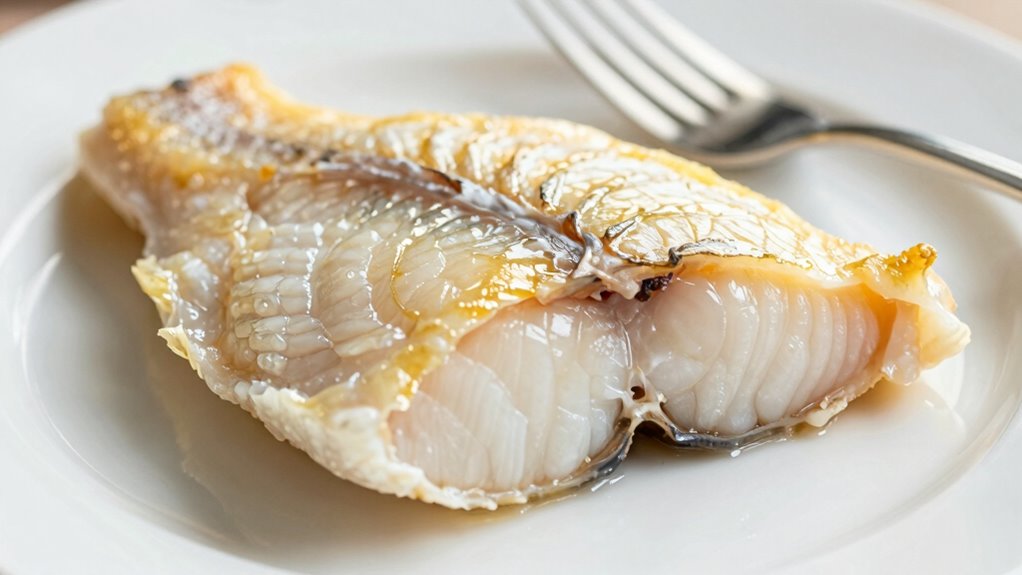
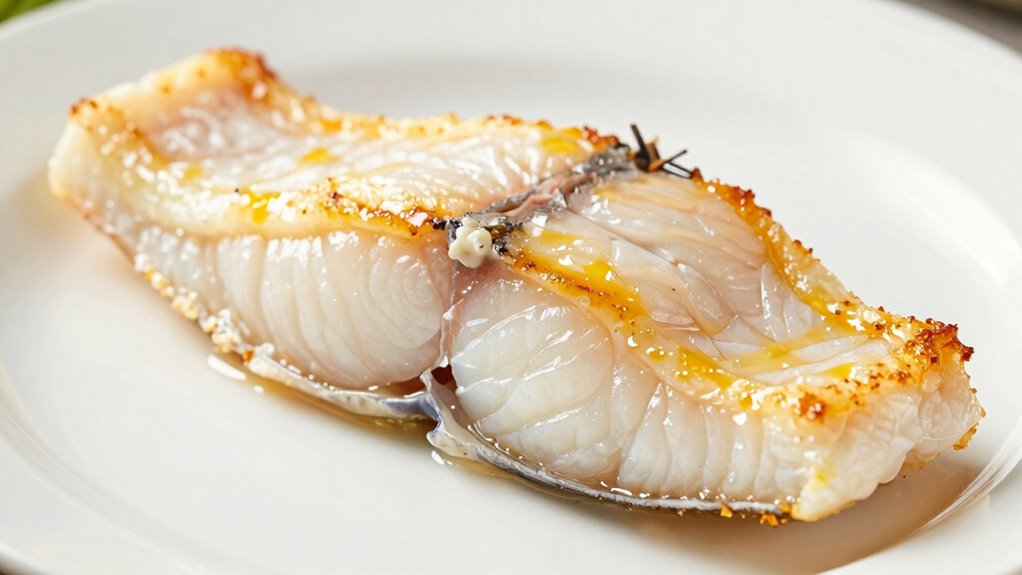
When your fish is ready, it should flake easily with a fork, showing it’s cooked through. You’ll also notice the flesh becomes opaque and loses its translucent appearance. Keep an eye on these signs to avoid overcooking and serve your fish perfectly. Additionally, cooking temperature plays a crucial role in achieving the ideal doneness. Maintaining an appropriate internal temperature ensures the fish is safe to eat while preventing overcooking.
Fish Flakes Easily
A key sign that your fish is fully cooked is when it flakes easily with a fork. When fish reaches the right cooking temperature, it becomes tender enough to break apart effortlessly. To check if your fish flakes easily, look for these signs:
- The flesh separates into large, flaky layers without resistance.
- The texture feels soft and moist, not rubbery or firm.
- The flakes are opaque, indicating proper doneness.
- The fish’s internal temperature has reached about 145°F (63°C), ensuring it’s cooked through.
Flesh Opacity Changes
As your fish approaches full doneness, its flesh will lose its translucent appearance and become opaque. This change in flesh opacity is a key visual cue that your fish is nearing readiness. Look closely at the thickest part of the fillet; when it turns from shiny and see-through to a solid, milky color, it’s a good sign it’s cooked through. The flesh should no longer appear raw or translucent, indicating it’s no longer undercooked. Keep an eye out for this visual cue, as it’s one of the most reliable signs to avoid overcooking. Remember, fish continues to cook slightly after removing from heat, so it’s better to aim for just opacity. This simple change in flesh opacity helps you perfectly gauge when your fish is ready to serve. Additionally, understanding carryover cooking concepts can help you master the art of perfect fish preparation without overcooking. Being aware of residual heat can further refine your timing for the ideal doneness, especially when combined with visual cues like flesh opacity. Monitoring the cooking temperature can also assist in achieving consistent results.
Common Mistakes When Testing Fish That Can Lead to Overcooking
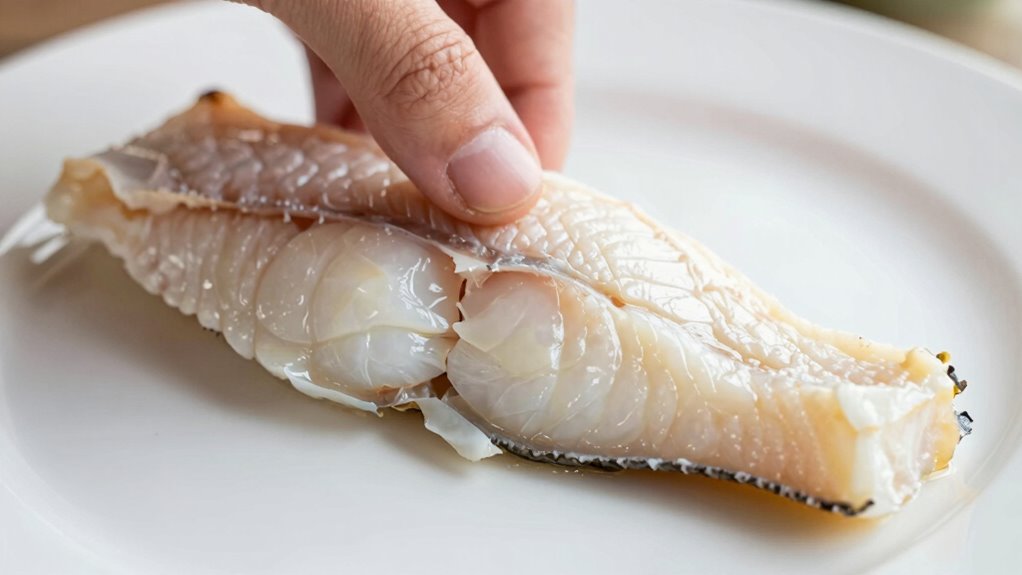
One common mistake that leads to overcooking fish is testing for doneness too early or using the wrong methods. This can cause overcooking pitfalls, as you may remove the fish before it’s perfectly cooked. To improve testing accuracy, avoid these errors:
- Relying solely on visual cues like color or shine, which can be misleading.
- Poking the fish with a fork too soon, risking unnecessary heat exposure.
- Using a thermometer incorrectly or not at all, compromising precision in cooking. Proper techniques for testing doneness are essential for achieving the perfect texture.
- Pressing or squeezing the fish excessively, which can cause overcooking or damage the delicate flesh.
- Not understanding the importance of proper leverage of testing techniques to ensure the fish is cooked just right.
- Additionally, understanding carryover cooking is essential, as residual heat can continue to cook the fish even after removal from heat sources.
- Mastering modern kitchen technology like smart thermometers can greatly enhance your ability to gauge doneness accurately.
Tips to Adjust Cooking Time Based on Fish Thickness
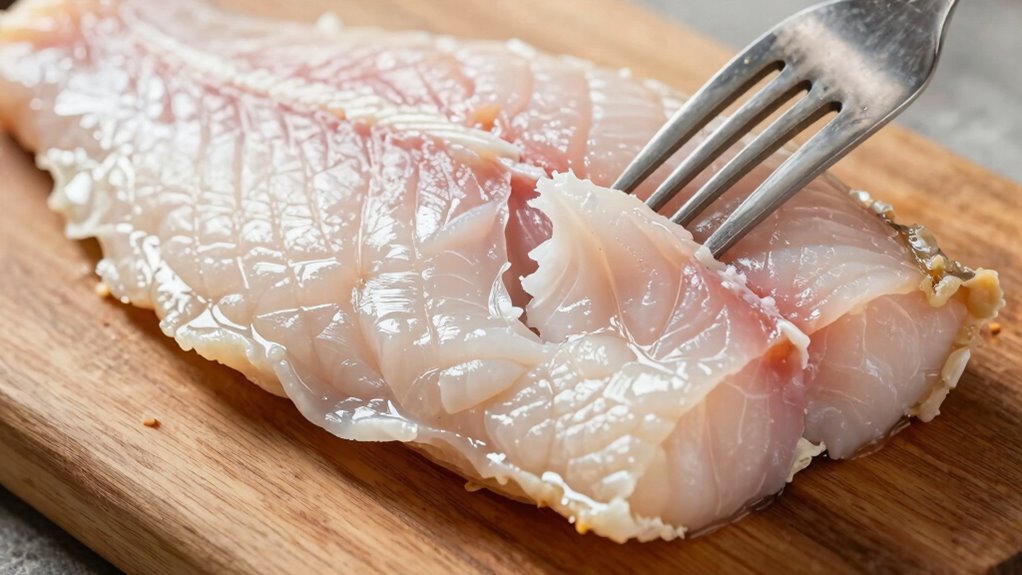
Adjusting cooking time based on fish thickness is essential for achieving perfect doneness. Thicker pieces require a longer cooking time, while thinner cuts cook quickly. To get it just right, start by setting your cooking temperature appropriately—lower temps often prevent overcooking. When cooking thicker fish, increase the time gradually, checking for doneness with the flake test. Remember, well-seasoned fish cooks more evenly; using the right fish seasoning ensures flavor doesn’t overpower the delicate texture. For evenly cooked fish, consider gently pressing the thickest part to gauge firming without overdoing it. Keep in mind that thinner portions need less time, so adjust accordingly to avoid overcooking and maintain moisture. Properly accounting for thickness guarantees tender, flavorful fish every time. Additionally, understanding fish net worth can provide insight into the value of premium seafood options, helping you select the best quality fish for your dish. Using accurate Cooking techniques such as pan-searing or baking can also influence cooking time and results, so adapt accordingly. A helpful tip is to measure thickness and consider body piercing measurements to better predict the necessary adjustments, and incorporating proper tools like a digital thermometer can further ensure perfect doneness.
Other Ways to Tell If Your Fish Is Perfectly Cooked
You can tell your fish is perfectly cooked by paying attention to its texture and appearance. Proper marination techniques can enhance flavor, but cooked fish should be firm yet tender. Also, consider storage methods; properly stored fish will retain moisture and quality when cooked. Additionally, using exfoliation techniques can help improve your skin’s texture and overall appearance, just as monitoring your fish’s texture ensures perfect doneness. Ensuring the correct cooking temperature is vital to prevent overcooking or undercooking your fish. Maintaining a digital literacy environment at home can help you better understand cooking techniques and food safety practices. Here are other signs to check:
Perfectly cooked fish is firm, tender, and retains moisture—watch for opacity, flakiness, and a moist, glistening surface.
- The flesh turns opaque and flakes easily with a fork.
- The edges are slightly browned but not dry or burnt.
- The fish’s surface appears moist and glistening, not dried out.
- When pressed gently, it feels firm but yields slightly, indicating doneness.
Using these cues alongside your knowledge of marination techniques and storage methods helps ensure perfectly cooked, flavorful fish every time.
Frequently Asked Questions
Can the Flake Test Be Used for All Types of Fish?
You can use the flake test for most fish types, but keep in mind that fish flavor and texture vary. Thinner, delicate fish like sole or flounder may flake sooner, while denser fish like salmon or tuna need longer cooking. Adjust your timing based on the fish’s thickness and your preferred doneness. This simple technique helps you master your cooking techniques and enjoy perfectly cooked fish every time.
How Does the Thickness of Fish Affect Cooking Time?
You notice that thicker fish takes longer to cook, right? Thickness considerations directly impact cooking duration because heat needs more time to penetrate deeper. When grilling or baking, aim for a few extra minutes per inch of thickness. Keep in mind, thinner fillets cook quickly, so monitor carefully. The key is to adjust your cooking time based on thickness, ensuring the fish flakes easily without overcooking, giving you perfect results every time.
Is There a Visual Indicator for Perfectly Cooked Fish?
Yes, there are visual cues for perfectly cooked fish. You’ll notice a color change from translucent to opaque, signaling doneness. The edges might turn firm and slightly flake apart when you gently press with a fork. Pay attention to these visual cues, especially the color change, to avoid overcooking. These indicators help you achieve moist, flaky fish every time, ensuring it’s just right.
What Are Alternative Methods to Test Fish Doneness?
Did you know that 78% of chefs rely on sensory cues over cooking temperature? To test fish doneness, use a food thermometer to check for an internal temp of 145°F, or observe color and texture changes. Gently press the fish; it should feel firm yet moist. These methods help you prevent overcooking and ensure perfectly tender, flaky fish every time.
How Do Leftovers Impact Fish Texture and Safety?
Leftover fish can affect its texture, often becoming dry or mushy if not stored properly. Food safety concerns also increase, as bacteria can grow if leftovers aren’t refrigerated promptly or reheated thoroughly. To maintain quality, store leftovers in airtight containers and consume within 1-2 days. When reheating, verify the fish reaches an internal temperature of 165°F to keep it safe and enjoy its best texture.
Conclusion
So, next time you cook fish, remember the flaky test isn’t just a fancy trick—it’s your ticket to avoiding the dreaded rubbery disaster. Ignore it at your peril, and you’ll end up with a bland, overcooked mess that even seafood haters can’t stomach. Master this simple method, and you’ll impress everyone with perfectly tender fish that practically melts in your mouth—without risking your reputation as the kitchen’s overcooked casualty. Happy cooking!