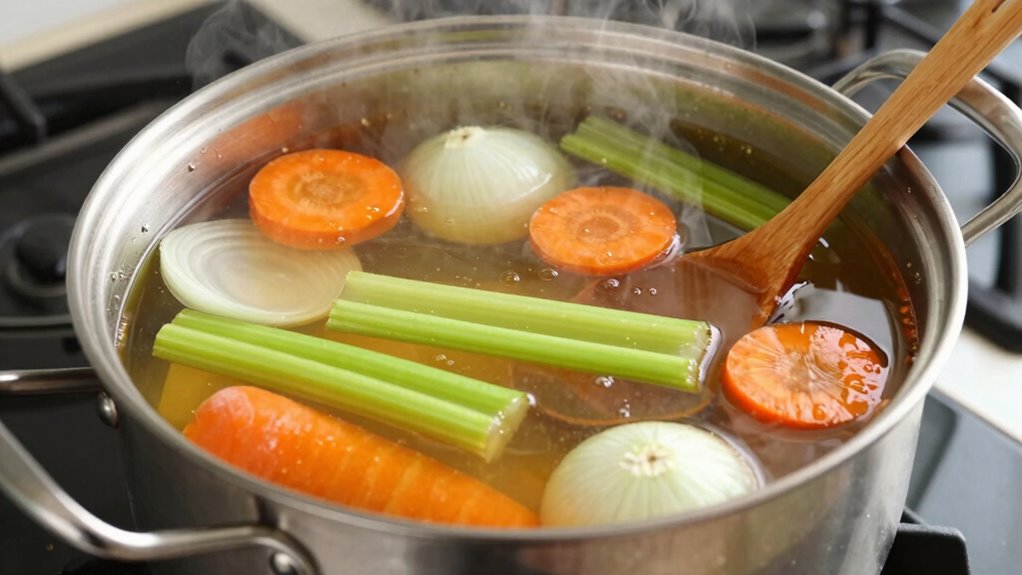

To make clear, flavorful homemade stock, follow the simmer rule by keeping the temperature low and steady between 185°F and 205°F. Avoid boiling vigorously, which stirs up impurities and clouds the liquid. Regularly skim foam and scum during the first hour to remove impurities. Use gentle heat and proper techniques to prevent emulsifying fats, resulting in a crystal-clear stock. Keep learning how to perfect your simmering skills for better results.
Key Takeaways
- Maintain a low, steady simmer between 185°F and 205°F to prevent cloudiness and emulsification of fats.
- Use a thermometer to monitor temperature and avoid vigorous boiling during stock preparation.
- Skim foam and impurities promptly within the first 30 minutes to keep the stock clear.
- Avoid stirring or overloading ingredients, which can stir impurities and cause cloudiness.
- Strain the stock gently after cooking and cool promptly to preserve clarity and flavor.
Why Proper Simmering Matters for Clear, Delicious Stock
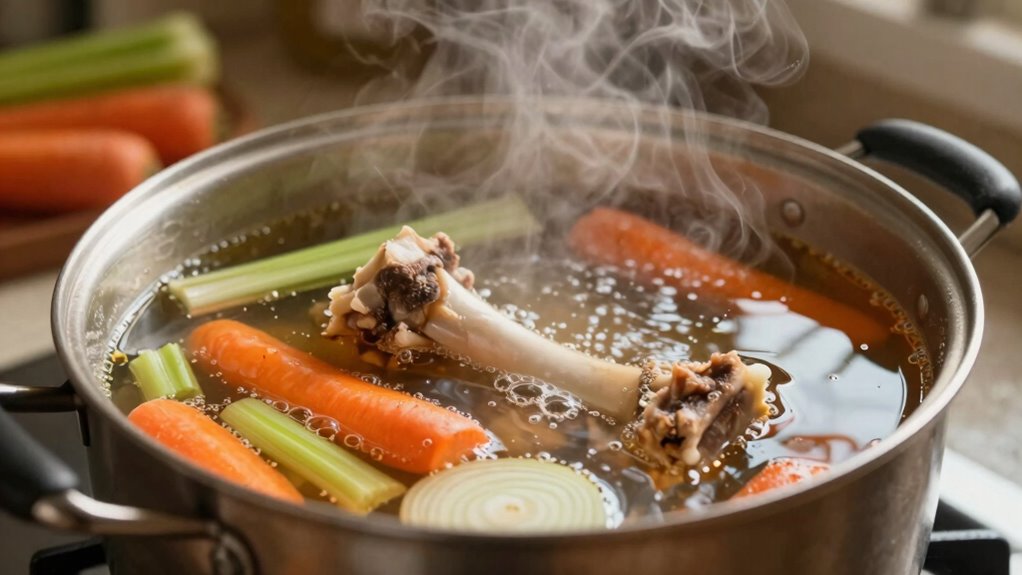
Proper simmering is vital because it guarantees your stock stays clear and flavorful. When you maintain a gentle simmer, the heat prevents impurities from emulsifying into the liquid, resulting in a cleaner, more appealing stock. It also allows flavors to develop gradually, so seasoning adjustments can be made as needed without over-reducing or clouding the broth. If you make ingredient substitutions, simmering at the right temperature ensures these changes blend smoothly, enhancing taste without introducing haze or bitterness. Rushing the process by boiling can cause the stock to turn cloudy and diminish its clarity. Consistent, controlled simmering helps you produce a beautifully clear, deeply flavorful stock that serves as the perfect foundation for soups, sauces, and more. Additionally, understanding the proper temperature control is crucial for maintaining a gentle simmer and achieving optimal results.
What Is the Simmer Rule and Why It Matters
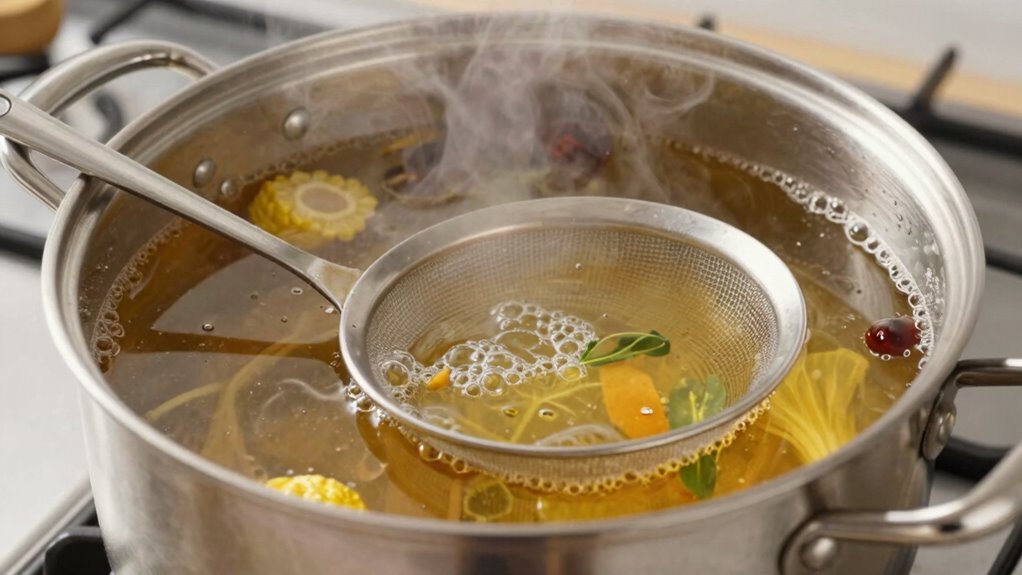
Understanding the simmer rule helps you control the cooking process and prevents your stock from becoming cloudy. When you keep the heat low, the broth stays clear and develops better flavor. Following this rule makes a noticeable difference in the quality of your homemade stock. Proper temperature control is essential for resolving common issues that affect clarity and taste. Maintaining a gentle simmer reduces unwanted impurities that can cloud the broth, resulting in a cleaner and more appealing stock. Using a consistent simmer temperature also helps maintain nutritional value, preserving the health benefits of your homemade broth. Additionally, this technique aligns with sustainable practices by minimizing waste and energy use during cooking.
Clarifies Cooking Process
The simmer rule is essential for making flavorful, clear homemade stock because it controls the cooking temperature to prevent the liquid from boiling vigorously. Keeping the heat low ensures gentle extraction of flavors without clouding the broth. This clarifies the cooking process, allowing you to monitor progress easily. Proper simmering also enhances flavor by gently releasing aromas and nutrients from your ingredient selection. When you follow this rule, you avoid turbulence that stirs up impurities, resulting in a cleaner stock. Using a thermometer can help maintain the proper temperature range for optimal results.
Ensures Clear Broth
Have you ever wondered why some homemade stocks turn out cloudy and murky? The key lies in following the simmer rule, which keeps the broth clear. Gentle simmering prevents agitation that releases impurities and creates cloudiness. This rule applies regardless of seasoning variations or ingredient substitutions, so keep the heat low and steady. If you add too many ingredients at once or stir vigorously, you risk clouding the broth. Even with different seasonings, the simmer rule remains constant, ensuring clarity. Patience is essential; a slow, gentle simmer allows impurities to rise to the surface, where you can skim them off easily. Consistent temperature is crucial for maintaining a gentle simmer and preventing cloudiness. Maintaining the correct simmer temperature is vital for achieving a clear broth, and understanding how to regulate it can make all the difference. Proper temperature control is a fundamental aspect of avoiding cloudiness in homemade stock. Recognizing how impurities behave during simmering can help you better monitor and adjust your heat.
The Ideal Temperature Range for Simmering Stock
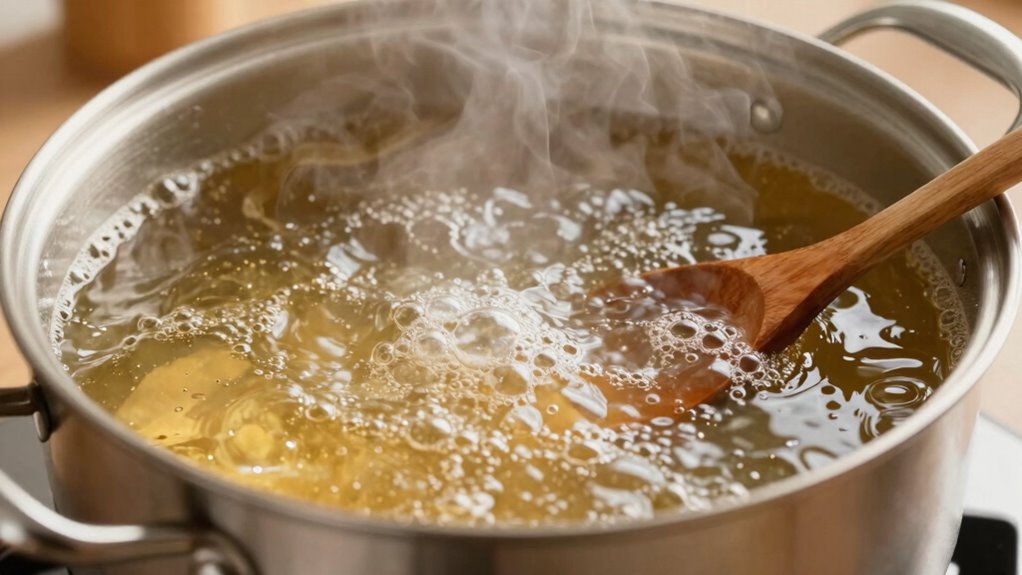
To achieve the best flavor and clarity, maintaining the right temperature during simmering is essential. The ideal temperature range for simmering stock is between 185°F and 205°F (85°C to 96°C). Staying within this range prevents rapid boiling, which can emulsify fats and turn your broth cloudy. A gentle simmer allows flavors to develop fully while keeping impurities and foam minimal. Use seasoning techniques like adding herbs early or later to control flavor extraction. If you’re short on ingredients, ingredient substitutions—like swapping chicken bones for beef—won’t affect the simmer temperature but can alter flavor. Keep the heat steady, adjusting as needed, and avoid boiling vigorously, which compromises both clarity and taste. This temperature range ensures a clear, flavorful homemade stock. Controlling heat is also important for consistent results, especially if using modern kitchen appliances like smart thermostats or induction cooktops. Proper temperature regulation helps maintain a steady simmer and ensures your stock turns out perfect every time.
How to Skim Impurities Effectively During Simmering

Use a fine skimmer to gently lift impurities from the surface of your stock. Skim frequently to prevent impurities from sinking back in, ensuring a clear broth. Discard impurities quickly to maintain a clean simmer and better flavor.
Use a Fine Skimmer
A fine skimmer is your best tool for removing impurities from simmering stock. Its mesh design allows you to easily scoop out foam, scum, and other unwanted particles without disturbing the delicate liquid beneath. Using a fine skimmer streamlines impurity removal, helping your stock stay clear and clean. When you notice foam rising to the surface, gently slide the skimmer across, catching the impurities before they settle back into the broth. Keep a steady hand and work carefully, ensuring you don’t miss any floating debris. Regularly removing impurities with a fine skimmer prevents cloudiness and bitterness, resulting in a more refined, flavorful stock. This simple tool makes the process efficient, keeping your simmering liquid pristine and ready for the next step.
Skim Gently and Often
Since impurities tend to rise gradually to the surface during simmering, it’s important to skim frequently and gently to keep your stock clear. Use gentle skimming techniques to avoid disturbing the simmering liquid and releasing more impurities. With a fine-skimmer or a shallow spoon, remove foam and scum as it appears, working around the edges of the pot. Consistent impurity removal prevents cloudiness and keeps your stock clean. Don’t rush—skim slowly and carefully, allowing you to catch impurities early before they settle. Regular skimming not only improves clarity but also enhances the stock’s flavor by removing unwanted impurities. It’s helpful to establish a skimming routine during the first hour of simmering for best results. Proper skimming guarantees a beautifully clear, professional-quality homemade stock. Safety during the process ensures you handle hot liquids properly and avoid accidents. Developing a skimming technique can further improve both efficiency and safety while maintaining clarity. Additionally, maintaining proper airflow around the pot can help prevent excess foam buildup and make skimming easier. Using proper cleaning tools can also streamline the process and ensure your utensils stay in good condition.
Discard Impurities Quickly
How can you remove impurities efficiently during simmering? The key is quick impurity removal through effective skimming techniques. As impurities rise to the surface, use a shallow spoon or a fine-mesh skimmer to remove them promptly. This prevents cloudiness and ensures a clear stock. Timing matters: skim frequently, especially in the first hour. To highlight this, consider the following:
| Impurity Type | Best Skimming Time | Technique |
|---|---|---|
| Foam | First 30 minutes | Gentle spooning |
| Fat | During simmering | Skim as needed |
| Sediment | End of cooking | Remove carefully |
Consistent skimming keeps your stock clear and pure, making impurity removal a simple but essential step.
Common Mistakes That Cloud or Grease Your Stock
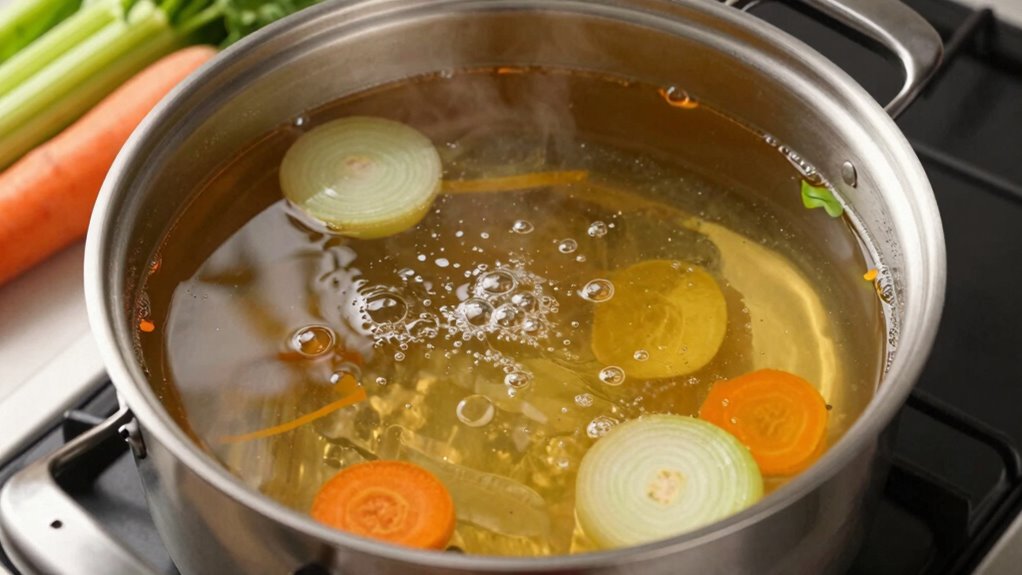
One common mistake that can cloud or grease your stock is boiling it too aggressively. Rapid boiling agitates impurities and fat, causing them to disperse and create a cloudy, greasy appearance. To keep your stock clear, maintain a gentle simmer. Additionally, seasoning mistakes like adding too much salt or seasoning early can alter the stock’s clarity and flavor. Be mindful of when and how much you add. Storage errors also impact stock quality; storing it improperly or for too long can lead to separation and spoilage, making it greasy or cloudy when reheated. Always let your stock cool before storing in airtight containers and use within a few days. Proper temperature control is essential for maintaining clarity and freshness. Using seasoning timing correctly can help you avoid cloudiness and preserve the clean look of your stock. Rushing the process or exposing the stock to oxidation can also cause cloudiness, so patience and proper handling are key. Additionally, understanding the importance of clarity in stock can guide you in refining your technique. Keeping the heat low and avoiding rapid boiling are crucial steps in achieving a clear, beautiful stock. And remember, a gentle approach throughout the process helps your homemade stock stay clear, flavorful, and pristine.
Step-by-Step: How to Achieve the Perfect Simmer
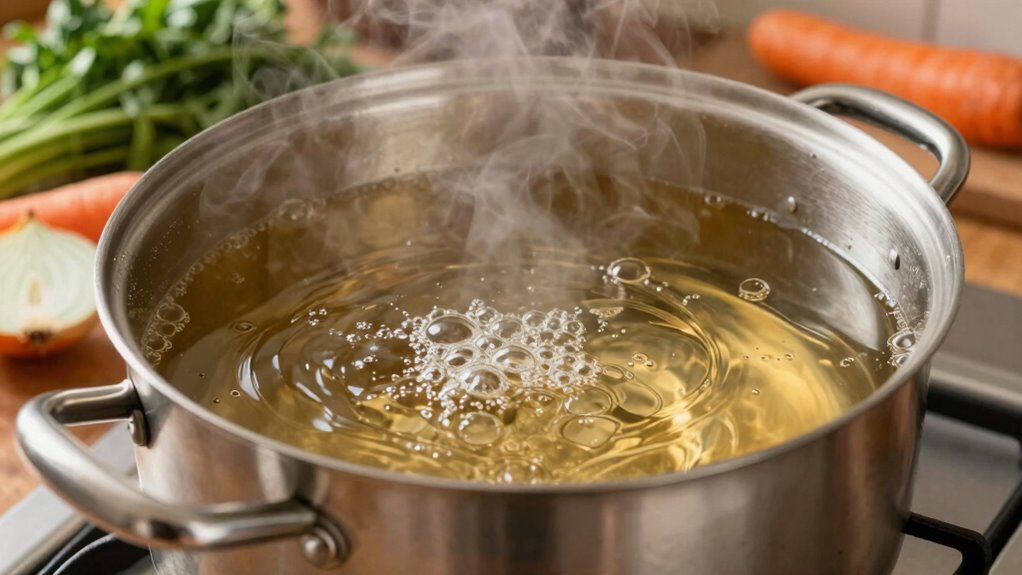
Achieving the perfect simmer is essential for making clear, flavorful stock. To do this, start by bringing your ingredients and cold water to a gentle boil, then reduce the heat to maintain a bare simmer. Keep the temperature low enough to prevent rapid bubbling, which can cloud the stock and disturb ingredient extraction. Proper ingredient selection boosts flavor enhancement; choose fresh vegetables, herbs, and quality bones or meat. Skim off any foam or impurities as they rise, ensuring clarity. Adjust the heat as needed to maintain a consistent, gentle simmer. This careful control allows flavors to meld beautifully while keeping the stock clear. Patience and attention to temperature are key to achieving that perfect, clean stock every time. Additionally, understanding the best anime movies can inspire creative cooking sessions during quiet days in the kitchen.
Tips for Straining and Storing Your Clear Stock

Once you’ve finished simmering your stock, careful straining is essential to guarantee clarity and remove solids. Use a fine-mesh strainer or cheesecloth to catch any remaining particles, ensuring your stock remains clear and smooth. When straining, pour slowly and steadily, avoiding agitation that can cloud the liquid. For ideal stock storage, let the strained stock cool to room temperature before refrigerating or freezing. Divide it into airtight containers, leaving some space for expansion if freezing. Label your containers with dates to track freshness. Proper straining techniques prevent sediment from cloudiness and improve shelf life. Store your stock in small portions for easy use later. Temperature control during storage also plays a key role in maintaining freshness and flavor. Maintaining proper food safety practices ensures your homemade stock stays fresh, flavorful, and perfectly clear whenever you need it.
Variations in Simmering Techniques for Different Stocks
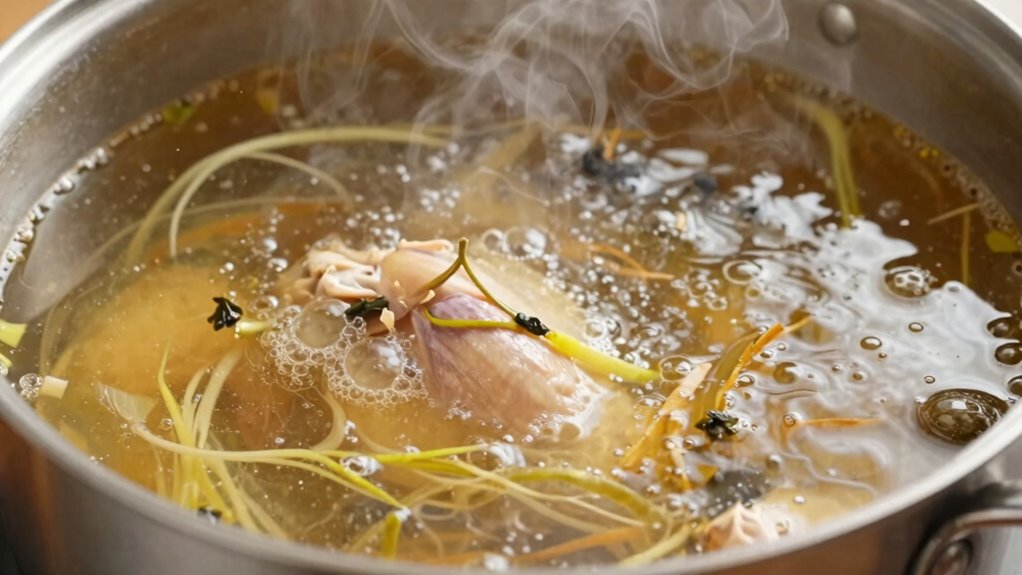
Different types of stocks require tailored simmering techniques to bring out their best flavors and textures. For vegetable simmering, keep the heat gentle and avoid overcooking, which can result in a cloudy stock. A slow, steady simmer helps extract pure flavors without breaking down delicate vegetables. When making seafood stock, use a quick, gentle simmer and avoid boiling, as high heat can make the stock cloudy and greasy. Seafood stock benefits from a shorter cooking time—about 30 to 45 minutes—so you preserve its lightness and clarity. Adjust simmering times and temperatures based on the ingredients, ensuring you extract maximum flavor without compromising the stock’s clarity and texture. Proper techniques for each type enhance overall quality and flavor.
Troubleshooting: Fixing Cloudy or Greasy Stock

When troubleshooting cloudy or greasy stock, start by examining your simmering process. Too vigorous a boil can cause fat separation, making your stock greasy and cloudy. Keep the heat low and gentle, allowing impurities and fat to rise to the surface. Skim these off regularly to maintain clarity. Next, review your ingredient selection; using leaner bones or avoiding fatty cuts can reduce excess fat, preventing greasiness. Properly blanch or rinse ingredients before adding them to the pot can also help minimize impurities that cloud the stock. Additionally, avoid stirring excessively, as this can disturb the surface and emulsify fat into the liquid. By controlling your simmer and selecting ingredients carefully, you’ll produce a clear, clean stock every time.
Frequently Asked Questions
Can I Reuse Homemade Stock for Different Recipes?
Yes, you can reuse homemade stock for different recipes, but reusing stock safely is key. Always store it properly in airtight containers and refrigerate within two hours. When reusing, taste and aroma will guide you—if it smells off or has a strange flavor, discard it. To enhance flavor, simmer it with fresh herbs or vegetables before adding to your new dish. This keeps your stock fresh and delicious for multiple uses.
How Long Should I Simmer Homemade Stock for Best Flavor?
Think of your stock as a symphony, where each note of flavor must be allowed to flourish. For the best flavor extraction, you should simmer homemade stock for about 4 to 6 hours. This simmering duration gently reveal the rich, layered tastes from bones and aromatics, ensuring a clear, flavorful broth. Keep the heat steady, and remember to skim regularly for a pristine, harmonious result.
Is It Safe to Leave Stock Simmering Unattended?
You shouldn’t leave stock simmering unattended for extended periods, as it can pose food safety risks. Bacteria can develop if the temperature drops or if the simmering duration exceeds safe limits. To keep your stock safe, stay nearby and monitor the simmering process, ensuring it stays at a gentle simmer without boiling vigorously. Always refrigerate promptly after cooking, and discard any stock left out too long.
What Are the Best Ingredients for a Flavorful Homemade Stock?
You’ll want to start with fresh vegetable options like carrots, onions, and celery for a rich flavor. Meat choices such as chicken wings or beef bones add depth, with studies showing homemade stock often contains 50% more nutrients than store-bought. Use herbs like thyme and bay leaves to enhance taste. Combining these ingredients creates a flavorful, nourishing stock perfect for soups and stews.
How Can I Customize Stock for Specific Dietary Needs?
You can customize your stock for dietary needs by adjusting ingredients. For vegetarian adaptations, use vegetables, herbs, and seaweed instead of meat or bones. To make it low sodium, skip added salt and opt for herbs or spices to boost flavor naturally. You can also add nutritional yeast or mushroom broth for depth. These tweaks help you create a healthy, flavorful stock tailored to your dietary preferences.
Conclusion
Mastering the simmer rule guarantees your homemade stock stays clear and flavorful. Did you know that properly simmered stock contains 50% more collagen, boosting both taste and nutrition? By following simple techniques like skimming impurities and maintaining the right temperature, you’ll elevate your cooking game. Next time you make stock, remember: patience and attention to detail make all the difference. Your dishes will thank you with richer, cleaner flavors every time.