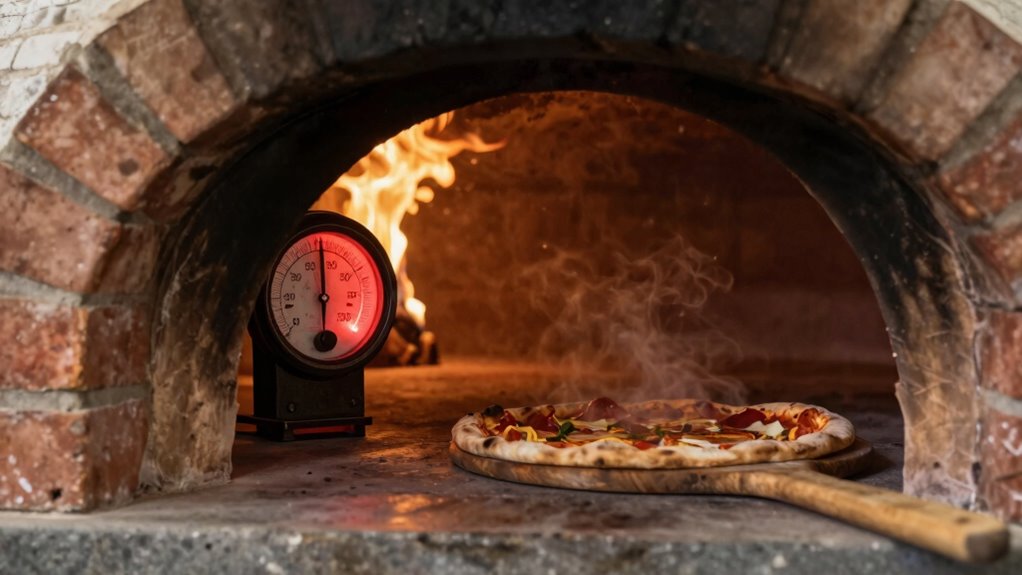

To make or break your crust, understanding oven temperature ranges is key. For authentic Neapolitan style, aim for 800°F to 900°F to get that blistered, airy crust. If you prefer a thicker, chewier crust like New York style, 600°F to 700°F works best. The right temperature ensures the perfect balance of crispiness and chewiness, but mastering how oven materials influence heat will help you perfect your pizza. Keep going to discover the secrets behind ideal heat control.
Key Takeaways
- Different pizza styles require specific oven temperatures; Neapolitan needs 800°F–900°F for blistered crusts, while New York-style prefers 600°F–700°F.
- Oven materials like brick and stone retain heat better, ensuring consistent high temperatures essential for authentic crust textures.
- Proper temperature control influences crust crispiness, chewiness, and flavor, making precise temperature numbers crucial for desired results.
- Heat distribution varies with oven material, affecting crust evenness and preventing hot spots that can ruin pizza quality.
- Understanding oven temperature numbers helps fine-tune settings for optimal crust development and professional-quality pizza.
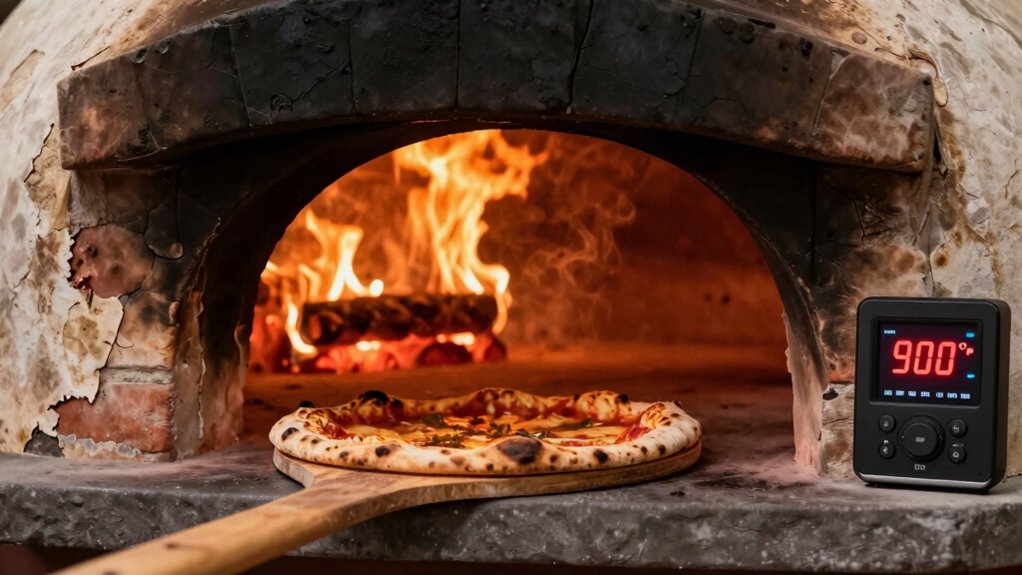
Pizza ovens have become essential tools for pizza enthusiasts and home chefs alike, allowing you to achieve that authentic, restaurant-quality crust right in your backyard. The key to mastering pizza at home lies not just in the toppings or sauce but in understanding how temperature impacts the final product. The right temperature numbers can make or break your crust, giving it the perfect balance of crispiness and chewiness. When you’re choosing a pizza oven, consider the different pizza styles you want to make. For example, Neapolitan pizza requires a very high heat, typically around 800°F to 900°F, to create that thin, blistered crust. Conversely, a more traditional New York-style slice benefits from slightly lower temperatures, around 600°F to 700°F, which produce a thicker, chewier crust with a nice caramelization. Knowing your preferred pizza styles helps you pick the right oven and set the proper temperature for each.
Oven materials play a significant role in how heat is distributed and retained, directly affecting your crust’s quality. For example, brick and stone ovens are renowned for their excellent heat retention and even cooking, making them ideal for high-temperature pizzas like Neapolitan. These materials absorb and radiate heat evenly, allowing you to reach those critical temperature numbers that deliver the perfect crust. Steel ovens, on the other hand, heat up quickly and conduct heat efficiently, making them suitable for rapid cooking and achieving crisp textures. Cast iron is another popular choice, especially for portable or outdoor setups, because it holds heat well and can be used in combination with other oven materials to enhance heat retention. Your choice of oven materials influences not just how hot your oven gets but how consistently it maintains those high temperatures, which is essential for pizza styles that demand rapid cooking. Additionally, understanding the thermal mass of your oven can help in maintaining stable temperatures for consistent results.
Understanding the importance of temperature numbers and oven materials empowers you to create pizza that rivals those from professional pizzerias. Achieving the right crust is about more than just heat; it’s about how that heat interacts with the oven’s materials and the style of pizza you want to produce. By paying close attention to these factors, you can fine-tune your equipment and technique, ensuring every pizza comes out with the perfect crust—crispy on the outside, tender on the inside, and topped with just the right amount of char and flavor. With a bit of knowledge and the right setup, you’ll be turning out pizza masterpieces that impress every time.
Frequently Asked Questions
How Does Humidity Affect Pizza Oven Temperature Accuracy?
Humidity effects can impact your pizza oven’s temperature accuracy by causing fluctuations in heat. High humidity makes it harder for your oven to reach and maintain consistent temperatures, as moisture in the air absorbs heat. Conversely, low humidity helps stabilize the temperature. To guarantee accurate cooking, keep humidity levels controlled and avoid opening the oven door too often, which can further disrupt temperature stability.
Can Different Pizza Styles Require Different Oven Temperatures?
You might think all pizza styles need the same oven temperature, but that’s not true. Different pizza styles, like Neapolitan or thick-crust, demand specific oven temperatures to get the perfect crust and toppings. For example, Neapolitan pizzas thrive at high temperatures around 800-900°F, while thicker crusts might do better at lower heats. Modifying your oven temperature based on pizza style guarantees you get that authentic, delicious result every time.
What Safety Precautions Are Necessary at High Oven Temperatures?
You should always wear safety gear, like heat-resistant gloves and aprons, when working with high oven temperatures to prevent burns. Keep fire hazards in check by ensuring no flammable materials are nearby and maintaining a clean, clutter-free workspace. Never leave the oven unattended, and have a fire extinguisher nearby. These precautions safeguard you from accidents and ensure safe operation during high-temperature cooking.
How Often Should Oven Temperature Be Calibrated?
Oh, the irony of ignoring oven calibration! You should calibrate your oven at least once every 6 to 12 months, depending on usage. Regular oven maintenance and calibration frequency guarantee your oven stays accurate, preventing soggy or burnt crusts. Don’t wait for inconsistent results—staying proactive keeps your pizza perfect. Trust me, a well-calibrated oven saves you time, energy, and a lot of dough in the long run!
Are There Energy Efficiency Differences Between Oven Temperatures?
Yes, there are energy efficiency differences between oven temperatures. When you set your oven higher than necessary, it consumes more energy because it works harder to reach and maintain that temperature. Proper temperature regulation helps you save energy by avoiding unnecessary heat. By calibrating your oven regularly and sticking to ideal cooking temperatures, you guarantee efficient energy use, reducing costs and minimizing environmental impact.
Conclusion
So, next time you fire up your pizza oven, trust the numbers. Aim for that sweet spot between 450°F and 550°F—it’s the magic zone for crispy crusts and perfectly melted cheese. Some say higher temps burn the crust, but science shows you just need the right balance. Don’t sweat it too much; with a bit of practice, you’ll master the perfect pizza. After all, temperature really does make or break your crust!