Fuzzy logic in rice cookers matters because it allows the appliance to adapt in real time, ensuring perfectly cooked rice every time. By combining sensor data with intelligent programming, it adjusts cooking cycles automatically based on moisture, temperature, and other factors, overcoming the limitations of fixed timers. This makes your rice consistently fluffy and tender, regardless of rice type or conditions. Want to discover how this smart technology can improve your cooking experience? Keep exploring to find out.
Key Takeaways
- Fuzzy logic enables rice cookers to adapt their cooking process based on real-time sensor data, ensuring optimal results.
- It allows the cooker to respond flexibly to variations in rice type, moisture, and ambient conditions.
- Unlike fixed timers, fuzzy logic adjusts cooking cycles dynamically for consistent, perfectly cooked rice every time.
- It combines sensor accuracy with intelligent programming, reducing manual guesswork and overcooking or undercooking risks.
- Overall, fuzzy logic makes rice cookers smarter, more reliable, and capable of delivering high-quality rice with minimal user intervention.
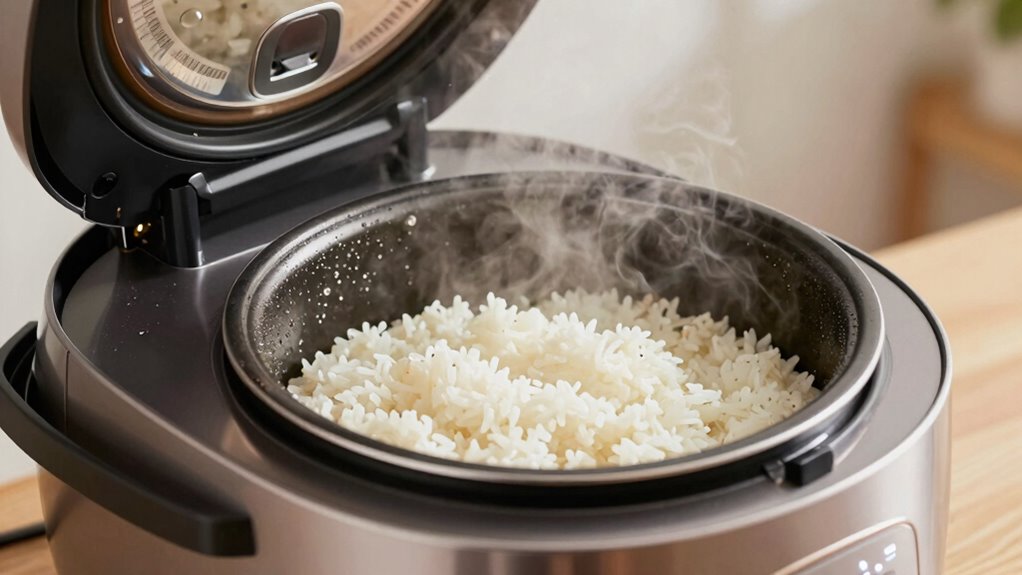
Have you ever wondered how your rice cooker perfectly turns water into fluffy rice every time? The secret lies in its ability to sense when the rice is done and adjust the cooking process accordingly. This is where sensor accuracy plays a pivotal role. Modern rice cookers equipped with fuzzy logic technology use sensors to monitor temperature, moisture, and sometimes even pressure inside the pot. These sensors gather real-time data, allowing the cooker to make precise adjustments rather than sticking to a fixed cooking time. When the sensors detect that the water has been absorbed or evaporated, the cooker knows the rice is ready, preventing overcooking or undercooking. This high level of sensor accuracy ensures consistent results, whether you’re cooking short-grain sushi rice or long-grain basmati.
Beyond sensor accuracy, programming flexibility is another essential component of why fuzzy logic rice cookers outperform traditional models. Instead of relying on a simple timer, these cookers come with multiple cooking modes and customizable settings. You can select options tailored for different types of rice or even experiment with porridge, steaming, or slow-cooking functions. This flexibility allows you to adapt the cooking process based on the specific grain or desired texture, giving you more control over the final dish. When combined with sensor data, programming flexibility creates a dynamic system that responds intelligently to varying conditions. For instance, if the sensors detect that the rice needs a little more time to reach the ideal moisture level, the cooker can extend the cooking cycle automatically, ensuring perfect rice every time.
Additionally, understanding the sensor technology used in fuzzy logic cookers can help you appreciate their reliability and precision. This combination of sensor accuracy and programming flexibility sets fuzzy logic rice cookers apart from traditional models. Instead of a one-size-fits-all approach, they adapt to the unique characteristics of each batch of rice and even ambient conditions in your kitchen. You don’t need to manually guess or set multiple timers; the cooker takes care of all those adjustments internally. As a result, you get consistently excellent rice with minimal effort, whether you’re a novice or a seasoned chef. The technological sophistication behind fuzzy logic ensures your rice cooker is smarter, more responsive, and capable of delivering perfect results with each use. So, next time you press the start button, remember that it’s this blend of sensor accuracy and programming flexibility that makes your rice turn out just right—fluffy, tender, and perfectly cooked.
Frequently Asked Questions
How Does Fuzzy Logic Differ From Traditional Cooking Methods?
Fuzzy logic differs from traditional cooking methods by using sensors to monitor temperature, moisture, and other factors, allowing for real-time adjustments. You’ll notice better rice quality because it adapts to changing conditions, unlike fixed-temperature methods. Although it involves more programming complexity, this approach guarantees consistent results. You benefit from improved sensor accuracy, making your rice perfectly cooked every time, thanks to the intelligent adjustments fuzzy logic provides.
Can Fuzzy Logic Improve Cooking Efficiency?
Fuzzy logic can totally revolutionize your cooking efficiency! With highly accurate sensors, it adjusts temperature and cooking time precisely, saving energy with every use. This means your rice cooker isn’t just smart—it’s a genius at conserving power while perfectly cooking your rice every single time. Say goodbye to overcooked or undercooked rice, and hello to faster, more efficient meals that save you time, energy, and frustration!
Are All Rice Cookers Using Fuzzy Logic Equally Effective?
Not all rice cookers using fuzzy logic are equally effective. Some offer better temperature accuracy, ensuring perfectly cooked rice every time, while others focus on user customization options like texture and flavor preferences. You’ll find that higher-quality models adapt more precisely to your needs, giving you consistent results. So, it’s worth comparing features, as some fuzzy logic systems deliver more reliable performance and personalized control than others.
Does Fuzzy Logic Affect Rice Texture and Flavor?
Yes, fuzzy logic directly affects rice texture and flavor. It constantly adjusts cooking based on grain moisture levels, ensuring the rice reaches ideal doneness. This dynamic control helps maintain flavor consistency and prevents overcooking or undercooking. By fine-tuning heat and time, fuzzy logic creates perfectly cooked rice with the desired texture and enhanced flavor, making your rice taste better every time.
How Long Does a Fuzzy Logic Rice Cooker Typically Last?
A fuzzy logic rice cooker typically lasts around 5 to 8 years with proper care. Durability concerns are common, but regular maintenance tips like cleaning the heating element and avoiding overflows can extend its lifespan. You should also check the sensor and circuit board periodically. By taking these steps, you guarantee your cooker stays reliable longer, maximizing your investment and consistently delivering perfect rice.
Conclusion
Understanding fuzzy logic in rice cookers shows how advanced technology improves your cooking. Did you know that smart rice cookers can adjust their temperature hundreds of times during cooking? This precision guarantees perfectly cooked rice every time, saving you from sogginess or crunchiness. So, next time you hear “fuzzy logic,” remember it’s not just fancy jargon—it’s what makes your rice consistently better, making your kitchen smarter and your meals more satisfying.