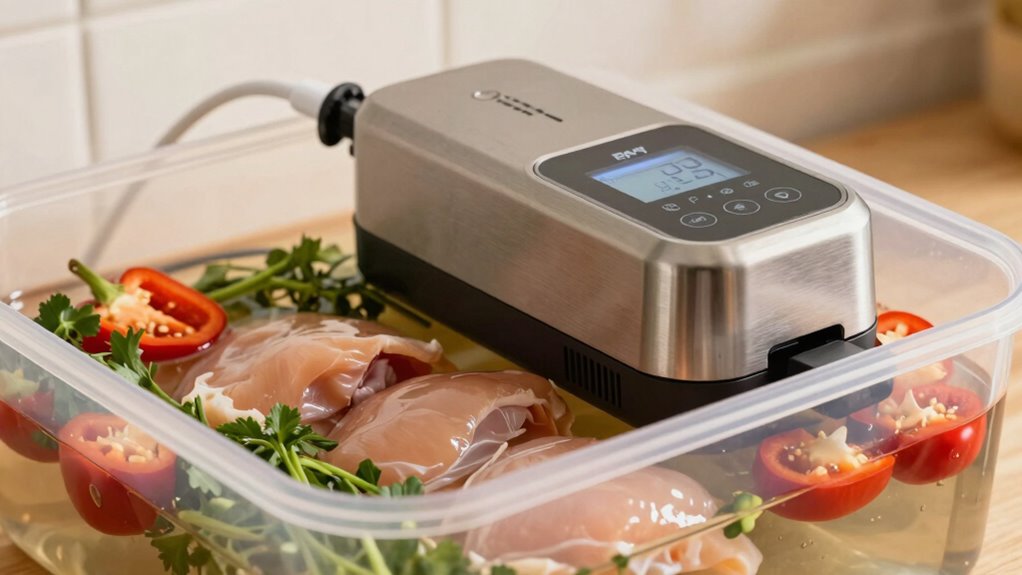

To cook safely with sous vide, always follow proper time and temperature guidelines. Keep your device steady at the right temperature for the recommended duration to guarantee bacteria are destroyed, especially with meats like poultry and beef. Proper handling before, during, and after cooking is key—refrigerate raw ingredients, keep cooked foods at safe temperatures, and reheat thoroughly. Stick to these rules, and you’ll enjoy delicious, safe meals every time. Want to learn more about maintaining safe sous vide practices?
Key Takeaways
- Follow established time-temperature guidelines for each food type to ensure bacteria are effectively destroyed.
- Maintain precise temperature control throughout cooking using reliable sous vide devices for safety.
- Keep raw ingredients refrigerated until just before cooking, and promptly chill or serve cooked foods.
- Reheat foods to the recommended internal temperature to eliminate any bacteria that may have survived.
- Consistently monitor and verify temperatures to prevent undercooking and ensure food safety.
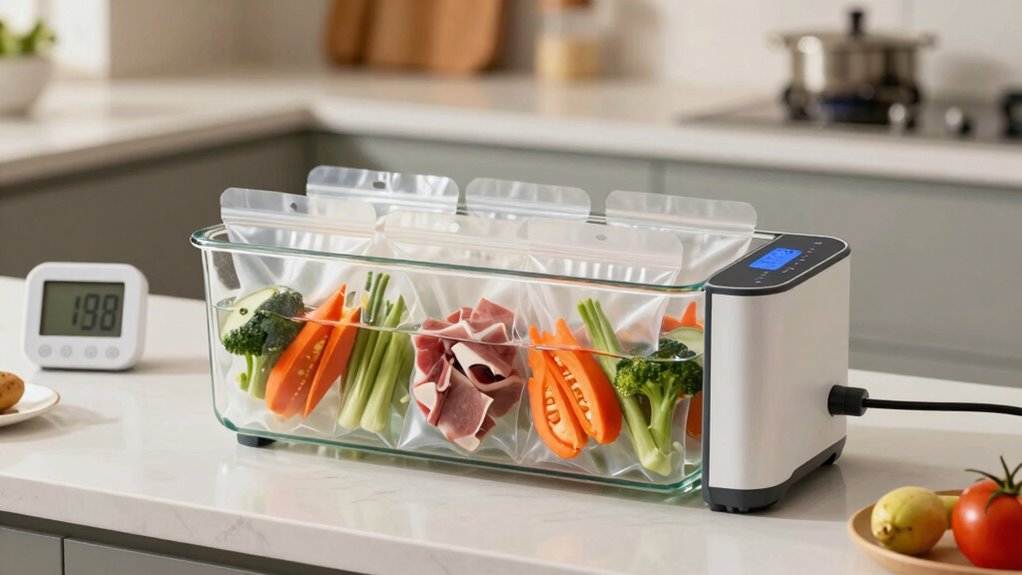
Sous vide cooking offers precise temperature control that can produce flavorful, perfectly cooked meals, but it also requires careful attention to safety. Understanding temperature guidelines is vital to guarantee your food is safe to eat and free from harmful bacteria. When you cook sous vide, you’re relying on low, consistent temperatures over extended periods to achieve the desired doneness. However, if these temperatures aren’t set correctly, bacteria control becomes a concern. Pathogens like Salmonella and Listeria can survive if the food isn’t cooked or held at the proper temperatures for the right amount of time. That’s why it’s essential to follow established temperature guidelines for different types of food. For example, cooking poultry to a minimum of 140°F (60°C) for a specified time ensures bacteria are effectively destroyed, while beef or pork can be safely cooked at slightly lower temperatures if held long enough.
You need to pay close attention to these temperature thresholds, especially since sous vide involves cooking at lower temperatures than traditional methods. The key is the combination of temperature and time—lower temperatures require longer cooking times to achieve the same level of bacteria control. For instance, cooking chicken at 140°F (60°C) for at least 1.5 hours can eliminate harmful bacteria, whereas at higher temperatures, shorter times are sufficient. Using a reliable sous vide device that maintains consistent temperatures helps you meet these guidelines easily. Always double-check the recommended time and temperature for each type of food, as slight deviations could compromise safety.
Another important aspect is proper handling before and after cooking. Keeping raw ingredients refrigerated until just before cooking prevents bacterial growth. After cooking, promptly chilling or serving the food minimizes the risk of bacterial proliferation. If you plan to store cooked food, refrigerate it at or below 40°F (4°C) within two hours to prevent bacteria from multiplying. When reheating, ensure the food reaches a safe internal temperature again, following the same temperature guidelines to maintain bacteria control.
Frequently Asked Questions
Can Sous Vide Cooking Eliminate All Bacteria?
Sous vide cooking can greatly reduce bacterial growth if you follow proper time-and-temp rules, reaching pasteurization thresholds. It doesn’t eliminate all bacteria instantly, but maintaining the right temperature for the correct duration kills harmful pathogens effectively. By carefully monitoring your cook time and temperature, you guarantee food safety and minimize bacterial risks, making sous vide a reliable method for safe, delicious meals without fear.
How Long Can Cooked Sous Vide Meat Be Stored Safely?
You can store cooked sous vide meat safely for up to 3 to 4 days in the refrigerator. Keep an eye on storage duration and spoilage indicators like off-smell, sliminess, or discoloration. Always refrigerate promptly after cooking, and reheat thoroughly before eating. If you’re unsure about freshness, it’s best to discard to avoid any health risks. Proper storage guarantees your sous vide meals stay safe and enjoyable.
Is It Safe to Reheat Sous Vide Leftovers?
Reheating sous vide leftovers is safe if you follow proper guidelines. Think of it as playing it by the book—ensure you heat the leftovers to at least 165°F (74°C) to kill bacteria. Use your immersion circulator or stovetop, and avoid reheating multiple times. Proper leftover reheating preserves flavor and safety, so you can enjoy your sous vide leftovers without worry, just like a well-rehearsed symphony.
What Are the Signs of Sous Vide Food Spoilage?
You’ll notice spoilage indicators like a foul smell, slimy texture, or discoloration in your sous vide food. Microbial growth causes these signs and can make food unsafe to eat. If your food develops any of these spoilage indicators, it’s best to discard it. Always trust your senses—smell, look, and texture—to determine if your sous vide leftovers are still safe, rather than relying solely on time and temperature.
Does Vacuum Sealing Affect Sous Vide Safety?
Vacuum sealing enhances sous vide safety by using vacuum sealers to remove air, which prevents bacteria growth and spoilage. Proper air removal creates a sealed environment that minimizes contamination risks. Just guarantee your vacuum sealer maintains a tight seal and that you refrigerate or cook the sealed bags promptly. This way, you reduce the chance of spoilage and enjoy safe, perfectly cooked sous vide meals every time.
Conclusion
So, now that you know the secret sauce—time and temperature—you can confidently cook sous vide without fear… or so they say. Just remember, in the world of food safety, it’s less about magic and more about science—though a little paranoia keeps things interesting. So go ahead, indulge in perfectly cooked meals, but don’t forget: ignoring the rules might just turn your gourmet adventure into a microbial horror story. Bon appétit—safely!