To cook for a week without eating the same thing daily, focus on versatile ingredients like grilled chicken, grains, and fresh vegetables that you can mix and match into different meals. Plan your menu and batch cook staples early in the week for quick assembly. Use a variety of herbs, spices, and cooking techniques to add flavor and variety. Keep meals interesting by rotating proteins and vegetables and experimenting with new recipes. Stay tuned to discover more tips to make your meal prep effortless and exciting.

Get everyday essentials delivered free with Prime
- Fast, free delivery on millions of items
- Prime Video, Amazon Music and more included
- Member-only deals all year
Key Takeaways
- Use versatile ingredients like grains, proteins, and produce to create different meals with minimal additional effort.
- Plan weekly menus and batch cook staples to assemble a variety of dishes easily.
- Incorporate diverse cooking techniques and seasonings to vary flavors and textures.
- Shop strategically, buying in bulk and exploring seasonal produce for freshness and variety.
- Organize your meal prep to combine pre-cooked components into new, exciting meals each day.
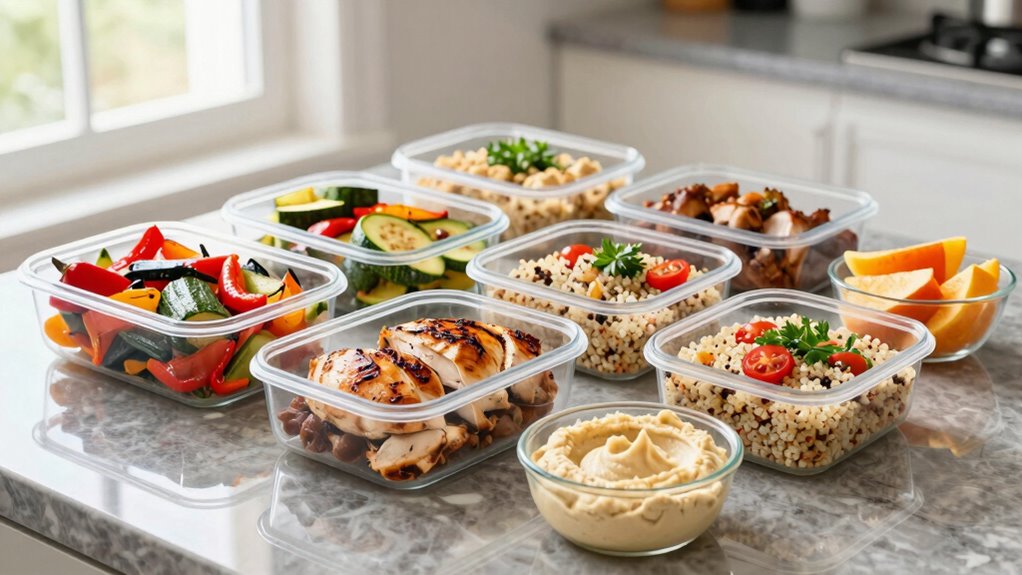
Planning your meals for a week can seem overwhelming, but with a strategic approach, you can enjoy variety without eating the same thing every day. The key is to implement effective meal prep tips and smart grocery shopping strategies that streamline your process and keep your meals exciting. Start by choosing a handful of versatile ingredients that can be used in multiple dishes. For example, grilled chicken can serve as a main protein for salads, wraps, or rice bowls. This not only simplifies shopping but also saves prep time. When selecting ingredients, focus on fresh produce, grains, and proteins that are flexible enough to be incorporated into different meals.
Choose versatile ingredients like grilled chicken and fresh produce to simplify meal prep and add variety.
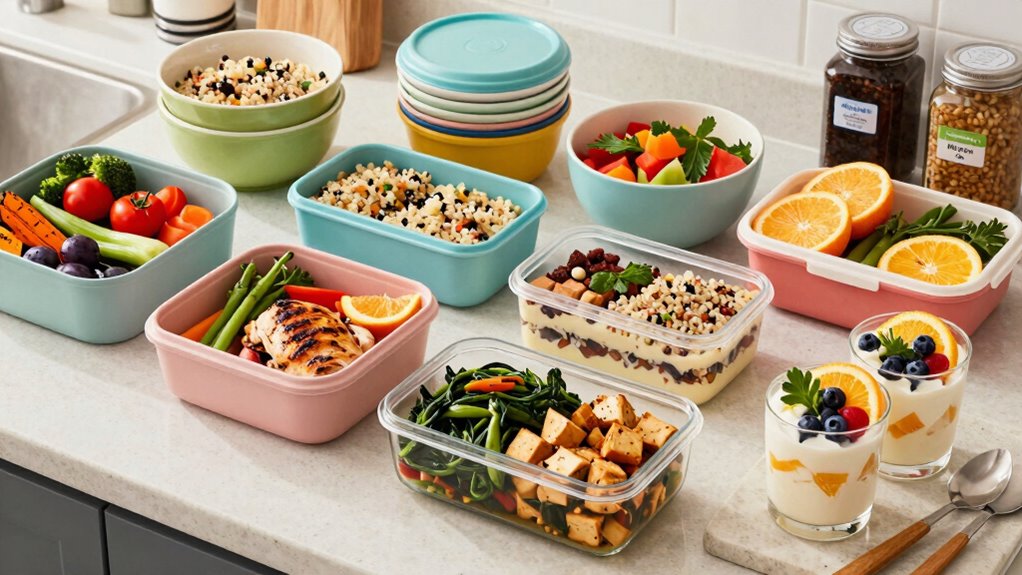
Next, map out your week’s meals beforehand. Creating a simple meal plan helps you avoid last-minute decisions that often lead to repetitive eating. Mix and match components—pair roasted vegetables with different grains or switch up your sauces to create new flavor profiles. This way, you can prepare larger quantities of certain staples early in the week and use them in various ways, reducing daily cooking stress. To maximize efficiency, batch cook components like grains, roasted vegetables, or cooked proteins. Store them in airtight containers, so you can assemble meals quickly each day without starting from scratch.
Grocery shopping strategies are essential to maintaining variety. Make a detailed shopping list based on your meal plan, but also include a variety of seasonings, herbs, and dressings. These small additions can dramatically change the flavor of the same base ingredients, giving you multiple taste experiences. Consider shopping at different stores or markets to access a broader range of fresh and specialty products. Buying in bulk for staples like rice, beans, or frozen vegetables can be cost-effective and ensures you always have ingredients on hand for quick meal assembly. Additionally, incorporating biodiversity into your shopping habits—such as choosing seasonal and locally sourced produce—can support sustainable practices and improve the quality of your meals. Exploring meal diversity in your shopping choices can further enhance your culinary variety. Incorporating diverse cooking techniques and trying new cuisines can also inspire creativity and prevent boredom in your meal routine. Incorporating seasonal produce can also boost flavor and nutritional value, making your meals more enjoyable and wholesome.
To keep things fresh and interesting, experiment with different cooking techniques—grilling, roasting, sautéing, steaming—and use herbs and spices to vary the flavor. Incorporate a wide array of vegetables and proteins throughout the week, and don’t hesitate to try new recipes or cuisines. Developing a diverse pantry of flavoring options can help you customize dishes and avoid monotony. As you become more organized with your prep and shopping, you’ll find that preparing diverse meals becomes effortless. This approach not only saves time and money but also keeps your diet balanced and exciting, making it easier to stick to your healthy eating goals without falling into a boring routine.
Popular right now

Dyson Cyclone V10 Origin Cordless Vacuum

Samsung 48-Inch S90H OLED 4K Smart TV (2026)

Bose QuietComfort Wireless Noise-Cancelling Over-Ear Headphones, Black
As an affiliate, we earn on qualifying purchases.
Frequently Asked Questions
How Can I Incorporate Variety in My Weekly Meal Prep?
To add variety, focus on diverse meal presentation styles and flavor enhancement techniques. Mix up your ingredients, use different herbs and spices, and try various cooking methods like grilling, roasting, or steaming. Incorporate colorful vegetables and different protein sources to keep meals interesting. By playing with presentation and flavor, you’ll keep each meal exciting, making your weekly prep enjoyable and ensuring you don’t get bored of eating the same thing every day.
What Are Some Budget-Friendly Ingredients for Diverse Meals?
Did you know that staples like beans, rice, and eggs are among the most budget-friendly ingredients? You can easily use ingredient substitutions to keep meals interesting and add flavor enhancements without overspending. For example, swap out proteins or grains to diversify dishes, and spice things up with herbs and sauces. These affordable options help you create a variety of meals that are both tasty and economical throughout the week.
How Do I Store Pre-Cooked Meals to Maintain Freshness?
To keep your pre-cooked meals fresh, focus on proper storage techniques and meal portioning. Use airtight containers to prevent air exposure, and divide your meals into individual portions for convenience. Label each container with dates to track freshness and store them in the fridge or freezer accordingly. Make sure your fridge is at the right temperature, around 40°F, and reheat meals thoroughly before eating to maintain quality and safety.
What Tools or Containers Are Best for Meal Organization?
You need the ultimate tools for meal prep containers—stackable, leak-proof, and microwave-safe—that turn your kitchen chaos into perfect organization. These containers make it effortless to sort and store your meals, keeping everything fresh and accessible. For premium kitchen organization, choose versatile options that fit neatly in your fridge or freezer. With the right meal prep containers, you’ll conquer meal planning with ease and never struggle to find your delicious creations again.
How Can I Adjust Recipes for Dietary Restrictions?
You can modify recipes for dietary restrictions by swapping ingredients. For gluten-free options, use gluten-free flour or pasta instead of wheat-based products. For vegan needs, replace eggs with flaxseed or chia seeds, and dairy with plant-based alternatives like almond or soy milk. These gluten-free swaps and vegan substitutions guarantee your meals stay delicious and suitable for your diet while cooking for the week.
Conclusion
By mixing up your meals and planning ahead, you turn your weekly menu into a colorful tapestry rather than a dull repeat. Think of it as dancing through a culinary garden, where each day offers a new flavor bloom. Embrace variety and get creative in your kitchen—your taste buds will thank you for the adventure. With a little effort, your week will be a delicious symphony, never missing a beat of excitement.