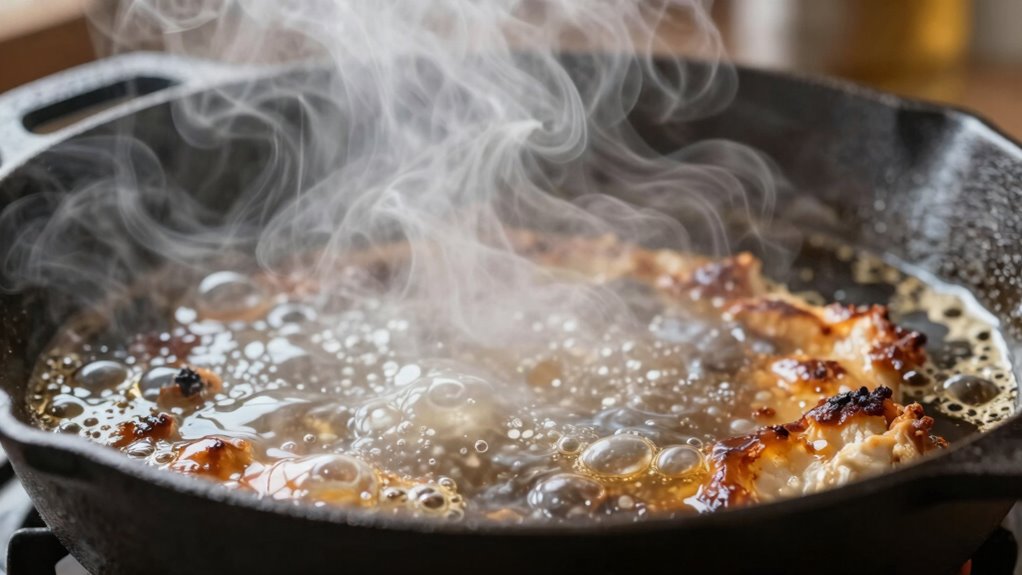

The main heat mistake that causes food to steam instead of sear is using too low a temperature. When your pan isn’t hot enough, moisture doesn’t evaporate quickly, leading to steaming rather than browning. Proper searing requires high, consistent heat to develop a flavorful crust. Preheating your pan thoroughly and testing with water drops can help you achieve the right temperature. Keep going, and you’ll discover how to master your pan’s heat for perfect searing every time.

Get everyday essentials delivered free with Prime
- Fast, free delivery on millions of items
- Prime Video, Amazon Music and more included
- Member-only deals all year
Key Takeaways
- Using insufficient or uneven heat causes moisture to evaporate slowly, leading to steaming instead of searing.
- Overcrowding the pan lowers the temperature, preventing proper crust formation and causing steaming.
- Adding food to a wet or unpreheated pan introduces moisture, hindering browning.
- Using the wrong pan material, like non-stick, can prevent reaching high enough temperatures for searing.
- Not preheating the pan thoroughly results in moisture buildup and inadequate searing.
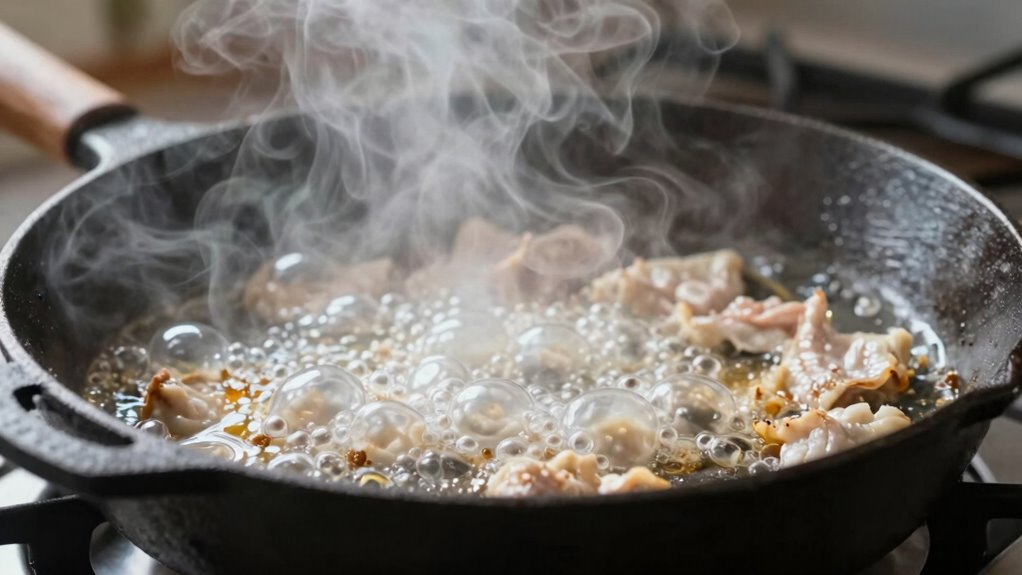
Have you ever wondered why your steak ends up steaming rather than searing? It all comes down to the heat you’re using and the pan you select. When you’re aiming for a perfect sear, the key is to create that beautiful, caramelized crust that locks in juices and adds flavor. But if your food is steaming instead, it’s likely because your cooking temperature isn’t high enough or your pan isn’t suitable for searing. Both factors play a crucial role in achieving that ideal crust.
First, let’s talk about cooking temperature. When you want to sear, you need your pan to be hot enough so that the surface of the meat instantly reacts, creating Maillard reactions that give that rich, brown color. If your pan isn’t hot enough, the moisture on the surface of the food will start to evaporate gently, forming steam rather than searing. This results in a cooked, steaming surface instead of the desired crisp exterior. To prevent this, always preheat your pan thoroughly before adding your food. You can test the temperature by flicking a few drops of water into the pan—if they dance and evaporate immediately, you’re ready to cook.
Preheat your pan thoroughly and test with water drops—if they dance and evaporate immediately, you’re ready to sear.
Next, your choice of pan is equally important. Not all pans are created equal when it comes to searing. For high-heat cooking, you want a pan that can withstand and distribute intense heat evenly. Cast iron and stainless steel pans are typically the best options because they retain heat well and can reach higher temperatures without warping or damaging. Non-stick pans, on the other hand, usually aren’t suitable for searing because they don’t handle high heat as well and may prevent proper browning. Using the right pan allows you to maintain a consistent, high cooking temperature, which is essential for that perfect sear. Proper heat transfer is vital for achieving a crisp, flavorful crust without steaming.
In addition to selecting the right pan and setting the correct temperature, avoid crowding the pan with too much food at once. Overcrowding lowers the temperature rapidly and causes moisture buildup, leading to steaming instead of searing. Make sure your pan is dry and hot before adding the food, and don’t move it around too much once it hits the surface. Let it sit undisturbed so that a crust can form. If you’re cooking multiple pieces, do so in batches to maintain an optimal temperature. Also, keeping the pan dry is essential because excess moisture can hinder the searing process and promote steaming.
Finally, understanding the heat transfer process can help you better control your cooking results. Proper heat transfer from the pan to the food is vital for achieving a crisp, flavorful crust without steaming. Ultimately, understanding and controlling your cooking temperature and pan selection will help you avoid the steaming trap. With a properly heated, suitable pan and patience, you’ll be able to turn your dishes into beautifully seared, flavorful creations instead of steamed, soggy disappointments.
As an affiliate, we earn on qualifying purchases.
Frequently Asked Questions
How Can I Tell if My Pan Is Hot Enough?
You can tell if your pan is hot enough by using a few simple tricks—avoid relying on temperature myths like guessing by hand. Wait until a drop of water sizzles and evaporates quickly or use an infrared thermometer for precise heat. Proper pan maintenance, like keeping it seasoned and clean, helps it heat evenly. When your pan’s ready, food will sear beautifully instead of steaming, ensuring perfect results every time.
Does Oil Type Affect Searing Quality?
Yes, oil type definitely affects searing quality. Ironically, choosing an oil with a high smoke point, like avocado or grapeseed, guarantees your pan stays hot enough without smoking or burning, which preserves flavor retention. Using the wrong oil, like extra virgin olive, can lead to smoking and uneven searing. So, pick your oil wisely to get that perfect, flavorful sear without compromising taste or texture.
What Temperature Is Ideal for Searing?
You should aim for a temperature of around 400-450°F for searing. Using proper searing techniques, you need to preheat your pan thoroughly to guarantee even heat distribution. Temperature control is vital; too low and you’ll steam, not sear, while too high can burn the exterior. Maintain consistent heat, avoid overcrowding, and make sure your pan is hot enough before adding the food for that perfect, flavorful sear.
Can Using a Non-Stick Pan Improve Searing?
Using a non-stick pan isn’t ideal for searing, as it can hinder the development of a proper crust. Only about 10% of home cooks prefer non-stick for searing, mainly due to its drawbacks like reduced heat capacity. Searing techniques require high heat and good contact, which non-stick surfaces often lack. For the best sear, opt for a stainless steel or cast iron pan that can withstand higher temperatures and deliver better results.
How Does Pan Material Influence Heat Transfer?
Your choice of pan material directly impacts heat transfer because material properties influence heat conduction. Metals like cast iron and copper excel at conducting heat evenly and quickly, allowing you to sear food effectively. Non-stick pans, often made of aluminum with a coating, may not conduct heat as well, leading to uneven searing. Understanding these differences helps you select the right pan to achieve a perfect, high-heat sear without steaming your food.
Conclusion
So, remember, don’t rush the process or you’ll end up steaming rather than searing. Keep your heat just right, and you’ll get that perfect crust every time. It’s all about playing it smart, not hard, to turn your cooking mishaps into masterpieces. When you master the heat, you steer clear of the pitfalls and cook with confidence. Stay patient, stay attentive, and soon enough, you’ll have a sear that’s worth bragging about.
Halloween Picks
halloween
As an affiliate, we earn on qualifying purchases.