
If you want quick, easy, and precise control, a gas grill is best for you, especially for fast cooks or convenience. For consistent heat and versatile cooking options like smoking and slow roasting, a pellet grill suits those who prefer minimal effort with maximum flavor. If you love the traditional, smoky taste and enjoy the process of managing a fire, charcoal is the way to go. Want to find the perfect match? Keep exploring to discover which style fits your lifestyle.

Get everyday essentials delivered free — and shop member deals
- Fast, free delivery on millions of items
- Access to Prime Big Deal Days deals on October 6–7
- Prime Video, Amazon Music and more included
Key Takeaways
- Choose gas for quick, convenient outdoor cooking with precise temperature control and minimal setup.
- Opt for pellet grills if you want consistent low-and-slow smoking with versatile flavor options.
- Select charcoal if you crave authentic smoky flavor and enjoy the traditional, hands-on fire-building process.
- Consider your lifestyle: gas suits busy outdoor cooks, while charcoal appeals to enthusiasts who enjoy ritual and flavor depth.
- Use pellet grills for versatility in grilling, smoking, and roasting with minimal effort and consistent results.
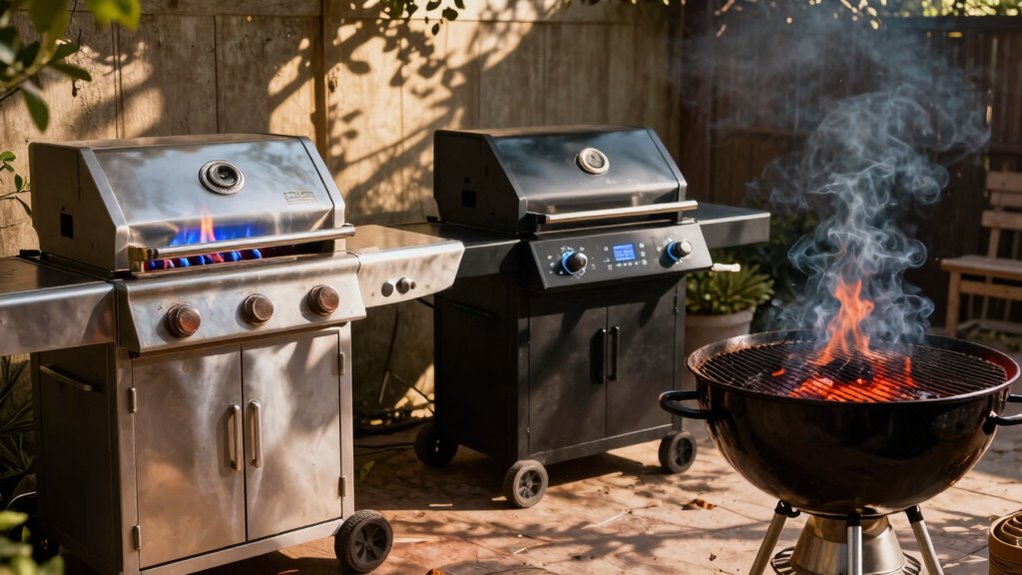
Choosing the right outdoor cooking method can make all the difference in how your meals turn out, but with so many options—gas, pellet, and charcoal—it’s easy to feel overwhelmed. Each method offers unique advantages in flavor enhancement and temperature control, so understanding these differences can help you pick the style that fits your cooking style and lifestyle best.
Choosing the right outdoor grill depends on your flavor preferences and desired level of convenience and control.
If you value convenience and precision, gas grills are a popular choice. They heat up quickly, and their temperature control is straightforward, allowing you to dial in the heat with a turn of a knob. This makes it easier to maintain consistent cooking temperatures, especially for delicate foods that require precise heat levels. While gas grills might not produce the same smoky flavor as charcoal or pellets, many models now incorporate features like smoker boxes or flavorizer bars that add subtle smoky notes, enhancing flavor without sacrificing ease of use. If you’re often in a hurry or prefer quick, controlled cooks, gas is a reliable choice that simplifies outdoor cooking while still offering decent flavor enhancement through added flavoring accessories.
Pellet grills strike a balance between flavor and convenience. They use hardwood pellets, which impart a rich, smoky aroma to your food, elevating flavor enhancement considerably. Because pellet grills operate with digital controls, you can set a specific temperature and trust the grill to maintain it throughout your cook. This precise temperature control makes them ideal for smoking meats, slow roasting, or even grilling at lower temperatures. The consistency they provide means your food cooks evenly, and the smoky flavor develops deeply over time. If you enjoy experimenting with different wood flavors and want a versatile grill that handles everything from grilling to smoking with minimal effort, a pellet grill could be your perfect style. Additionally, understanding the smoke production techniques used in pellet grilling can help you optimize flavor and temperature control for your cooking. Incorporating precise temperature control features can further enhance your overall grilling experience.
Charcoal grills excel in flavor enhancement, delivering a robust, smoky taste that’s hard to match. When you light charcoal, you create a high, even heat, but controlling that temperature can be more challenging than with gas or pellets. It requires a bit of skill and experience to maintain consistent heat levels, especially for long cooks. However, this hands-on process can be rewarding, giving you greater control over the smoky intensity and flavor development. Additionally, incorporating outdoor pizza oven safety tips can ensure a safe and enjoyable cooking experience when working with charcoal. If you relish the ritual of building a fire and enjoy the depth of flavor that only charcoal can provide, then this method might be your best pick. While it demands more attention and practice to master temperature control, the payoff is a distinctly authentic outdoor-cooked flavor that many grill enthusiasts cherish.
As an affiliate, we earn on qualifying purchases.
Frequently Asked Questions
Which Outdoor Grill Is Most Eco-Friendly?
The most eco-friendly outdoor grill for you is one made from sustainable materials, as it reduces environmental impact. Look for models with lower carbon footprints, such as those powered by propane or natural gas, which burn cleaner than charcoal. Pellet grills can also be eco-conscious if they use sustainably sourced wood pellets. Choosing a grill with energy-efficient features helps minimize your carbon footprint while enjoying outdoor cooking.
How Long Does Each Fuel Type Typically Last?
Gas typically offers the longest burn time, with fuel efficiency allowing you to cook for hours on a single tank. Pellets burn efficiently too, but their burn time depends on hopper size, usually lasting 4-12 hours. Charcoal burns quickly, providing shorter cook times—around 1-2 hours—making it less fuel-efficient for extended grilling. Your choice depends on whether you prioritize longer burn time or quick, intense heat.
Are There Safety Concerns With Pellet Grills?
Think of your pellet grill as a trusted guardian, but even guardians have rules. Yes, there are safety concerns, especially with pellet size and proper ventilation. Always follow safety regulations, keep the grill on a stable surface, and confirm the lid is securely closed. Regular maintenance and attentive operation minimize risks. When you respect these guidelines, your pellet grill becomes a safe, reliable partner in outdoor cooking adventures.
Can I Use Charcoal Indoors or in Enclosed Spaces?
You shouldn’t use charcoal indoors or in enclosed spaces. The main concerns are poor indoor ventilation and the smoke odor produced, which can lead to dangerous carbon monoxide buildup. Charcoal fires release toxic fumes that pose serious health risks, so always cook outdoors in well-ventilated areas. If you want indoor grilling, consider electric or gas grills designed for indoor use, ensuring safety and proper ventilation.
Which Cooking Style Is Best for High-Temperature Searing?
If you love searing at high temperatures, charcoal’s your best bet—ironically, it’s the fiery method that offers the most authentic flavor retention. While gas grills provide steady heat, they often fall short on that smoky punch. Charcoal delivers intense, consistent heat perfect for searing, so you get that perfect crust and rich flavor, making your steaks irresistibly juicy and flavorful every time.
Conclusion
Choosing your outdoor cooking style is like picking a dance partner—you want one that moves with your rhythm. I once tried all three for a backyard BBQ, and each brought its own flavor and flair. Just like how a good dance feels natural, your ideal grill should make you feel confident and excited. So, test them out, find your groove, and turn every cookout into a memorable performance.
Fall Picks
fall essentials
As an affiliate, we earn on qualifying purchases.