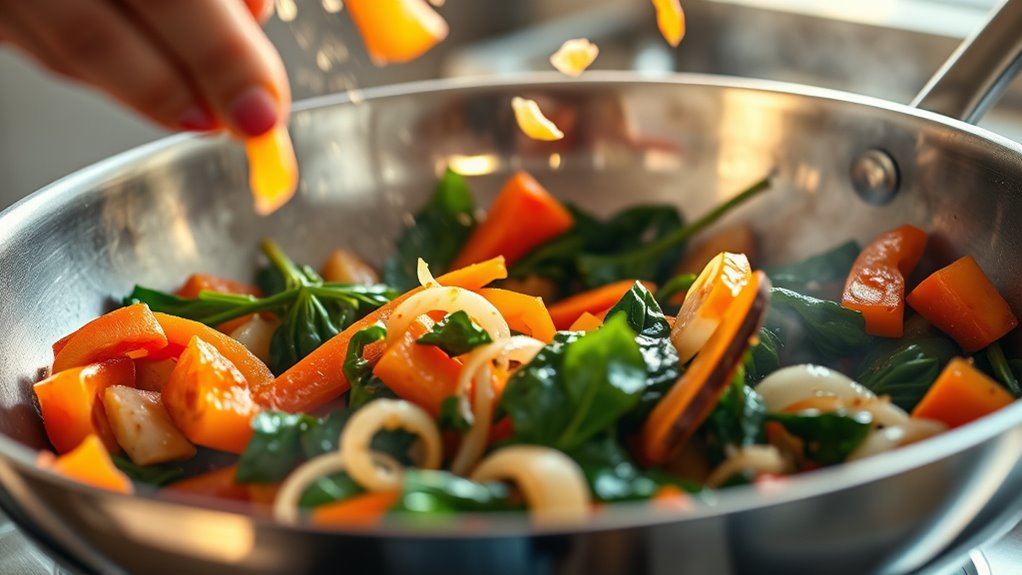

To master sautéing, start with a heavy-bottomed pan preheated to medium-high, ensuring the oil shimmers before adding ingredients. Avoid overcrowding to maintain high heat and achieve that perfect sear. Use fast, confident motions to toss or stir, minimizing moisture and developing browning. Proper temperature control helps secure flavors and texture, resulting in crispy vegetables or tender meats. Keep practicing, and you’ll discover the subtle techniques that open rich flavors—if you keep exploring, you’ll perfect every batch.
Key Takeaways
- Preheat a heavy-bottomed pan until oil shimmers for even heat distribution and optimal searing.
- Use high smoke point oils like vegetable or canola to prevent burning at high temperatures.
- Avoid overcrowding the pan to maintain heat and ensure proper browning and crispness.
- Keep ingredients dry and add them carefully to prevent steaming and promote a flavorful crust.
- Toss or stir quickly with wrist flicks to promote even browning and develop rich flavors.

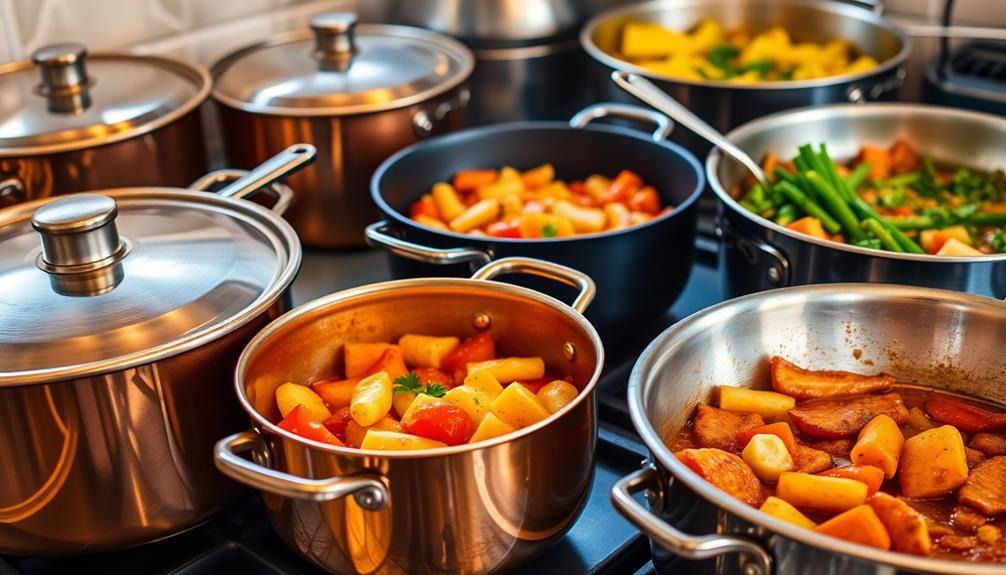
Ever wondered how chefs achieve perfectly seared meats and vibrant, flavorful vegetables? The secret lies in the art of sautéing—a quick, high-heat cooking method that enhances natural flavors and textures. To master this technique, you need the right equipment, starting with a heavy-bottomed pan. This type of pan ensures even heat distribution, preventing hot spots that can cause sticking or burning. Stainless steel pans are a popular choice because they promote browning and flavor development, especially when heated properly.
Preheating your pan is essential. Before adding oil or food, heat the pan until it’s hot enough that the oil shimmers or just begins to smoke. This signals the right temperature, usually medium-high, which is ideal for most sautéing tasks. Starting at the correct temperature is vital because once the heat drops, it’s difficult to bring it back up without risking sogginess or uneven cooking. Different pans may require slight adjustments; for stainless steel, medium-high is typically best.
When it comes to fats, use just enough to lightly coat the pan—too much can lead to greasy food and hinder browning. Oils with higher smoke points, like vegetable or canola oil, are better for high-heat sautéing, although butter can be used for added flavor if carefully managed. As you add food, avoid overcrowding the pan. Too much in the pan lowers the temperature, causing food to steam rather than sear. Place ingredients carefully, leaving space for them to cook evenly and develop a nice crust.
The key to perfect searing is minimal disturbance. Once you add the food, resist the urge to move it around immediately. Let it sit undisturbed for a short time to allow the Maillard reaction—a chemical process that creates complex flavors and rich browning—to occur. After that, use a wrist flick to toss or stir the ingredients frequently. This ensures even cooking, prevents sticking, and promotes uniform browning. A quick, high-heat exposure is what locks in juices for meats and preserves the crispness of vegetables.
Managing moisture is equally important. High heat quickly evaporates surface water, preventing steaming and sogginess. Dry ingredients or batches may be necessary for ingredients that release a lot of water. Proper heat control balances thorough cooking with maintaining texture, whether you’re aiming for a tender steak or crisp vegetables. Additionally, understanding the benefits of curiosity can help cooks experiment with different techniques and ingredients to enhance their skills. Developing a good sense of timing is essential for achieving perfect searing and avoiding overcooking. Incorporating temperature control tools can further improve consistency and results in sautéing. Recognizing the impact of heat management can lead to more precise cooking outcomes. When done correctly, sautéing develops rich flavors and appealing textures through browning, making it an invaluable technique in any cook’s repertoire.
Frequently Asked Questions
What Are Common Mistakes to Avoid When Sautéing?
When sautéing, you want to avoid common mistakes like using the wrong pan size or material, which can unevenly cook your food. Make sure to preheat your pan properly and choose the right oil with a high smoke point. Don’t overcrowd the pan, as it prevents browning, and stir frequently to avoid burning. Adjust your heat as needed, and always prepare your ingredients beforehand for the best results.
How Do I Choose the Best Oil for Sautéing?
Choosing the best oil for sautéing might seem obvious, but don’t go for the one with the strongest flavor or the lowest price. Instead, pick an oil with a high smoke point like avocado or safflower, so you don’t end up smoking out your kitchen. Consider health benefits too, like olive or canola oil. Versatility and flavor matter, but high heat stability is key for perfect sautéing.
Can Sautéing Be Used for All Types of Vegetables?
You might wonder if sautéing works for all vegetables. The answer is yes, but with some tweaks. Soft veggies like zucchini and spinach sauté quickly, while harder ones like carrots or broccoli benefit from pre-steaming. To get the best results, chop vegetables evenly, avoid overcrowding the pan, and adjust heat as needed. This way, you’ll bring out flavors and textures, making every vegetable shine.
How Do I Prevent Food From Sticking to the Pan?
To prevent food from sticking, start by properly heating your pan for about a minute, ensuring it’s hot enough. Use a high-smoke-point oil like vegetable or canola, heating it until it shimmers before adding food. Pat dry your ingredients to remove excess moisture and avoid overcrowding the pan. Handle food gently with tongs or spatulas, and don’t stir too often—let a crust form before flipping.
What Are Alternative Techniques to Achieve Similar Flavors?
If you want similar flavors without sautéing, try browning or pan-frying for crispy textures, or use grilling for smoky hints. Stir-frying with vibrant vegetables preserves nutrients and adds color. Braising tenderizes tougher cuts with rich flavors, while marinating infuses ingredients beforehand. Infused oils and dry rubs boost taste without extra effort. These techniques give your dishes depth and complexity, mimicking the rich flavors you aim for in sautéing.
Conclusion
Mastering the art of sautéing turns your kitchen into a symphony of flavors, with each sear like a brushstroke on a culinary canvas. When you pay attention to your heat, ingredients, and timing, you reveal a world of rich, irresistible tastes. Remember, every perfect sear is a small victory, a testimony to your growing skill. With practice, you’ll find yourself dancing effortlessly around your pan, creating dishes that delight the senses like a well-composed masterpiece.