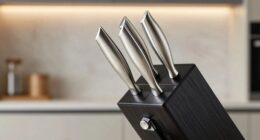
Whetstones and pull-through sharpeners both keep your knives sharp but serve different needs. Whetstones require more skill, as you manually grind and polish blades, resulting in a precise edge and longer-lasting sharpness. Pull-through sharpeners are faster and easier to use, but they might remove more metal and risk damaging thin blades if not careful. To make the best choice and improve your sharpening technique, explore the key differences in their design and use.
Key Takeaways
- Whetstones offer precise, customizable sharpening angles and remove less metal, ideal for fine, professional edge restoration.
- Pull-through sharpeners are quick, user-friendly, and suitable for everyday use but may remove more metal and offer less control.
- Whetstones require skill and practice but provide superior edge quality; pull-throughs are simpler but less precise.
- Regular honing with a steel can maintain an edge, reducing the need for frequent sharpening with either tool.
- Combining both methods ensures optimal blade sharpness, longevity, and ease of maintenance.

Have you ever wondered why a dull knife makes kitchen tasks more difficult? It’s because a dull blade requires more force to cut through food, increasing the risk of slips and accidents. To keep your knives sharp and effective, you need to understand the different sharpening methods available. One popular option involves electric sharpeners, which are designed for quick and easy maintenance, and honing steels, which help realign the blade’s edge between sharpenings. Both tools are essential in keeping your knives performing at their best, but they serve different purposes and require different techniques.
Electric sharpeners work by using abrasive belts or wheels to grind away metal and restore a sharp edge. They’re convenient because they often come with multiple stages, allowing you to sharpen, refine, and polish your blades with minimal effort. If you’re someone who values speed and ease, an electric sharpener can be a game-changer. Just remember, these devices should be used carefully; over-sharpening or improper angle settings can wear down your blades prematurely. They’re especially useful for dull or damaged knives that need a quick refresh. However, they tend to remove more metal than necessary if used excessively, so it’s best to use them sparingly and follow the manufacturer’s instructions.
Electric sharpeners quickly restore dull blades but require careful use to prevent over-sharpening.
Honing steels, on the other hand, don’t sharpen your knives in the traditional sense. Instead, they straighten and realign the microscopic teeth along the edge, maintaining its sharpness between actual sharpening sessions. You’ll find honing steels in both traditional manual forms and electric versions, but the manual steel is more common. Using a honing steel involves a simple pulling motion at a consistent angle, which pushes the metal fibers back into place. This process is quick and can be done daily, keeping your knives slicing smoothly without the need for frequent sharpening. It’s a cost-effective way to extend the life of your blades and reduce the frequency of more aggressive sharpening methods. Additionally, understanding the role of abrasive materials in sharpening can help you choose the right tool for your needs.
Many people overlook the importance of maintenance tools like honing steels and the role of electric sharpeners when it comes to keeping their knives in top shape. Regular honing can greatly extend the interval between sharpenings, saving you time and effort. When your knives do need a full sharpening, you might opt for a whetstone or a professional service, but for everyday upkeep, honing steels and electric sharpeners are your best allies. Both tools help ensure your knives stay sharp, safe, and effective—making your kitchen tasks easier, faster, and more enjoyable. So, whether you prefer the quick convenience of electric sharpeners or the gentle, precise correction of honing steels, incorporating these tools into your routine will elevate your cooking experience.
Frequently Asked Questions
Which Sharpening Method Is Faster for Everyday Use?
For everyday use, a pull-through sharpener is faster than a whetstone. It’s ideal for amateurs and those who want quick results, especially compared to manual whetstones. Electric sharpeners automate the process, making them even quicker than manual pull-throughs, perfect for busy households. Professional chefs often prefer whetstones for precision, but if speed is your priority, an electric sharpener wins hands down, whether you’re an amateur or someone who needs quick, sharp blades daily.
Can I Use a Whetstone on Serrated Knives?
You generally shouldn’t use a whetstone on serrated knives because of the serrated maintenance intricacies. Whetstones are designed for flat edges, making it difficult to properly sharpen the scallops on serrated blades. Instead, use a ceramic rod or a specialized serrated knife sharpener. These tools target the serrations directly, ensuring effective sharpening without damaging the intricate edge. This approach keeps your serrated knives performing their best.
How Often Should I Sharpen My Kitchen Knives?
You probably don’t need to sharpen your knives every day—unless you’re a professional chef or a culinary superhero. For typical home cooks, a good rule of thumb is to sharpen every 1-2 months, depending on usage. Remember, proper knife maintenance extends your blade’s life and keeps your cuts precise. Pay attention to dullness signs like slipping or uneven cuts, and sharpen accordingly to avoid damaging your knives.
Are Pull-Through Sharpeners Safe for Beginners?
Pull-through sharpeners are generally safe for beginners because they require less training and are easy to use. However, safety considerations include making sure you keep your fingers away from the blades and follow the manufacturer’s instructions carefully. You should also be aware of the training differences; pull-throughs simplify the process but may not produce as sharp or precise an edge as whetstones. Always prioritize safety to avoid accidents.
What Are the Environmental Impacts of Each Sharpening Method?
They say “every action has a ripple effect,” and when it comes to sharpening, each method impacts the environment differently. Whetstones have a smaller environmental footprint since they’re durable, reusable, and produce minimal material waste. Pull-through sharpeners often generate more waste due to disposable parts and plastic components. Choosing a whetstone helps reduce material waste and minimizes environmental impact, making it a more eco-friendly option for sharpening knives.
Conclusion
Choosing between a whetstone and a pull-through sharpener is like picking the right tool for a craft—each has its own charm. With a whetstone, you’re sculpting your blade like a master artist, achieving precision and a keen edge. A pull-through is more like a quick, reliable tune-up. Whichever you pick, remember, sharpening your knife is about nurturing your kitchen’s heartbeat, turning dullness into a razor-sharp symphony of slicing power.