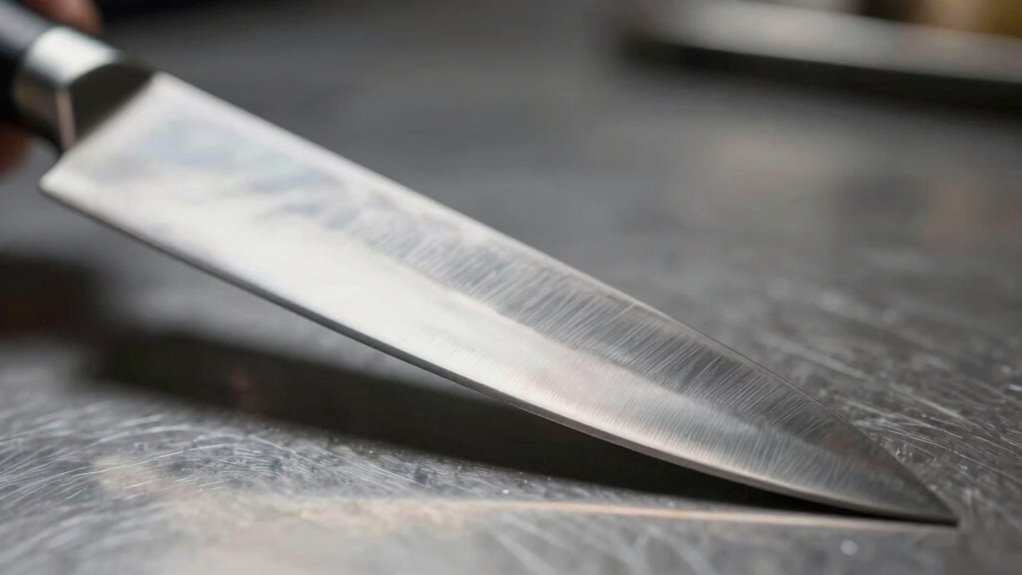
You’ll find that knife sharpness changes more than speed because the quality of the edge plays a vital role in cutting. A sharp blade glides through food easily, requiring less force, while a dull one needs more pressure, leading to uneven cuts and damage. Speed alone won’t fix dullness, but maintaining your blade’s sharpness through proper care makes a big difference. Keep going, and you’ll discover how technique and material impact your cuts even more.

Get everyday essentials delivered free — and shop member deals
- Fast, free delivery on millions of items
- Access to Prime Big Deal Days deals on October 6–7
- Prime Video, Amazon Music and more included
Key Takeaways
- Sharpness directly affects cut quality more than movement speed, enabling cleaner, smoother slices with less force.
- Dull blades require increased force, leading to uneven cuts and higher risk of slipping or damaging the knife.
- Proper technique and consistent angle preservation are crucial for maintaining edge sharpness over speed.
- Material quality and regular sharpening help blades retain their sharpness longer, reducing the need for faster cuts.
- Speed alone cannot compensate for a dull blade, as sharpness determines efficiency and safety during cutting.
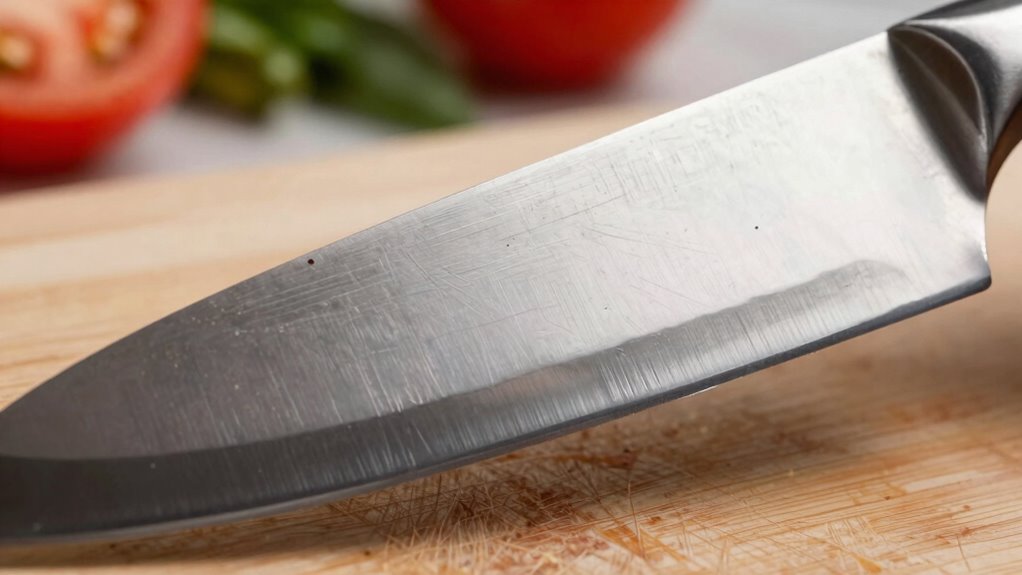
When slicing through ingredients, you might assume that a faster knife always results in cleaner cuts, but in reality, sharpness plays a more essential role than speed. The key factor isn’t how quickly you move the knife but how effectively the blade interacts with the food. A dull knife requires more force, increasing the risk of slipping or crushing delicate items, which can compromise your presentation and even cause injury. Sharpness, on the other hand, allows for smoother, cleaner cuts with less effort, regardless of how fast you try to work.
One major element influencing sharpness is the blade material. High-quality steels, such as VG-10 or AUS-8, maintain their edge longer and can be sharpened to a finer point, making them more efficient for precise cutting. Cheaper or softer metals tend to dull more quickly, forcing you to sharpen more often to keep the edge in ideal condition. The material’s hardness and ability to hold an edge directly impact how well the knife performs over time. A blade made from a superior material not only stays sharp longer but also preserves its cutting ability through repeated use, meaning you don’t have to rely solely on speed to get a clean cut — a sharp, well-made blade does the heavy lifting.
High-quality steels like VG-10 or AUS-8 keep edges longer and cut more precisely.
Your cutting technique also plays a vital role. Even with a first-rate blade, improper technique can dull the edge faster or cause uneven cuts. For example, applying excessive force, using a chopping motion instead of a slicing or rocking motion, or pressing down too hard can chip or dull the blade prematurely. Instead, you should use a controlled, fluid motion, letting the sharpness of the blade do most of the work. Proper technique involves maintaining a consistent angle — typically around 15 to 20 degrees — and using the full length of the blade to reduce stress on any one part. By honing your cutting technique, you maximize the efficiency of a sharp knife and minimize damage to the blade, keeping your cuts cleaner and more precise. Additionally, understanding the importance of blade maintenance can significantly extend the lifespan of your knife’s sharpness. Regularly sharpening and honing your blade ensures it remains in optimal condition for safe and effective cutting. Using proper storage methods can also prevent accidental damage and preserve the edge longer. Incorporating proper cleaning techniques, such as hand washing and avoiding dishwasher exposure, can also help maintain the blade’s integrity over time.
Ultimately, the relationship between knife sharpness and speed isn’t linear. You can move slowly but still cause damage if your knife is dull or used improperly. Conversely, a sharp knife with good technique allows you to cut quickly without sacrificing quality. It’s about understanding that a well-made blade and proper handling are what truly determine the quality of your cuts, more than just how fast you’re willing to move. Sharpening your blade regularly and refining your technique are investments that will pay off in better, safer, and more efficient cooking.
As an affiliate, we earn on qualifying purchases.
Frequently Asked Questions
How Is Knife Sharpness Measured Accurately?
You can measure knife sharpness accurately by testing edge consistency through standardized cutting tests, such as slicing through a set material like paper or tomato. Use a sharpness meter or a durometer designed for blades to assess sharpness degradation over time. Regularly checking these metrics helps you understand how the blade’s edge dulls, ensuring precise maintenance and peak performance.
Does Blade Material Affect Sharpness Retention?
Yes, blade material substantially affects sharpness retention. You’ll find that blades with higher material hardness tend to hold their edge longer because they resist dulling better. Additionally, blade durability plays a role; tougher materials withstand daily use without chipping or bending, maintaining sharpness over time. So, choosing a knife with durable, hard material will guarantee it stays sharp longer, making your cutting tasks easier and more efficient.
Can Sharpening Techniques Improve Longevity?
Yes, sharpening techniques can improve edge durability by maintaining a finer, more precise edge. Proper technique effectiveness reduces micro-chipping and dulling, extending the knife’s sharpness lifespan. Regular, careful sharpening helps prevent damage and keeps the edge aligned, allowing the blade to cut efficiently for longer periods. When you focus on using precise angles and quality stones, you actively enhance the longevity of your knife’s sharpness, making it a valuable skill.
How Does Cutting Technique Impact Blade Wear?
Your cutting technique greatly influences blade wear. When you maintain a steady blade angle and avoid excessive cutting pressure, you help preserve the edge’s delicate balance. Using proper technique minimizes unnecessary stress, reducing dulling and chipping. Gentle, controlled cuts protect the blade’s integrity, allowing it to stay sharper longer. Mindful handling isn’t just about safety; it’s about nurturing your blade’s lifespan, ensuring each cut remains precise and efficient.
What Role Does Cutting Surface Play?
Your cutting surface plays a vital role because it influences material interaction with the blade. A hard or abrasive surface causes more wear, dulling your knife faster, while softer surfaces reduce stress on the blade. The type of material you cut into also affects sharpness retention. For best results, choose a cutting surface that minimizes friction and abrasion, helping your knife stay sharp longer and perform better over time.
Conclusion
Imagine chopping vegetables with a dull knife that slips easily, causing frustration and uneven cuts. Now, picture the same task with a sharp knife that glides effortlessly. Sharpness impacts your cutting experience more than speed because a dull blade requires more force and can lead to accidents. When you understand this, you’ll realize that maintaining sharpness isn’t just about precision—it’s about safety and efficiency. Keep your knives sharp, and your kitchen work becomes smoother and safer.
Fall Picks
fall essentials
As an affiliate, we earn on qualifying purchases.