
Mastering essential knife cuts starts with using the right tool—a sharp, sturdy chef’s knife—and practicing proper techniques. Begin with simple cuts like dicing vegetables into consistent cubes, ensuring stability and control. Keep your fingers tucked away for safety and focus on smooth, deliberate motions. Practice regularly with easy ingredients before moving on to more challenging ones. If you want to improve your skills further, there’s much more to discover about perfecting your cuts and boosting your confidence.
Key Takeaways
- Learn and practice essential cuts like dicing, julienning, and slicing to build foundational knife skills.
- Use proper techniques, such as a claw grip and controlled movements, to ensure safety and precision.
- Start practicing with soft vegetables before progressing to tougher ingredients like carrots and onions.
- Keep knives sharp and well-maintained to make cuts easier, safer, and more consistent.
- Use stable cutting surfaces and focus on uniform, deliberate motions to develop confidence and skill.

Have you ever wondered how professional chefs achieve perfectly sliced vegetables and precise cuts? The secret often lies in mastering basic knife skills, especially when it comes to dicing techniques and practicing proper knife safety tips. These skills aren’t just about aesthetics; they’re essential for efficiency, safety, and even the flavor of your dishes. When you learn the right way to hold and maneuver your knife, you gain confidence in your ability to prep ingredients quickly and uniformly.
Mastering basic knife skills enhances safety, efficiency, and presentation in your cooking.
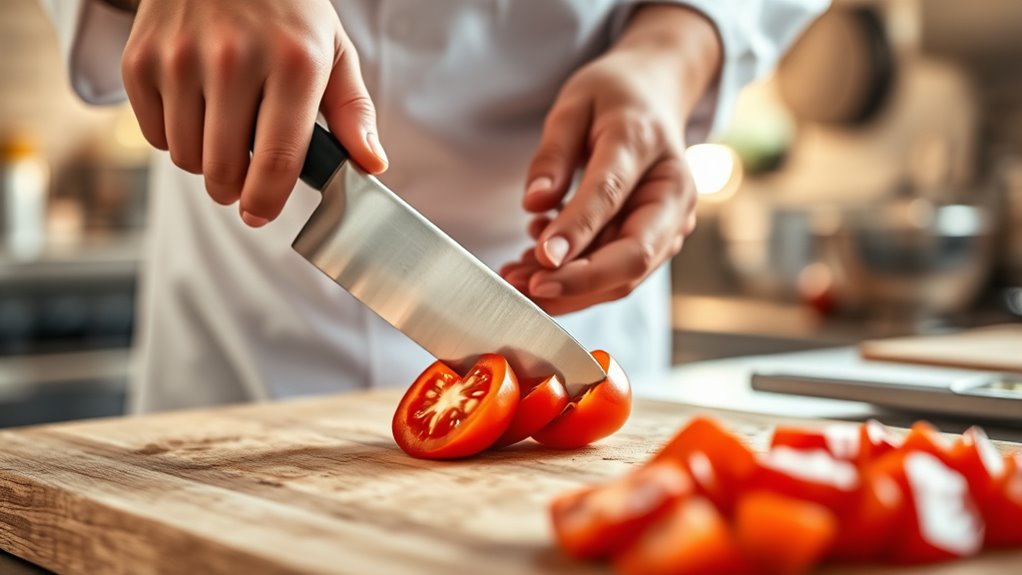
Dicing techniques start with choosing the right knife—usually a chef’s knife with a sharp, sturdy blade. To dice effectively, you need to keep your knife sharp, which makes cutting safer and easier. The first step is to cut your vegetable into manageable, flat surfaces; this provides stability and prevents slipping. Once stabilized, you can start by making even slices lengthwise, then turn the vegetable and cut across those slices to create uniform cubes. The key is to maintain a consistent thickness with each cut, so your dice cook evenly and look professional. Practice makes perfect, so don’t rush—focus on controlled, deliberate movements. As you gain confidence, you’ll notice your speed and precision improve.
In addition to mastering dicing techniques, understanding and applying knife safety tips is vital. Always keep your fingers tucked in—using a claw grip—to prevent accidental cuts and maintain control. Never leave your knife loose on the counter; instead, place it flat or in a designated knife holder when not in use. When cutting, use a stable cutting board that won’t slide around; placing a damp towel underneath helps secure it. Keep your knife sharp, because dull blades require more force and are more likely to slip, increasing the risk of injury. Also, pay attention to your cutting environment—avoid distractions, and never try to catch a falling knife.
Practicing these skills regularly will build your confidence and safety in the kitchen. Start with softer vegetables like cucumbers or bell peppers to hone your technique, then move on to more challenging items like onions or carrots. Over time, your cuts will become more consistent, your speed will increase, and you’ll enjoy preparing ingredients more. Remember, good knife skills aren’t just about cutting; they’re about working smarter and safer. By focusing on proper dicing techniques and following reliable knife safety tips, you’ll turn simple ingredients into beautifully prepared components for any dish. Keep practicing, stay safe, and soon you’ll be slicing and dicing like a professional chef.
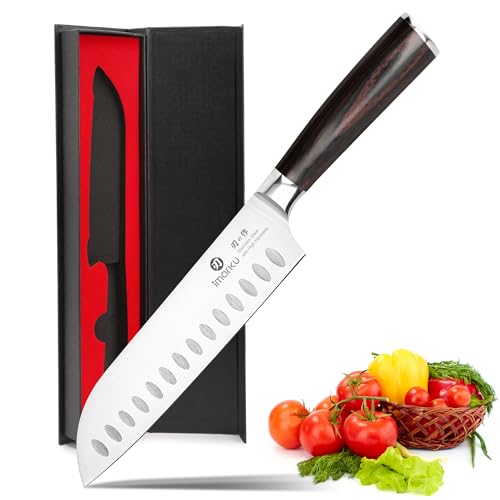
imarku Chef Knife 7 Inch Kitchen Knife Ultra Sharp Santoku Knife – High Carbon Japanese Chefs Knife, Kitchen Gadgets 2025, Apartment Essentials, Birthday Gifts for Him Her, Best Gifts for Women Men
Professional Santoku Knife: This imarku super sharp santoku knife is made of high carbon stainless steel that resists…
As an affiliate, we earn on qualifying purchases.
As an affiliate, we earn on qualifying purchases.
Frequently Asked Questions
What Is the Proper Way to Hold a Chef’s Knife?
To hold a chef’s knife properly, grip the handle firmly with your dominant hand, ensuring your fingers wrap around it comfortably. Use a pinch grip by pinching the blade just above the handle with your thumb and index finger, while the remaining fingers curl around the handle. Keep your other hand in a claw shape, guiding the food with your knuckles, and maintain proper hand positioning for safety and control.
How Do I Choose the Right Knife for Different Cuts?
To choose the right knife for different cuts, consider blade types and handle materials. For intricate work like julienne or chiffonade, go for a paring or utility knife with a sharp, narrow blade. For slicing meats or vegetables, a chef’s knife with a broad, curved blade works well. Handle materials like wood, plastic, or composite should feel comfortable and secure in your hand. Test different knives to find the best fit for your cutting style.
What Safety Precautions Should I Take When Practicing Knife Skills?
Stay safe while sharpening your skills by following simple safety steps. Always wear personal protective equipment like cut-resistant gloves and keep your knives sharp to prevent slips. Store knives properly in knife storage to avoid accidents when not in use. Focus on your fingers, curling fingertips away from the blade, and cut on a stable surface. Practice patience, and prioritize safety first to prevent pitfalls and promote proper technique.
How Can I Prevent My Knives From Dulling Quickly?
To prevent your knives from dulling quickly, you should practice proper knife maintenance by regularly honing your blades with a honing steel. Always use the right sharpening tools, like a whetstone or sharpening steel, to keep the edge sharp. Avoid cutting on hard surfaces like glass or stone, and wash and dry your knives carefully after use. Proper maintenance extends the life of your knives and keeps them performing well.
Are There Specific Techniques for Cutting Difficult or Slippery Ingredients?
When cutting slippery ingredients like tomatoes or mushrooms, you should use a damp cloth under your cutting board for stability, and hold the ingredient firmly with your fingers curled back to prevent slips. For tough produce, like squash, applying steady, controlled pressure and using a sharp knife helps. For example, a chef successfully sliced slippery eel by securing it with a damp towel, demonstrating effective techniques for tough produce and slippery ingredients.
imarku Chef Knife 7 Inch Kitchen Knife Ultra Sharp Santoku Knife – High Carbon Japanese Chefs Knife, Kitchen Gadgets 2025, Apartment Essentials, Birthday Gifts for Him Her, Best Gifts for Women Men
Professional Santoku Knife: This imarku super sharp santoku knife is made of high carbon stainless steel that resists…
As an affiliate, we earn on qualifying purchases.
As an affiliate, we earn on qualifying purchases.
Conclusion
Mastering knife skills takes practice, patience, and a little bit of swagger. With these essential cuts, you’ll chop, slice, and dice like a pro—no need to call in the cavalry. Remember, even in the age of smartphones, a sharp knife and steady hand are your best tools in the kitchen. So go ahead, channel your inner medieval chef, and turn your culinary chaos into gourmet greatness. The secret’s in your hands, so get chopping!

Cutting Board for Kitchen Dishwasher Safe, Toptier, Wood, Fiber , Eco-Friendly, Non-Slip, Juice Grooves, Non-Porous, BPA Free, Small, Silicone, 11.5 x 9.25-inch, Natural Slate
🌟 A Cut Above – 11.5 x 9.5 inch wood fiber composite cutting board, wooden natural color, removable…
As an affiliate, we earn on qualifying purchases.
As an affiliate, we earn on qualifying purchases.

Intelitopia Complete Knife Sharpening Stone Set – Dual Grit Whetstone 400/1000 3000/8000 Knife Sharpener with Leather Strop, Flattening Stone, Bamboo Base, 3 Non-slip Rubber Bases & Angle Guide
【Complete Knife Sharpening Stone Kit】You don't need to be a Pro to sharpen your blades, all you need…
As an affiliate, we earn on qualifying purchases.
As an affiliate, we earn on qualifying purchases.