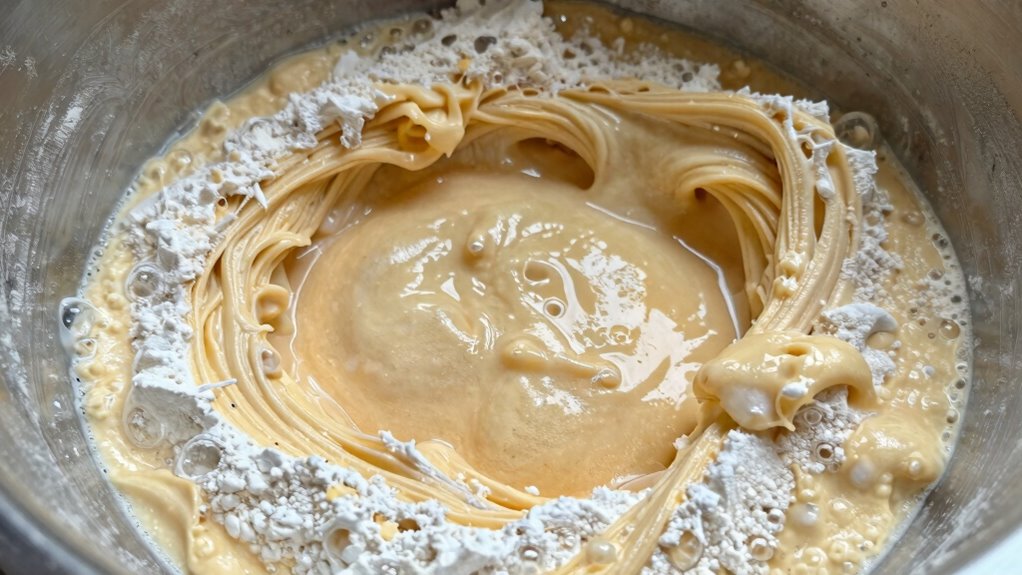

When you overmix batter, you encourage too much gluten development, which makes baked goods dense, chewy, or rubbery. Vigorous mixing destroys delicate air pockets that help your baked items rise, resulting in less fluffiness and uneven textures. It also creates an overly elastic batter that can develop tunnels, toughening the final product. If you keep these tips in mind, you’ll understand how to prevent overmixing and achieve the best results in your baking.

Get everyday essentials delivered free with Prime
- Fast, free delivery on millions of items
- Prime Video, Amazon Music and more included
- Member-only deals all year
Key Takeaways
- Overmixing develops excessive gluten, leading to dense, tough, and rubbery baked textures.
- It causes the batter to lose delicate air pockets, resulting in poor leavening and a heavy crumb.
- Vigorous mixing can burst or deflate air bubbles crucial for rising and lightness.
- Overmixing creates an overly elastic batter that can form tunnels and uneven structures.
- Properly mixing just until ingredients blend preserves air, texture, and overall baked product quality.
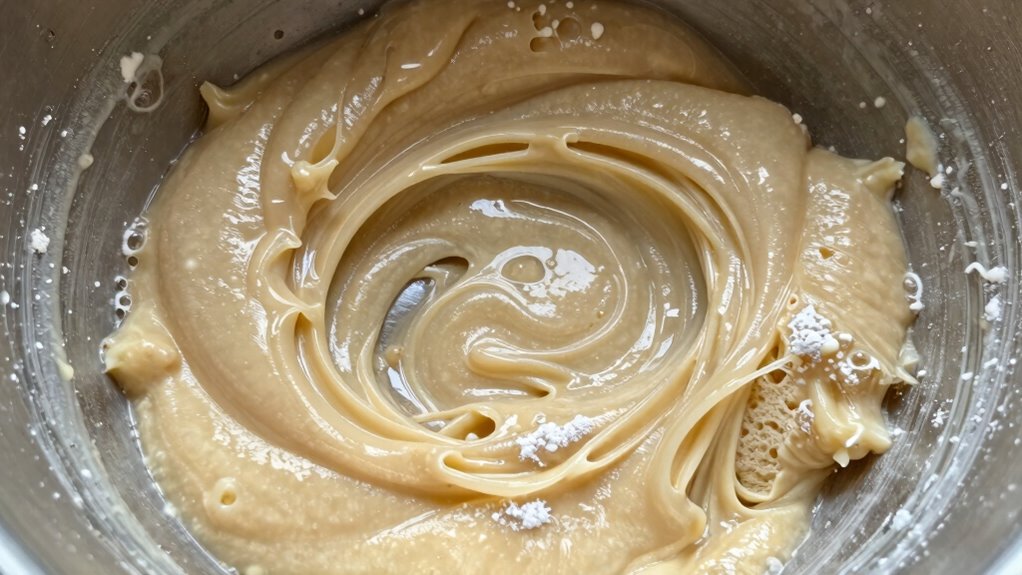
When you overmix batter or dough, you risk damaging the delicate structure that gives baked goods their ideal texture. The process of mixing is meant to combine ingredients evenly, but pushing it too far can have negative effects. One key aspect affected by overmixing is gluten development. Gluten, a protein in wheat flour, gives dough its elasticity and strength, creating a sturdy network that traps gases during baking. When you mix excessively, you encourage too much gluten formation, resulting in a dense, chewy final product rather than a tender, light one. This is especially problematic in cakes and muffins, where a delicate crumb is desired.
At the same time, overmixing interferes with air incorporation, which is crucial for leavening and the overall rise of your baked goods. When you gently fold or stir ingredients, you introduce tiny air bubbles that expand during baking, making your bread, pancakes, or muffins fluffy. But if you continue to mix vigorously, you can deflate or burst these bubbles, preventing your batter from rising properly. The loss of air pockets leads to a compact, heavy texture rather than the airy, soft result you’re aiming for. Additionally, overmixing can cause the batter to develop a rubbery or tough consistency because of excessive gluten formation. Proper mixing techniques help maintain the ideal batter structure and prevent these issues from occurring.
In many recipes, the goal is to combine ingredients just enough to create a uniform mixture without activating too much gluten or destroying air pockets. For example, when making cake batter, you might start with a few gentle strokes and stop as soon as the ingredients are just blended. Overmixing at this stage causes the batter to become overly elastic and dense, making your baked goods tough and chewy instead of light and tender. Similarly, in quick bread or muffin recipes, overmixing can produce tunnels or a rubbery texture because of excessive gluten development. Being aware of batter consistency can help you recognize when to stop mixing and preserve the desired texture.
Understanding the balance is key. You want just enough mixing to unify your ingredients but not so much that you alter the batter’s structure. When you’re mixing, pay attention to the texture—stop as soon as the ingredients are combined smoothly. This way, you preserve the air bubbles and prevent gluten from becoming too strong, resulting in baked goods with the perfect lightness and tenderness. Overmixing might seem harmless or quick, but it can significantly compromise your baked goods’ texture and overall quality. Being mindful during mixing helps ensure your recipes turn out as delicious and fluffy as intended. Additionally, understanding how gluten development impacts texture can help you avoid common baking pitfalls and achieve consistently good results. Recognizing the importance of proper mixing techniques can make all the difference in your baking success.
Top picks for "overmix wreck texture"
As an affiliate, we earn on qualifying purchases.
Frequently Asked Questions
Can Overmixing Affect the Flavor of Baked Goods?
Overmixing can affect the flavor of baked goods through flavor alteration, as it may cause ingredients to break down or develop a different taste profile. It also leads to texture degradation, which can change how flavors are perceived. When you overmix, you risk creating a dense or tough crumb, diminishing the overall flavor experience. To preserve both flavor and texture, mix just enough to combine ingredients without overdoing it.
How Does Overmixing Differ Between Gluten-Based and Gluten-Free Recipes?
In gluten-based recipes, overmixing accelerates gluten development, making the batter tough and chewy. For gluten-free recipes, overmixing can cause batter to become dense and gummy because it disrupts delicate starches and bindings. You should mix just enough to combine ingredients and achieve the desired batter consistency. This prevents over-developing gluten or damaging fragile structures, ensuring a tender, light texture in your baked goods.
Is There a Way to Fix Overmixed Batter?
Once your batter is overmixed, you can’t fully undo it, but you can try to improve the batter’s consistency. Gently fold in extra dry ingredients, like flour, to thicken it up, or add a little liquid to loosen it if it’s too stiff. Using careful mixing techniques next time helps prevent overmixing, and paying attention to batter consistency guarantees your baked goods turn out light and tender rather than dense and tough.
Does Overmixing Impact the Shelf Life of Baked Products?
Overmixing can subtly affect the shelf life of baked goods, like a whisper of trouble lurking. It may reduce shelf stability by creating a denser crumb that spoils faster or encourages mold. To maximize preservation, use proper preservation techniques like airtight storage and refrigeration. While overmixing doesn’t drastically shorten shelf life, it can compromise freshness and texture over time, so handle batter with care to keep your baked goods at their best longer.
Are Certain Ingredients More Prone to Damage From Overmixing?
Yes, some ingredients are more prone to damage from overmixing. For example, delicate ingredients like eggs and cream are sensitive to excessive mixing, which can break down their structure and cause them to lose their stability. Your mixing techniques matter; gentle folding preserves their integrity, while vigorous stirring can lead to overmixing. Being mindful of ingredient sensitivity helps you prevent damaging textures and ensures better baking results.
Conclusion
To keep your baked goods light and tender, remember that overmixing is like stirring a pot of boiling water—you risk causing chaos. Stick to gentle mixing until just combined, and you’ll avoid wrecking your batter’s delicate structure. Think of it as walking a tightrope; too much force throws everything off balance. When you master the right technique, your baked treats will turn out beautifully, proving that sometimes, less really is more.
Fall Picks
fall essentials
As an affiliate, we earn on qualifying purchases.