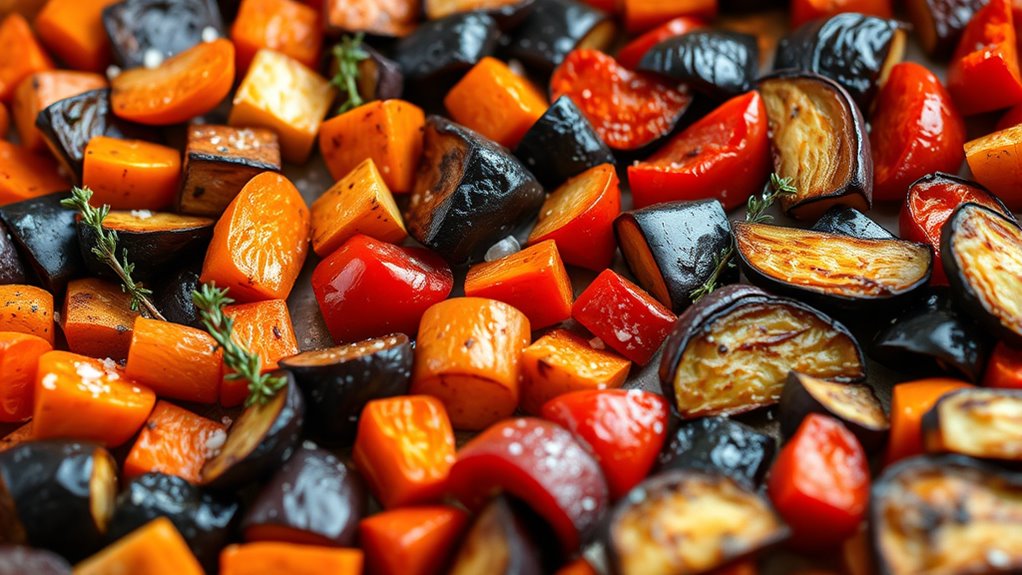

To maximize caramelization, preheat your oven to 400°F–425°F for even browning. Spread your vegetables in a single layer without overcrowding to avoid steaming. Toss them with olive oil, salt, and optional herbs or honey to enhance flavor and promote browning. Flip or shake halfway through to expose all sides. Adjust timing based on vegetable type, and exploring these techniques further will help you perfect your roasted vegetables.

Get everyday essentials delivered free with Prime
- Fast, free delivery on millions of items
- Prime Video, Amazon Music and more included
- Member-only deals all year
Key Takeaways
- Roast at 400°F to 425°F (200°C to 220°C) for optimal browning without burning.
- Spread vegetables in a single layer to ensure even heat exposure and promote caramelization.
- Toss or flip vegetables halfway through roasting to develop dark, flavorful edges on all sides.
- Lightly season with salt and add sweeteners like honey or balsamic vinegar to enhance caramelization.
- Use a preheated oven and avoid overcrowding to maintain consistent temperature and moisture control.

Have you ever wondered how to bring out the natural sweetness and depth of flavor in vegetables? The secret lies in mastering your seasoning techniques and adjusting your roasting temperature. When you roast vegetables properly, you *release* their full potential, transforming simple produce into caramelized, flavorful bites. The first step is understanding how seasoning techniques can enhance the natural sugars present in vegetables. A light sprinkle of salt not only seasons but also helps draw out moisture, encouraging better caramelization. You might also consider adding herbs, spices, or a touch of honey or balsamic vinegar to boost sweetness and complexity. Tossing vegetables with olive oil ensures even coating, which is essential for achieving that beautiful, crispy exterior.
Next, you need to pay close attention to roasting temperature. Too low, and your vegetables won’t caramelize properly; too high, and they risk burning before becoming tender. The ideal roasting temperature generally falls between 400°F and 425°F (200°C to 220°C). This range allows the natural sugars to brown and develop that irresistible caramelized crust while keeping the interior tender. Preheating your oven is *vital*—an evenly heated oven guarantees consistent results across all vegetables. Spread your vegetables in a single, even layer on a baking sheet. Overcrowding traps steam, preventing proper browning, so use multiple sheets if necessary.
Timing also plays a key role. Most vegetables will take about 20 to 30 minutes to reach *peak* caramelization at the right temperature. Halfway through, give them a toss or flip to ensure even browning. This physical agitation helps expose all sides to the heat, creating those enticing dark edges. You can also experiment with different seasoning techniques during this process—adding garlic, lemon zest, or fresh herbs late in roasting can add layers of aroma and flavor that enhance the caramelization process. Additionally, understanding the science behind sugar browning can help you fine-tune your technique for even better results.
Ultimately, achieving maximum caramelization in roasted vegetables hinges on your understanding of how seasoning techniques interact with roasting temperature. Properly seasoned vegetables roasted at the right temperature will develop that rich, sweet flavor and crispy texture that makes them irresistible. Remember, small adjustments in seasoning and temperature can make a significant difference, so don’t be afraid to experiment and find what works best for your taste. With practice, you’ll master the art of roasting vegetables that are deeply caramelized and bursting with flavor every time.
oven roasting vegetables baking sheet
As an affiliate, we earn on qualifying purchases.
As an affiliate, we earn on qualifying purchases.
Frequently Asked Questions
What Is the Ideal Oven Temperature for Maximum Caramelization?
You should set your oven temperature to around 400°F (200°C) for maximum caramelization during roasting. This temperature strikes the right balance, allowing the vegetables to undergo the caramelization process effectively without burning. Keep an eye on them, and toss halfway through to ensure even browning. Higher temperatures can speed up caramelization, but 400°F typically provides you with the best flavor and texture for perfectly roasted, sweet, and caramelized vegetables.
How Does Vegetable Size Affect Caramelization During Roasting?
You’ll notice that vegetable size considerably impacts caramelization during roasting. When you cut vegetables uniformly and maintain consistent cut thickness, they roast evenly, promoting better caramelization. Larger pieces may take longer to brown, while smaller ones can burn easily. To maximize caramelization, aim for uniformity in size and thickness, ensuring all pieces roast at the same rate. This way, you get evenly caramelized, flavorful vegetables every time.
Can Marinating Vegetables Enhance Caramelization?
Marinating vegetables can indeed boost caramelization, especially when you use a marinade with the right acidity, like lemon juice or vinegar. The marinade gently tenderizes and infuses the vegetables with flavor, enhancing their natural sweetness as they roast. Just be mindful not to overpower the process with too much moisture, and pat the veggies dry before roasting to achieve that perfect, caramelized finish.
What Types of Oils Are Best for Caramelized Roasted Vegetables?
You should choose oils with a high smoke point, like avocado or refined olive oil, for roasting vegetables to maximize caramelization. These oils can withstand the heat without burning, ensuring even browning. Olive oil benefits include adding flavor and healthy fats, but its smoke point varies—extra virgin has a lower one, while refined olive oil is better for high heat. Using the right oil helps achieve perfectly caramelized, flavorful vegetables.
How Long Should Vegetables Be Roasted to Achieve Optimal Caramelization?
You should roast vegetables for about 25 to 35 minutes to achieve ideal caramelization. Keep an eye on their texture, as timing adjustments might be necessary based on your oven or vegetable size. Turn them halfway to promote even browning, and remove when they’re tender and golden brown. Remember, patience guarantees maximum flavor development, so don’t rush the process—proper timing brings out the best caramelized taste.
Conclusion
By mastering the art of roasting vegetables, you open their sweetest potential, transforming humble produce into caramelized treasures. Remember, patience is your secret ingredient—allowing heat to work its magic turns simple ingredients into a symphony of flavors. So, embrace the process and let your oven be the conductor. In the end, the golden, tender results will speak volumes, proving that with a little care, even the simplest vegetables can become extraordinary masterpieces.
Halloween Picks
halloween
As an affiliate, we earn on qualifying purchases.