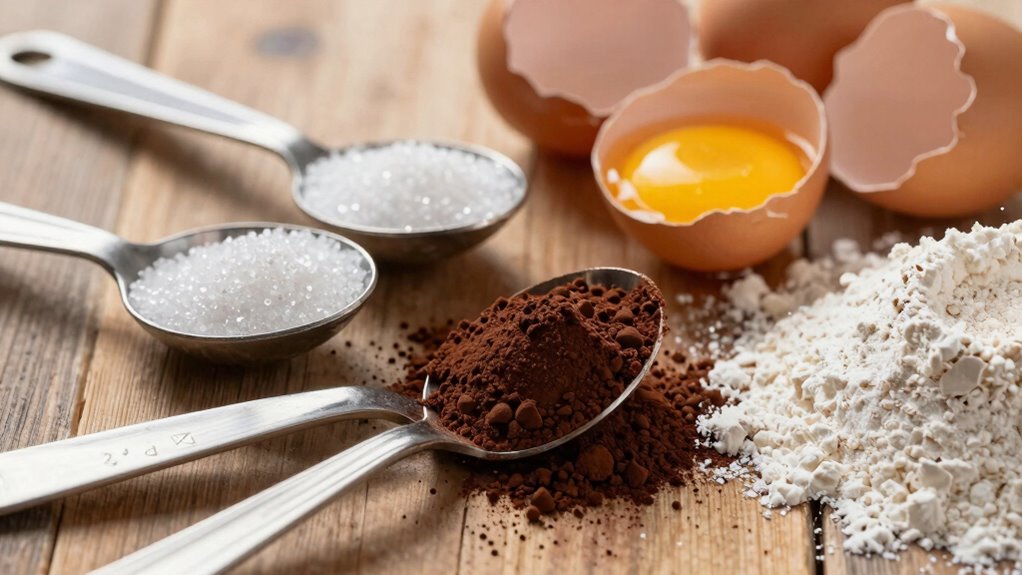
Small baking variables like ingredient substitutions, oven calibration, and ingredient temperature can create big differences in your baked goods. Changing flour, butter, or sugar types affects texture, flavor, and browning. Ensuring your oven is accurately calibrated and ingredients are at the right temperature helps achieve even baking. Precise measurements and proper mixing techniques further improve your results. Pay attention to these tiny details, and you’ll discover how they can transform your baking success with just a few adjustments.

Get everyday essentials delivered free with Prime
- Fast, free delivery on millions of items
- Prime Video, Amazon Music and more included
- Member-only deals all year
Key Takeaways
- Slight ingredient substitutions can significantly alter texture, flavor, and moisture in baked goods.
- Accurate oven calibration ensures even baking and prevents under or overcooking.
- Proper ingredient temperature and mixing techniques influence rise, crumb, and overall structure.
- Precise measurements and correct baking rack placement promote uniform heat distribution.
- Small adjustments in variables can lead to noticeable improvements in final baked product quality.

Have you ever wondered why your baked goods turn out differently even when following the same recipe? It’s often the small variables that make the biggest difference. One key factor is ingredient substitutions. Swapping out ingredients—like using a different brand of flour or a substitute for butter—can alter the texture, flavor, and structure of your baked goods. For example, replacing all-purpose flour with a gluten-free alternative or switching from whole milk to almond milk introduces subtle changes in moisture and density. Even the type of sugar you use can impact sweetness and browning. These variations might seem minor, but they can considerably influence the final product. Being mindful of ingredient substitutions means understanding how each component interacts with others and adjusting your expectations or recipe accordingly.
Another often overlooked variable is oven calibration. Many bakers don’t realize that their oven’s temperature might not be accurate, which affects baking times and results. An oven that runs hot can cause your baked goods to brown too quickly, resulting in a burnt exterior and undercooked interior. Conversely, an oven that’s too cool can leave your treats pale, dense, or underdone. To avoid this, it’s smart to use an oven thermometer regularly to verify the actual temperature. Regular calibration ensures consistency and helps you fine-tune your baking process. When your oven is properly calibrated, you’ll notice that your baked goods come out evenly cooked and with the desired texture. This small adjustment can be the difference between a good batch and a perfect one. Additionally, understanding oven calibration can help bakers achieve consistent results every time. It’s also helpful to keep in mind the importance of ingredient temperature, as it can significantly influence how ingredients react during baking.
In addition to ingredient substitutions and oven calibration, other tiny variables like ingredient temperature, mixing techniques, and even the position of your rack play a role. For instance, using ingredients at room temperature can help them combine more smoothly, resulting in a better rise and texture. Stirring or mixing for the right amount of time ensures proper gluten development or even distribution of ingredients. Properly measuring ingredients is also crucial to maintain the balance of your recipe and prevent undesirable outcomes. Measuring accurately can prevent excess moisture or dry spots, ensuring a consistent bake. Positioning your baking rack in the center of the oven promotes even heat exposure, preventing hot spots that can cause uneven baking. Paying attention to these small details might seem tedious, but they truly add up. When you control these variables, you gain more predictability in your baking, and your results will improve noticeably. It’s all about paying close attention to each tiny factor, because in baking, small differences can create big, delicious outcomes. Additionally, understanding small baking variables can help bakers fine-tune their techniques for optimal results.
As an affiliate, we earn on qualifying purchases.
Frequently Asked Questions
How Does Altitude Affect Small Baking Variables?
Altitude affects small baking variables through air pressure effects, which can cause your baked goods to rise too quickly or unevenly. You should make altitude adjustments by increasing oven temperature slightly, reducing leavening agents, and adjusting liquids. These changes help counteract the effects of lower air pressure, ensuring your baked items turn out perfect. Embracing altitude adjustments allows you to maintain consistent results regardless of your baking location.
Can Ingredient Brand Choices Impact Baking Outcomes?
Yes, ingredient brand choices can impact your baking outcomes. Higher-quality ingredients often have better flavor and texture, leading to more consistent results. Brand consistency matters because it guarantees you get the same quality every time, reducing surprises in your baked goods. By selecting reputable brands, you help guarantee your recipes turn out reliably, making your baking experience smoother and your treats tastier.
How Does Oven Type Influence Small Baking Variables?
Your oven type influences small baking variables through oven heat distribution, which affects how evenly your baked goods cook. With a conventional oven, hot spots can cause uneven browning, so using baking racks helps promote uniform heat exposure. In a convection oven, the fan circulates heat more evenly, reducing the need for rack adjustments. Understanding your oven’s heat pattern allows you to adapt baking rack placement for the best results.
What Role Does Room Temperature Play in Baking?
Room temperature plays an essential role in baking because it helps guarantee ingredient consistency. When ingredients like butter and eggs are at room temperature, they blend more evenly, creating a smoother batter. This uniformity results in better rise and texture in your baked goods. Skipping this step can lead to dense, uneven results. So, always let ingredients sit out until they reach room temperature for the best baking outcomes.
Are There Specific Tools Recommended for Precise Measurements?
Yes, you should use precise tools like measuring spoons and a digital scale for accurate measurements. Measuring spoons are great for small quantities of ingredients like baking powder or spices, while a digital scale guarantees you get exact weights for flour, sugar, or butter. Using these tools helps you maintain consistency, avoid mistakes, and achieve perfect results every time. Invest in quality tools for the best baking experience.
Conclusion
Think of baking as tending a delicate garden. Each tiny variable—like a pinch of salt or a splash of vanilla—is a seed that influences the entire bloom. When you pay close attention to these small details, your baked goods flourish into perfect creations. Neglect one, and the beauty can wither. Remember, in baking, as in gardening, it’s the tiniest adjustments that cultivate the most remarkable results.
Fall Picks
fall essentials
As an affiliate, we earn on qualifying purchases.