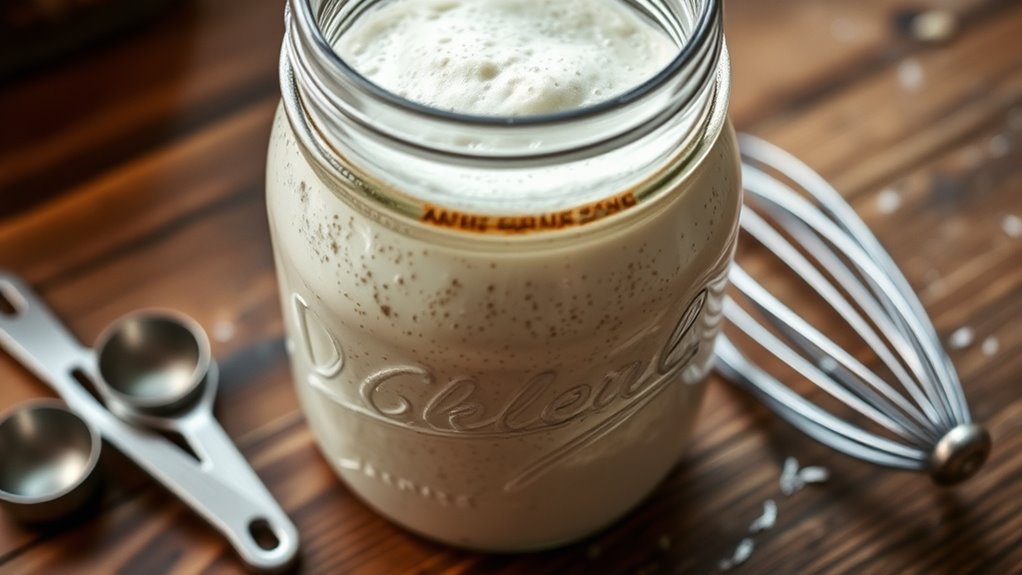

To create a sourdough starter, mix equal parts flour and water, then let it ferment at room temperature for 24-48 hours until you see bubbles and a tangy smell. Feed it regularly with fresh flour and water to keep it active, and store it at room temperature for frequent baking or in the fridge for less activity. Keep an eye on signs of health like bubbling and rising, and you’ll maintain a lively starter. If you continue, you’ll discover more tips to guarantee your starter stays robust.

Get everyday essentials delivered free with Prime
- Fast, free delivery on millions of items
- Prime Video, Amazon Music and more included
- Member-only deals all year
Key Takeaways
- Mix flour and water to create a fermentation starter, which begins bubbling and develops a tangy aroma within 24-48 hours.
- Maintain the starter’s health by feeding it regularly with fresh flour and water, discarding part beforehand.
- Store the starter at room temperature for frequent baking or refrigerate to slow fermentation for less frequent use.
- Reactivate refrigerated starter by discarding some and feeding it; expect activity within 1-2 days.
- Signs of a healthy starter include bubbles, a pleasant sour smell, and a noticeable rise in volume.

Have you ever wondered how to create the perfect base for delicious sourdough bread? It all starts with understanding your sourdough starter, which is essentially a living culture of wild yeast and bacteria. To get it thriving, you need to pay close attention to fermentation timing and starter storage. The process begins by mixing flour and water, then letting it ferment. During this stage, fermentation timing is crucial; too short, and your starter won’t develop enough flavor or rise properly, too long, and it may become overripe or sour. Usually, the initial fermentation takes about 24 to 48 hours at room temperature, but this can vary based on your environment and the flour you use. As your starter ferments, it will bubble and develop a tangy aroma, signaling that the microbial activity is progressing well. Watching these signs helps you determine the right fermentation timing for your specific conditions. Once your starter is active and bubbly, you’ll need to consider starter storage. Proper storage is key to maintaining its health and readiness for baking. If you’re baking frequently, you can keep your starter at room temperature and feed it daily—this keeps it lively and ready to use. Otherwise, if baking less often, storing it in the fridge is a smart move. A cold environment slows fermentation, preventing your starter from becoming too sour or overgrown, and allows you to feed it weekly without trouble. When you’re ready to bake again, you simply take it out of the fridge, discard some of the old starter, and feed it to reactivate. This process, known as refreshing, jump-starts fermentation timing again, making your starter active and bubbly within a day or two. The key is to plan your feeding schedule around your baking routine—if you know you’ll be baking in a few days, feed your starter accordingly so it peaks just when you need it. Also, keep your starter in a loosely covered jar to allow air exchange while preventing contamination. Understanding fermentation timing and proper starter storage helps you maintain a healthy, vigorous culture, which is essential for flavorful, well-risen sourdough bread. Over time, you’ll learn to recognize the signs of a happy starter—bubbles, a pleasant sour aroma, and a rise in volume—that point to optimal fermentation. With proper care, your sourdough starter becomes a reliable foundation for baking bread that’s full of character and depth. Mastering these aspects — fermentation timing and starter storage — empowers you to create consistently delicious sourdough every time you bake.
As an affiliate, we earn on qualifying purchases.
Frequently Asked Questions
How Long Does a Sourdough Starter Last Without Feeding?
A sourdough starter can last about a week without feeding if stored in the refrigerator, thanks to slowed fermentation. However, the longer you go without feeding, the more it weakens and develops off-flavors. Refrigeration extends its storage duration, but you should feed it at least once every 1-2 weeks to keep it healthy. If it develops mold or an unpleasant smell, it’s best to start fresh.
Can I Use Different Flours for My Starter?
Yes, you can use different flours for your starter, like whole wheat, rye, or gluten-free options. Keep in mind, alternative flours may have different hydration needs and nutritional differences that can affect fermentation. You might need to adjust your water amount and feeding schedule. Experimenting with various flours can add unique flavors and textures, but stay attentive to how your starter responds and adjust accordingly for best results.
What Are Signs of a Healthy Sourdough Starter?
A healthy sourdough starter shows lively gas bubble formation, like tiny balloons celebrating your baking efforts, and a pleasant sour aroma, not a foul smell that screams neglect. If it doubles in size within hours and has a tangy scent, congrats—your starter’s thriving. When it’s sluggish or smells off, it’s begging for a refresh. Keep it bubbly and sour, and your bread will rise to the occasion!
How Do I Troubleshoot if My Starter Isn’t Rising?
If your starter isn’t rising, first check its consistency—should be bubbly and somewhat elastic. If it’s sluggish, consider temperature effects; starters thrive around 75-78°F. Warm it gently to boost activity but avoid overheating. Make sure you’re feeding it regularly with the right flour and water ratio. If it still doesn’t rise, give it more time or try a slight increase in temperature to encourage fermentation.
Is It Necessary to Discard Some Starter During Feeding?
No, it’s not always necessary to discard some starter during feeding, but it can help manage starter hydration and maintain healthy fermentation. If your starter is overgrown or bubbling excessively, discard a portion before feeding to keep the balance of flour and water, ensuring proper storage and activity. This keeps the starter healthy, prevents over-acidification, and encourages consistent rising. Adjust the amount you discard based on your starter’s growth and activity levels.
Conclusion
Think of your sourdough starter as a living garden—you nurture it with care, patience, and attention, watching it grow stronger and more vibrant over time. Just like a garden needs consistent watering and love, your starter flourishes with regular feeding and gentle maintenance. With dedication, it becomes a resilient, lively ecosystem that transforms simple ingredients into delightful bread. Embrace this process, and your baking journey will blossom into a rich, rewarding experience that lasts a lifetime.
Fall Picks
fall essentials
As an affiliate, we earn on qualifying purchases.