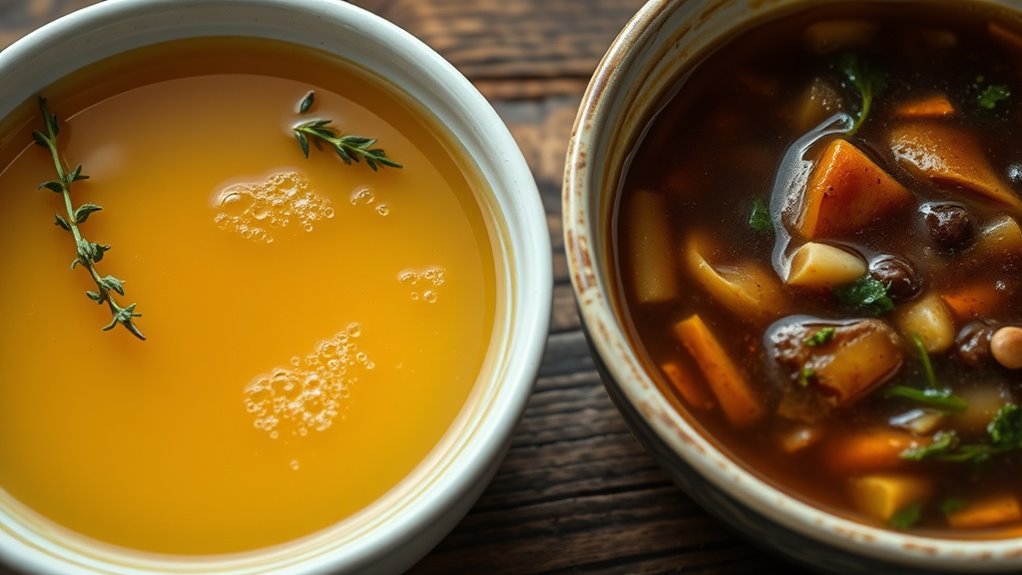

Use stock when you want a rich, hearty base for sauces, gravies, or complex soups, as it has concentrated flavors and lots of gelatin for texture. Turn to broth for quick, light dishes like simple soups, stews, or to add flavor to grains, since it’s milder and thinner. Knowing when to swap or combine them can elevate your cooking—stick around to learn more about the best ways to use each one.
Key Takeaways
- Use stock for rich sauces, gravies, and slow-cooked soups to add depth and body to dishes.
- Use broth for quick soups, stews, or as a cooking liquid for grains to provide light flavor and hydration.
- Choose stock when a concentrated, gelatinous texture enhances flavor complexity in recipes.
- Opt for broth when you need a lighter, clearer liquid suitable for sipping or speedy meal prep.
- Select stock for nutrient-dense, savory bases, and broth for versatile, less intense flavor applications.

When it comes to adding depth and flavor to your cooking, understanding the difference between stock and broth is essential. Both are liquids derived from simmering ingredients like bones, meat, and vegetables, but they serve different purposes and offer distinct qualities. Recognizing these differences helps you choose the right one for your dishes, whether you’re aiming for flavor enhancement or nutritional benefits.
Stock is typically made by simmering bones, often with a small amount of meat and vegetables, for an extended period—sometimes up to 24 hours. This slow process extracts gelatin, marrow, and connective tissues, which give stock a richer, more concentrated texture and flavor. Because of this, stock is often used as a base for sauces, gravies, and soups where a deep, complex flavor is desired. Its flavor profile is robust, making it an excellent ingredient for enhancing the overall taste of your dishes. Nutritional differences are notable here: stock, especially if made with bones, can provide collagen, minerals, and amino acids that support joint and skin health, adding a nutritional boost to your recipes.
Simmered for hours, bones release gelatin and marrow, creating a rich, flavorful, and nutritious stock base.
Broth, on the other hand, is usually made by simmering meat, vegetables, and seasonings for a shorter period—around one to two hours. Its primary focus is on creating a flavorful, easily drinkable liquid. Broth tends to have a lighter, cleaner flavor and a thinner consistency compared to stock. Since it’s made with meat rather than bones, it contains more dissolved flavors from the meat itself, making it more immediately palatable and ready to serve as a soup or sipping beverage. From a nutritional standpoint, broth provides hydration, some protein, vitamins, and minerals, but generally less collagen and gelatin than stock. It’s a versatile ingredient for quick soups, stews, or even as a cooking liquid for grains, offering flavor enhancement without the heaviness of stock.
In addition, the choice between stock and broth can influence the culinary outcome of your dish, depending on whether a rich base or a light liquid is desired. Knowing when to use each allows you to optimize both flavor enhancement and nutrition in your culinary endeavors, ensuring your dishes are both delicious and healthful.
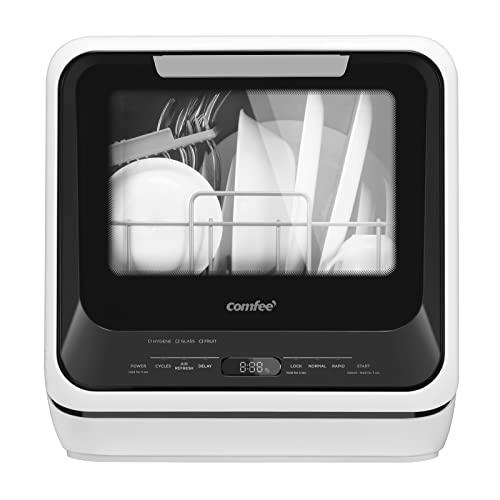
COMFEE' Portable Mini Dishwasher Countertop with 1.32Gal Built-in Water Tank for Apartments& RVs, No Hookup Needed, 6 Programs, 360° Dual Spray, 162℉ High-Temp& Air-Dry Function
Please make sure the distance between your countertop and wall cupboard is more than 19.6" No installation needed:...
As an affiliate, we earn on qualifying purchases.
Frequently Asked Questions
Can Stock Be Used Directly as a Soup Base?
Yes, you can use stock directly as a soup base for flavor enhancement. It acts as a rich, savory foundation, making it a great culinary substitution for water or other liquids. Just heat the stock and add your desired ingredients. Keep in mind, stock tends to be more concentrated, so adjust seasoning accordingly. Using stock directly gives your soup depth and a robust flavor, saving you time and effort.
Are There Specific Dishes That Require Broth Instead of Stock?
Yes, some dishes specifically call for broth instead of stock. You’ll want to use broth for vegetable-based dishes like soups and stews, where a lighter, more seasoned liquid is ideal. Seafood recipes also often require broth to enhance delicate flavors without overwhelming them. Broth provides a more straightforward, seasoned base, making it perfect when you want a clear, flavorful foundation that complements the ingredients.
How Long Can Homemade Stock or Broth Be Stored?
You can store homemade stock or broth in your refrigerator for up to 4 to 5 days. To prevent spoilage, make sure to cool it quickly and keep it in airtight containers. For longer storage, freeze it for up to 3 months. Proper storage duration helps prevent spoilage, ensuring your broth remains safe and fresh for future use. Always smell and check for any signs of spoilage before using leftovers.
Is There a Difference in Sodium Content Between Stock and Broth?
Sodium levels and salt content differ markedly between stock and broth. Broth typically has a higher sodium content because it’s seasoned more often, making it tastier but less suitable for low-sodium diets. Stock, on the other hand, usually contains less salt, allowing you to control seasoning better. Think of broth as a flavorful ready-made solution, while stock is a versatile base you can season to your preference.
Can Vegetable Stock Replace Chicken Broth in Recipes?
Yes, you can use vegetable stock as a vegetable substitution for chicken broth in recipes. It provides a similar liquid base and can enhance the broth flavor, especially if you’re aiming for a vegetarian or vegan dish. Keep in mind, vegetable stock may have a slightly different flavor profile, so you might want to adjust seasonings accordingly to maintain the desired taste in your recipe.
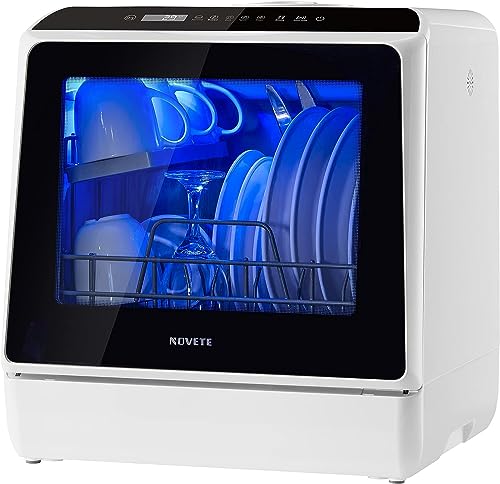
NOVETE Portable Countertop Dishwashers, Compact Dishwashers with 5L Built-in Water Tank & Inlet Hose, 5 Washing Programs, Baby Care, Air-Dry Function and LED Light for Small Apartments
【SMALL SIZE, LARGE CAPACITY】This portable dishwasher only measures 16.9 x 16.8 x 18.1 inches, but holds 4 full...
As an affiliate, we earn on qualifying purchases.
Conclusion
Whether you choose stock or broth, remember they’re like siblings with different personalities—stock is the quiet builder, while broth is the ready-to-eat friend. Knowing when to use each helps you craft dishes that shine. Think of stock as the foundation of a house, and broth as the inviting room inside. Mastering their differences lets you turn simple ingredients into culinary magic—your kitchen’s canvas just got a whole lot more vibrant.

COMFEE’ Countertop Dishwasher, Energy Star Portable Dishwasher, 6 Place Settings & 8 Washing Programs, Speed, Baby-Care, ECO& Glass, Dish Washer for Dorm, RV& Apartment, Black
6 Place Setting- A perfect size (H17.2″×W21.6″×D19.7″) for 2-3 people, COMFEE’ compact dishwasher is suitable for dorms, RVs,...
As an affiliate, we earn on qualifying purchases.

EUHOMY Countertop Dishwasher Portable with 6 Programs, 5L Built-in Water Tank for Apartments & RV, 167℉ High-Temp, No Hookup Needed, Mini Dishwasher with Baby Care, Air Dry/Quick/ECO/Fruit/Normal Mode
𝐂𝐨𝐦𝐩𝐚𝐜𝐭 𝐏𝐨𝐫𝐭𝐚𝐛𝐥𝐞 𝐃𝐢𝐬𝐡𝐰𝐚𝐬𝐡𝐞𝐫: Euhomy Portable Countertop Dishwasher: Compact yet powerful, measuring just 16.83 x 16.73 x 18.03 inches....
As an affiliate, we earn on qualifying purchases.