Choosing between dry brine and wet brine for your Thanksgiving turkey depends on your preferences. Wet brining involves soaking the bird in seasoned liquid to infuse deep flavor and moisture, while dry brining mists the turkey with salty spices for a less messy process that also enhances juiciness. Both methods improve flavor and tenderness, but your choice impacts prep and flavor intensity. Keep exploring to discover tips for perfecting each brine method.
Key Takeaways
- Wet brining involves soaking the turkey in seasoned liquid for deep flavor and moisture, typically 12-48 hours.
- Dry brining uses a salt-based rub, offering easier cleanup and similar flavor enhancement with 12-24 hours of resting.
- Wet brining provides more even seasoning and moisture retention, while dry brine is less messy and more convenient.
- Over-brining either method can result in overly salty or spongy meat; proper timing is essential.
- Choice depends on time, preference, and convenience, with both methods effectively enhancing turkey flavor and juiciness.
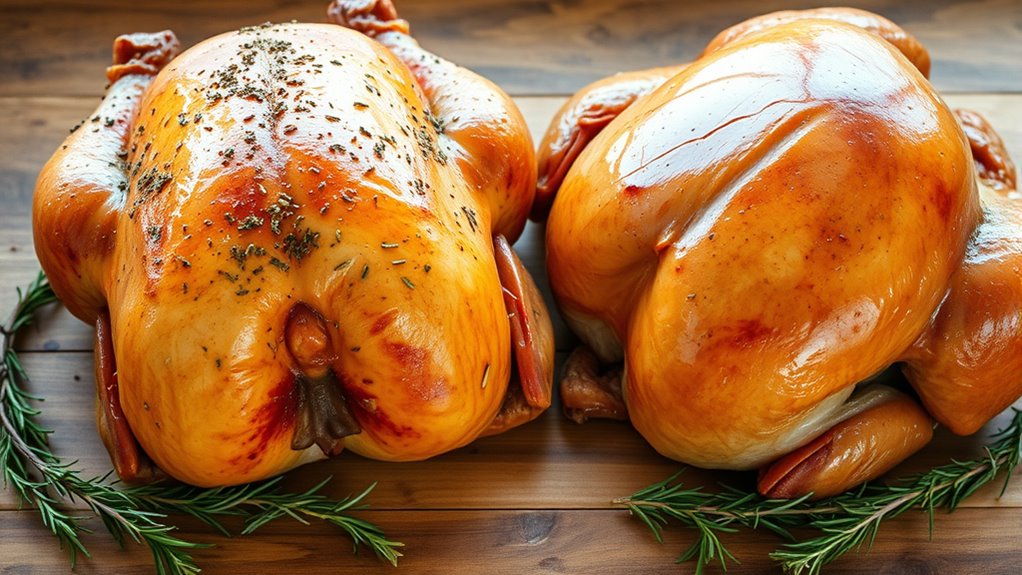
Brining your turkey is one of the best ways to guarantee a juicy, flavorful centerpiece for your Thanksgiving feast. When you choose to brine, you’re essentially soaking the bird in a solution that helps it retain moisture and absorb delicious flavors. The key to successful brining lies in understanding how flavor infusions work through different methods and how brine timing impacts the outcome. Whether you opt for a dry or wet brine, each approach offers distinct advantages, but both rely heavily on proper flavor infusion and timing to achieve the best results.
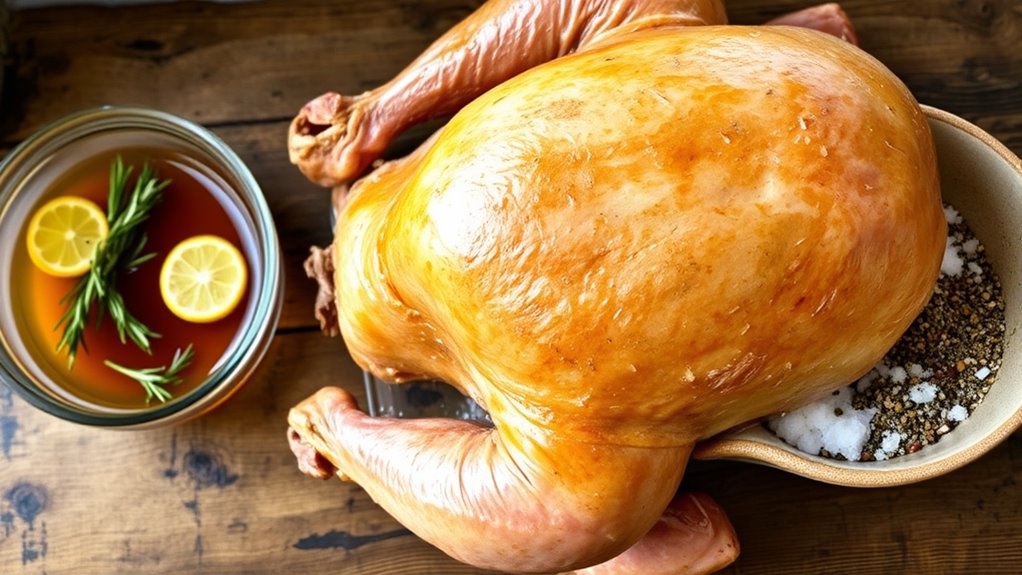
Flavor infusions are the heart of brining. With a wet brine, you submerge your turkey in a salty, seasoned liquid, often infused with herbs, spices, and aromatics. This method allows flavors to penetrate deeply into the meat, resulting in a moist, well-seasoned bird. Wet brining is more forgiving because the liquid surrounds the entire turkey, ensuring even flavor distribution. On the other hand, a dry brine involves rubbing the turkey with a mixture of salt, sugar, and spices, then letting it rest uncovered or loosely covered in the fridge for several hours. Despite the lack of liquid, dry brining still infuses flavors into the meat through salt’s natural ability to enhance taste and moisture retention. Both methods require careful consideration of flavor infusions—adding herbs like rosemary, thyme, garlic, or citrus can elevate the final flavor profile considerably.
Brine timing plays a vital role in how well your turkey absorbs those flavors. Wet brines typically take between 12 to 24 hours, with some chefs recommending up to 48 hours for maximum infusion. During this period, the turkey soaks up the seasoned liquid, becoming beautifully tender and flavorful. Over-brining, however, can lead to overly salty meat or a spongy texture, so sticking to recommended times is important. Dry brines usually require a shorter window—around 12 to 24 hours—giving the salt enough time to penetrate the meat and improve its moisture-holding capacity. Leaving a dry brine on too long can result in an overly salty taste or a change in texture, so timing is just as critical here. In both cases, proper brine timing ensures that your turkey is neither under-flavored nor over-seasoned, delivering the perfect balance of moisture and flavor.
Ultimately, choosing between a dry or wet brine comes down to personal preference and the amount of time you have. Whichever method you pick, understanding how flavor infusions work and paying close attention to brine timing will help you create a Thanksgiving turkey that’s juicy, flavorful, and unforgettable.
Frequently Asked Questions
Can I Combine Dry and Wet Brining Methods?
Yes, you can combine dry and wet brining techniques, but it’s essential to plan carefully. Start with a dry brine for seasoning, which enhances flavor and skin crispiness, then follow with a wet brine for moisture. Just make sure to perform brine storage properly, refrigerating the turkey during each step. This hybrid approach can give your turkey extra flavor and juiciness, combining the best of both seasoning techniques.
How Does Brining Affect Turkey Cooking Time?
Think of brining as giving your turkey a spa treatment—it influences how it cooks. Brining can slightly extend cooking time because the added moisture retention and flavor infusion make the turkey more forgiving, preventing dry meat. For example, a well-brined bird stays moist longer and cooks more evenly, so you might need to add a few extra minutes. Keep an eye on internal temperature, not just time, for perfect results.
Is Brining Necessary for a Moist Turkey?
You don’t have to brine to get a moist turkey, but it can help with flavor infusion and moisture retention. Brining, especially dry brine, enhances the turkey’s juiciness, making it more flavorful. Wet brine adds moisture and can improve skin crispiness. If you prefer a simpler approach, proper roasting techniques can also yield a moist, tasty turkey without brining.
What Are the Best Herbs for Dry Brine?
You should use herbs like thyme, rosemary, sage, and parsley for a dry brine, as their herb flavor combinations enhance the turkey’s taste. Mix these herbs with salt, sugar, and other brine ingredient variations for the best results. Feel free to experiment with garlic or citrus zest to add more flavor layers. These herbs and variations help infuse your turkey with aromatic, savory notes, making it irresistibly moist and flavorful.
Can I Brine a Pre-Cooked or Frozen Turkey?
Ever wonder if you can brine a frozen or pre-cooked turkey? You shouldn’t. Brining works best with fresh, thawed raw turkey. A frozen or pre-cooked turkey is already cooked or partially cooked, so brining won’t penetrate or rehydrate it effectively. Instead, focus on proper reheating or seasoning methods. Trying to brine these can lead to uneven texture or flavor. Stick to fresh turkey for best results.
Conclusion
Whichever brine you choose, remember that a well-brined turkey is like a good story—full of flavor and memories. I once watched my friend’s dry-brined bird come out so juicy it practically begged for seconds, proving the power of patience. Think of brining as seasoning your holiday with care; it turns a simple meal into a feast to remember. So, embrace your choice and savor every bite—your Thanksgiving story is just beginning.