To use residual heat to cook better, turn off your oven or stovetop a few minutes before your dish is fully cooked. The remaining warmth will gently finish the cooking process, helping you achieve even textures and flavors. Use cookware with good heat retention, like cast iron or ceramic, to hold the heat longer. Adjusting your heat and cookware choice can make a big difference. Keep exploring to discover more tips on maximizing residual heat’s potential.

Get everyday essentials delivered free — and shop member deals
- Fast, free delivery on millions of items
- Access to Prime Big Deal Days deals on October 6–7
- Prime Video, Amazon Music and more included
Key Takeaways
- Turn off the oven a few minutes before the expected completion to utilize residual heat for gentle finishing.
- Use cookware with high heat retention, like cast iron or ceramic, to prolong residual heat effects.
- Adjust oven temperature to a moderate range (350°F-375°F) for effective residual heat without overcooking.
- Cover dishes during residual heat cooking to trap heat and ensure even cooking and flavor development.
- Experiment with timing and temperature to find the optimal balance for different recipes and cookware materials.
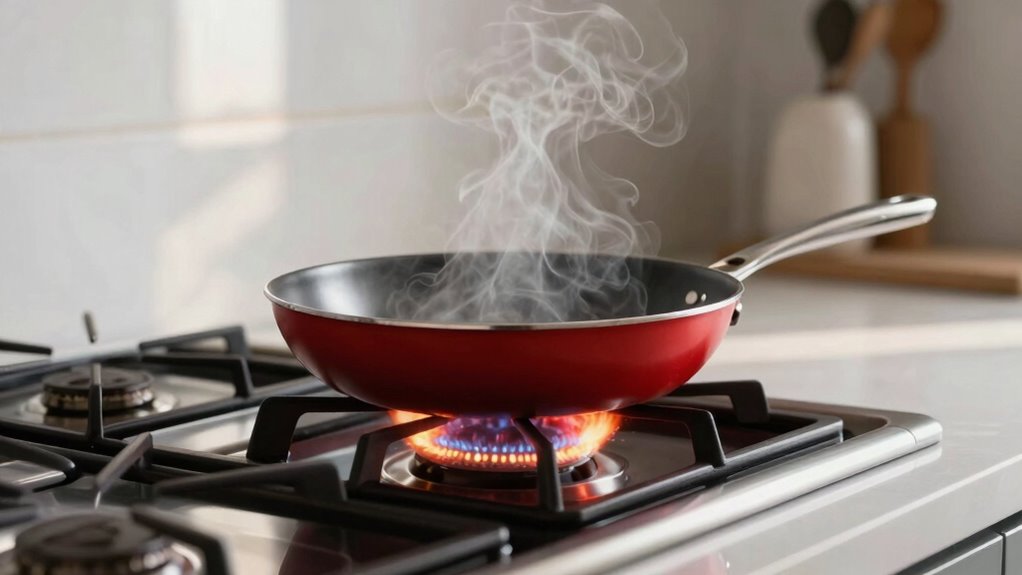
Residual heat refers to the heat remaining in your oven or stovetop after you’ve turned off the heat source. By understanding how to harness this heat, you can finish cooking dishes gently and evenly without wasting energy or risking overcooking. To do this successfully, you need to pay close attention to your oven temperature and the type of cookware material you use. Additionally, cooking science explains how heat transfer influences the effectiveness of residual heat in finishing your dishes.
When you turn off your oven, the temperature inside doesn’t drop instantly; it gradually decreases. This lingering heat can be used to gently finish cooking food. For example, if you’re baking a casserole or bread, you can turn off the oven a few minutes before the recipe states. The residual heat will continue to cook the dish, often resulting in better texture and flavor. The key is to know the right oven temperature to start with. If it’s too high, the residual heat may cause overcooking, especially for delicate foods like soufflés or custards. Conversely, if it’s too low, the residual heat might not be enough to finish the job. Experimenting with different oven temperatures will help you find the sweet spot, typically between 350°F and 375°F for most baked goods.
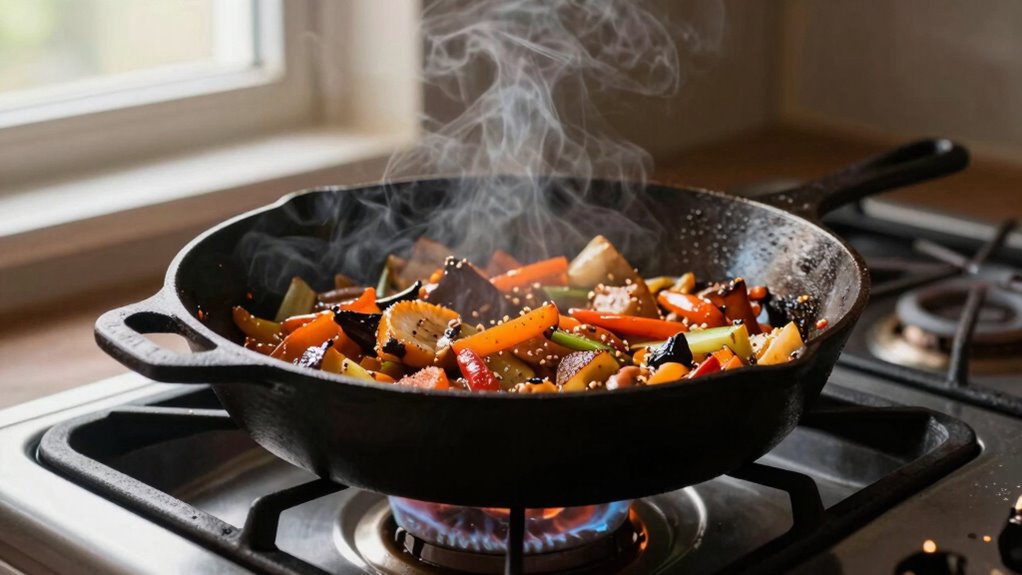
Equally important is the cookware material. Different materials retain heat differently, impacting how well residual heat can finish your cooking. Cast iron, for instance, is excellent at holding onto heat for a long time, making it ideal for using residual heat to finish cooking foods like stews or fried dishes. Stainless steel heats up quickly but also cools down faster, so it may not be as effective for residual heat techniques. Glass and ceramic cookware can retain heat well, but they also tend to cool down more slowly, providing a gentle, even finish. Knowing your cookware material allows you to predict how long the residual heat will last and adjust your cooking process accordingly. Using heat retention knowledge can help optimize your residual heat cooking method for better results. Additionally, understanding thermal mass can help you select the best cookware for this technique, ensuring consistent and predictable results. Recognizing the heat capacity of your cookware can also help you better gauge how long the residual heat will effectively finish your dishes. Developing an understanding of energy efficiency can further help to reduce electricity or gas consumption during cooking.
cast iron skillet for residual heat cooking
As an affiliate, we earn on qualifying purchases.
As an affiliate, we earn on qualifying purchases.
Frequently Asked Questions
How Long Does Residual Heat Typically Last in Different Cookware?
Residual heat typically lasts between 10 to 30 minutes, depending on cookware materials and temperature retention. Cast iron retains heat the longest, often staying hot for over 30 minutes, while aluminum or stainless steel cool down faster, usually within 10-15 minutes. To maximize residual heat, remove cookware from heat sources promptly and cover it to trap warmth, ensuring even cooking without overdoing it.
Can Residual Heat Safely Finish Cooking Raw Ingredients?
You can safely finish cooking raw ingredients with residual heat, especially if you’re aiming for flavor enhancement and energy efficiency. Just make certain the food reaches the right internal temperature to prevent bacteria. Keep the lid on to trap heat, and check periodically. It’s a smart way to save energy and boost flavors without overcooking. Trust your senses—if it smells and looks right, it’s likely safe and delicious!
How Does Residual Heat Affect Food Safety and Bacteria?
Residual heat can help guarantee food safety by gently finishing cooking, but it doesn’t eliminate bacterial growth risks if the food isn’t already cooked thoroughly. You need to be cautious because bacteria can survive in undercooked areas. Bacterial growth slows down at lower temperatures, so relying solely on residual heat isn’t enough. Always check that food reaches a safe internal temperature to prevent foodborne illnesses and guarantee safety.
Is Residual Heat Effective for Cooking All Types of Dishes?
Residual heat is effective for many dishes, especially for gentle cooking or finishing touches, enhancing flavor and saving energy. You can use it for simmering sauces, softening vegetables, or warming leftovers without additional energy. However, it’s not suitable for dishes requiring precise temperatures or thorough cooking, like raw meats. Knowing when to rely on residual heat helps you improve flavor, increase energy efficiency, and avoid undercooked or unsafe food.
How Do I Prevent Overcooking With Residual Heat?
You might worry residual heat will overcook your dish, but with careful timing, you can prevent this. Turn off the heat just before your food reaches your desired doneness, allowing residual warmth to finish the job. This not only prevents overcooking but also enhances flavor and conserves energy. Embrace the gentle simmer of residual heat, and you’ll enjoy perfectly cooked dishes every time, with less energy wasted.
Conclusion
Remember, residual heat is like a secret garden waiting to be explored. By understanding and harnessing this quiet power, you turn everyday cooking into an artful dance. When you let your dishes rest and finish cooking in the gentle warmth, you’re nurturing flavors and textures that could never be rushed. Embrace this hidden treasure in your kitchen—it’s the silent maestro guiding your meals to perfection, transforming simple ingredients into a symphony of taste.
Fall Picks
fall essentials
As an affiliate, we earn on qualifying purchases.