To use steam for better bread, rice, and vegetables, start by controlling the heat and timing precisely to prevent overcooking or mushiness. Use fresh ingredients and rinse them thoroughly before steaming to preserve nutrients and flavors. Make sure your steamer is set to the right temperature and avoid overcrowding for even cooking. By mastering these techniques, you’ll boost natural textures and flavors. Keep exploring to discover more tips that can elevate your steaming skills even further.
Key Takeaways
- Rinse rice thoroughly and add the correct water amount before steaming for fluffy, well-cooked grains.
- Use fresh vegetables and steam until bright in color and slightly crisp to preserve nutrients and flavor.
- Place seafood or bread in a single layer, season lightly, and steam until just cooked to maintain moisture and delicate texture.
- Control steaming temperature and time precisely with modern appliances to optimize texture and flavor for bread, rice, and vegetables.
- Avoid overcooking to prevent mushiness, color loss, and nutrient degradation, ensuring natural flavors and proper texture.
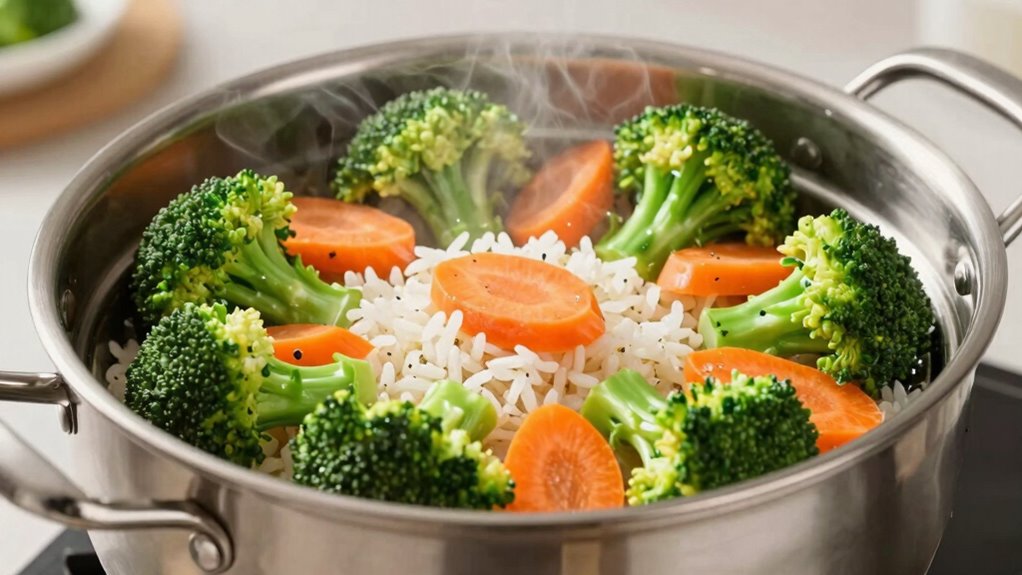
Have you ever wondered how to get the most out of Steam, the popular digital distribution platform for games and software? Well, in this case, we’re talking about steaming food, not gaming. Steaming is a fantastic way to prepare healthy, flavorful meals without adding extra fats or oils. Whether you’re aiming to perfect your bread, cook rice, or steam vegetables, understanding the right techniques will elevate your culinary skills.
When it comes to steaming vegetables, the key is to keep their nutrients and natural flavors intact. You want to avoid overcooking, which can lead to mushy textures and loss of vibrant color. Fill your steamer basket with fresh vegetables like broccoli, carrots, or green beans, and place it over boiling water. Cover tightly and let the steam do its work. You’ll know they’re done when they turn bright in color and are tender but still slightly crisp. Steaming vegetables preserves their vitamins better than boiling, making it an excellent choice for a nutritious meal. Plus, it’s quick and easy, which means you can have healthy side dishes ready in minutes. Proper control of the steaming process helps retain the natural flavors and nutrients of your vegetables. Additionally, using the correct steam duration is crucial to prevent nutrient loss and achieve optimal texture.
Cooking seafood through steaming is another technique that yields delicate, flavorful results. Whether you’re steaming fish fillets, shrimp, or scallops, the process is straightforward. Place the seafood in a single layer in your steamer basket, season lightly with herbs or lemon slices if you like, and steam until the flesh turns opaque and flakes easily. This method helps maintain the moisture and tenderness of the seafood, preventing it from drying out. Steaming seafood is also a healthy preparation method, as it requires no added fats. The gentle heat ensures that the flavors stay true and the texture remains pleasing. To enhance your seafood dishes, consider using fresh ingredients that are of high quality to maximize flavor.
If you’re using steaming for rice or bread, the process differs slightly but follows a similar principle of gentle heat. For rice, rinse thoroughly, then add the correct amount of water, and steam until fluffy. For bread, steaming is less common, but certain recipes like bao buns rely on this technique to achieve a soft, airy texture. In all cases, the goal is to allow natural flavors and textures to shine through without the interference of boiling or frying. Additionally, modern steaming appliances can help control temperature and timing more precisely, making it easier to perfect your dishes. Mastering temperature control is essential for achieving consistent results in steaming.
In essence, mastering steaming techniques for vegetables, seafood, rice, or bread can transform your meals. It’s about controlling the heat and timing carefully so your food stays flavorful, nutritious, and perfectly cooked. Whether you’re steaming vegetables or cooking seafood, it’s a simple yet powerful way to bring out the best in your ingredients.
food steamer basket for vegetables
As an affiliate, we earn on qualifying purchases.
As an affiliate, we earn on qualifying purchases.
Frequently Asked Questions
Can I Steam Frozen Vegetables Directly?
Yes, you can steam frozen vegetables directly. Simply place the frozen vegetables in your steamer basket, avoiding overcrowding, and steam for about 5-7 minutes until tender. Steaming frozen vegetables retains more nutrients and preserves their flavor, offering great steaming benefits. Just make certain they’re evenly spread out for consistent cooking. No need to thaw beforehand, making it quick and convenient for a nutritious side dish or ingredient.
How Long Should I Steam Different Types of Bread?
You should steam different types of bread just enough to soften the crust without making it soggy—usually around 3 to 5 minutes. The key is watching the steaming time to prevent the bread from turning into a soggy mess. For crusty bread, keep it shorter; for softer bread, extend the steam slightly. Remember, patience is a virtue—overdoing it can ruin the bread’s texture and flavor.
Is It Better to Steam or Boil Rice?
Steaming rice is better if you want to preserve flavor and nutrient retention, as it’s a gentle cooking method that maintains more of the rice’s natural qualities. Boiling can cause nutrients to leach into the water, reducing nutritional value. Steaming also prevents overcooking and keeps the rice fluffy. If you prioritize flavor and nutrients, steaming is your best choice; boiling is quicker but less effective at preserving those qualities.
Can Steaming Make Bread Softer?
Steaming can make bread softer, and the benefits are clear. Unlike baking, steaming gently tenderizes the bread’s crumb, giving it a moist, airy texture. The moist heat breaks down gluten and starches, enhancing softness without drying out the crust. If you want bread with a delicate, supple texture, steaming offers a gentle alternative that preserves moisture, making your bread irresistibly tender and perfect for sandwiches or snacks.
What Equipment Is Best for Steaming Vegetables?
For steaming vegetables, you should choose equipment like a bamboo steamer, metal steamer basket, or a dedicated electric steamer. These options guarantee even heat distribution and easy access to your vegetables. Consider your kitchen space and convenience when selecting equipment. A bamboo steamer offers an authentic touch, while a metal basket fits most pots. Pick the one that suits your needs best for perfectly steamed, nutrient-rich vegetables.
Conclusion
Now that you know how to harness steam for your bread, rice, and veggies, you’ll find that each meal turns out better than the last. It’s funny how a simple technique can transform your dishes, making every bite more flavorful and nutritious. As you steam more often, you’ll notice the coincidence—your cooking improves effortlessly, and your family’s favorites become even tastier. Embrace this method, and watch your meals become a delightful, seamless part of your everyday routine.