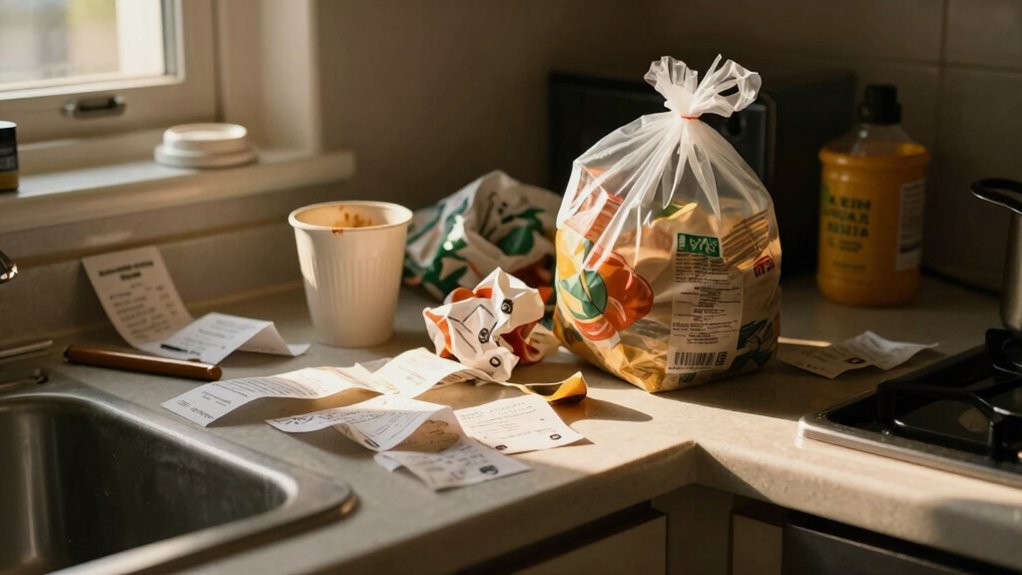

Convenience spending feels small because each purchase seems trivial and offers quick emotional relief, like a coffee or snack. You might not notice the cost stacking up because each expense is quick and easy. Over time, these small buys become a habit that steadily drains your budget without you realizing it. If you keep exploring, you’ll discover how these seemingly minor habits can add up and impact your financial health more than you expect.

Get everyday essentials delivered free with Prime
- Fast, free delivery on millions of items
- Prime Video, Amazon Music and more included
- Member-only deals all year
Key Takeaways
- Small purchases seem insignificant individually, but their frequent accumulation leads to substantial expenses over time.
- Emotional triggers like boredom or stress make small spending feel justified and easy to overlook.
- Habitual convenience spending distorts perception, masking the true cumulative cost until it becomes overwhelming.
- The quick, effortless nature of small buys provides an immediate mood boost, reinforcing the cycle of repeated spending.
- Recognizing the pattern requires awareness, as the true financial impact often feels distant until expenses become noticeable.

Have you ever noticed how small convenience purchases seem harmless at first, only to realize later how quickly they add up? It’s a common trap: you buy a snack here, a coffee there, maybe a quick gadget, thinking they’re minor splurges. These impulse purchases often feel trivial in the moment because they’re quick, effortless, and seem insignificant compared to your overall spending. But what you might not realize is how these seemingly minor buys are driven by emotional triggers that keep you reaching for your wallet more often than you’d like.
Impulse purchases are rarely just about the item itself. They’re often motivated by feelings—stress, boredom, or even a fleeting moment of happiness. When you’re feeling down or distracted, little things like a candy bar or a new accessory can seem like instant mood boosters. These purchases provide a quick hit of satisfaction, reinforcing a cycle where emotional triggers push you toward spending without much thought. Over time, these small transactions add up, quietly draining your finances in ways you don’t immediately see. Recognizing the emotional triggers behind these habits can help you develop healthier spending habits.
Small purchases driven by emotions can secretly drain your finances over time. Recognize and break the cycle.
What makes this phenomenon tricky is how easily these purchases slip into your daily routine. You might tell yourself it’s just a dollar or two, but when you do this repeatedly, it becomes a pattern. Your brain associates shopping with comfort or relief, creating a subconscious connection between emotional states and spending. This is why, even when you’re aware of the habit, it’s hard to stop. Your emotions are subtly guiding your decisions, making it feel natural to indulge in small, convenient purchases without considering their cumulative impact. Developing awareness of these triggers can make a significant difference in breaking the cycle. Additionally, understanding the psychology of impulse buying can help you identify the root causes of these behaviors.
It’s also important to realize how much these emotional triggers can distort your perception of what’s affordable. A $5 coffee might seem inconsequential on its own, but if you buy one every day, it quickly becomes a significant expense. The same goes for snacks, fast food, or small gadgets. You don’t see these costs building up because each one feels insignificant, but the reality is that they’re quietly chipping away at your budget. Recognizing how emotional states influence your spending can help you make more mindful choices. Moreover, adopting a mindful spending approach can empower you to control these impulses and prioritize your financial goals.
The key is recognizing the emotional triggers behind these habits. When you’re aware of what’s really driving your impulse purchases, you can develop strategies to break the cycle. Instead of seeking quick emotional relief through shopping, you might try alternative ways to cope with feelings—like taking a walk, practicing mindfulness, or planning your meals and expenses more intentionally. Understanding that these small purchases aren’t as harmless as they seem can give you back control and help you prevent them from becoming bigger financial problems later on. Building self-awareness about these habits is essential for long-term financial health.
budgeting apps for tracking small expenses
As an affiliate, we earn on qualifying purchases.
As an affiliate, we earn on qualifying purchases.
Frequently Asked Questions
How Can I Track Small Convenience Expenses Effectively?
To track small convenience expenses effectively, set up a dedicated budget category for daily spending. Use expense-tracking apps or a simple notebook to log each purchase, helping you identify spending triggers. Be consistent and review your expenses weekly to catch patterns. This approach reduces budget challenges and keeps you aware of how small costs add up over time, empowering you to make mindful choices and stay within your financial limits.
What Psychological Factors Influence Convenience Spending Habits?
Ever wonder why impulse triggers and emotional spending drive your convenience expenses? These psychological factors tap into your desire for instant gratification, making small purchases feel harmless. When you’re stressed or seeking comfort, you’re more likely to give in to these urges. Over time, this behavior becomes a habit, causing your spending to escalate unnoticed. Recognizing these triggers helps you develop better control and make more mindful choices.
Are There Long-Term Financial Impacts of Frequent Small Purchases?
Frequent small purchases, like impulse buys or luxury indulgences, can add up over time, impacting your long-term finances. While they seem minor, these expenses can erode savings and increase debt if unchecked. Consistent convenience spending may make you overlook how quickly costs accumulate, leading to less financial flexibility later. Being mindful of these habits helps you control spending, prioritize savings, and prevent small expenses from becoming a financial burden.
How Can I Prevent Convenience Spending From Adding up Unnoticed?
You can prevent convenience spending from adding up unnoticed by first investigating impulse triggers that lead to unplanned purchases. Set clear budget limits and track your expenses regularly to stay aware of your spending habits. When faced with temptation, pause and ask if the purchase aligns with your financial goals. This proactive approach helps you control small expenses before they accumulate into a significant, overlooked drain on your finances.
What Strategies Help Control Impulsive Convenience Spending?
To control impulsive convenience spending, identify your impulse triggers like stress or boredom, and find healthier alternatives. Set clear budget boundaries and stick to them, making it harder to justify spontaneous purchases. Use cash instead of cards to limit spending, and pause before buying—ask yourself if it’s necessary. These strategies help you stay mindful, prevent overspending, and keep your finances on track.
Conclusion
Think of convenience spending like dropping tiny drops into a pond. At first, the ripples seem small and harmless. But over time, those drops can fill the pond, creating waves that might overwhelm you. It’s easy to ignore the little costs until they start to shape your financial landscape. Stay aware, so you can enjoy the calm waters rather than being caught off guard by the rising tide of small expenses.
Halloween Picks
halloween
As an affiliate, we earn on qualifying purchases.