
Poorly planning your home gym wastes space and money by creating clutter, safety risks, and inefficient equipment placement. If you don’t position large machines against walls and leave enough room for movement, your space becomes cramped and unsafe. Neglecting ventilation leads to unpleasant odors and equipment damage. By avoiding these mistakes, you’ll create a functional, more motivating workout environment. Keep going to discover key tips that help you design a smarter, safer gym space.

Get everyday essentials delivered free with Prime
- Fast, free delivery on millions of items
- Prime Video, Amazon Music and more included
- Member-only deals all year
Key Takeaways
- Poor equipment placement leads to clutter, inefficient use of space, and safety hazards.
- Neglecting proper spatial organization reduces workout effectiveness and increases the risk of injuries.
- Inadequate ventilation causes discomfort, odors, and equipment deterioration, increasing long-term costs.
- Overcrowding or improper spacing limits movement and diminishes workout safety and motivation.
- Lack of early planning for airflow and layout results in costly modifications and inefficient space utilization.
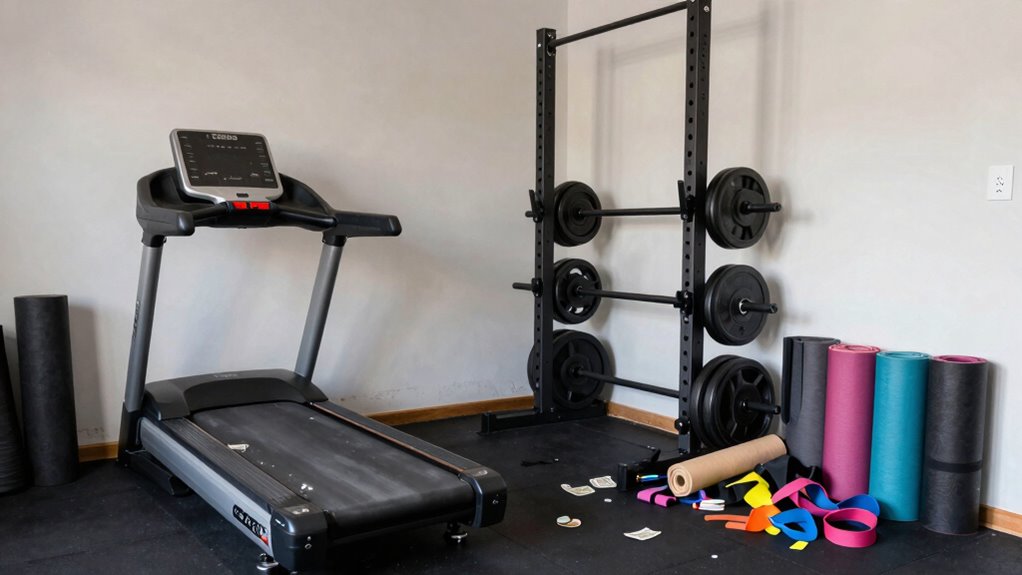
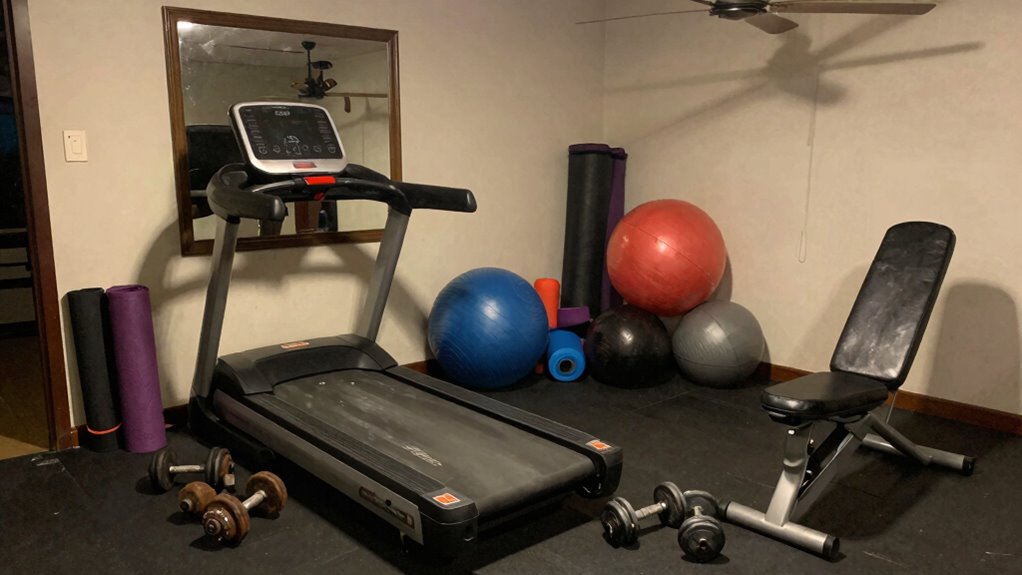
Setting up a home gym can be an exciting way to prioritize your fitness, but many people make common planning mistakes that can hinder their success. One of the biggest errors is neglecting how to best arrange your equipment. Poor equipment placement can turn your workout space into a cluttered, inefficient area. Instead of spreading out your machines randomly, think about the flow of movement. Place larger, bulkier equipment like treadmills or weight benches against walls, leaving enough room in the center for dynamic exercises. Be mindful of spacing to avoid cramped quarters that make workouts uncomfortable or even unsafe. Proper equipment placement not only makes your gym more functional but also helps prevent injuries caused by tripping over misplaced items or trying to work out in a cramped space. Additionally, considering equipment placement carefully can improve the overall safety and accessibility of your workout area. Proper spatial planning can also enhance your motivation by creating a more inviting environment. Thinking about spatial organization from the beginning can also help you utilize your available space more efficiently. Moreover, incorporating design principles early on can lead to better long-term use of your gym.
Another mistake that often goes unnoticed is overlooking ventilation solutions. Many home gyms get stuffy and uncomfortable, especially if there’s poor air circulation. Without proper ventilation, your workout space can quickly become stifling, which impacts your motivation and performance. To avoid this, consider investing in a good exhaust fan or portable air purifier to keep fresh air circulating. If possible, set up near a window that you can open, especially during intense sessions. Good ventilation also helps control humidity, which can be a problem if you’re using heavy weights or cardio equipment that generates heat. Inadequate airflow can lead to stuffiness, lingering odors, and even mold if the space stays damp. Making certain your space has proper ventilation is a simple yet vital step that keeps your gym safe, comfortable, and inviting. Proper airflow management can also contribute to maintaining equipment longevity by reducing moisture buildup. Additionally, planning for airflow management from the start can prevent costly modifications later on. Incorporating ventilation solutions early in your planning ensures the long-term comfort and health of your workout environment.
home gym equipment placement mats
As an affiliate, we earn on qualifying purchases.
As an affiliate, we earn on qualifying purchases.
Frequently Asked Questions
How Do I Determine the Right Equipment Size for My Space?
To determine the right equipment size for your space, start by measuring your available area accurately. Focus on equipment selection that fits comfortably without overcrowding, allowing room for movement. Prioritize versatile, compact options that optimize your space. Consider the dimensions of each piece and leave enough clearance for safety and ease of use. Proper space optimization guarantees your gym feels functional, inviting, and prevents costly mistakes from choosing oversized or inappropriate equipment.
What Are Cost-Effective Ways to Expand My Home Gym Later?
Did you know that 70% of home gym owners expand their setups within two years? To do this cost-effectively, focus on budget-friendly upgrades like versatile, space-saving equipment such as foldable benches or compact weights. You can also add small accessories over time, like resistance bands or a jump rope, which don’t take up much space or money. Gradually upgrading helps you grow your gym without breaking the bank or cluttering your space.
How Can I Ensure Proper Ventilation and Airflow?
To guarantee proper ventilation and airflow, focus on airflow optimization by installing exhaust fans or ceiling vents to promote air circulation. Use ventilation solutions like portable air purifiers or oscillating fans to improve air quality and comfort during workouts. Keep windows open when possible, and consider adding a ceiling fan for continuous airflow. Regularly maintain your ventilation devices to keep fresh air flowing and prevent stale, stuffy conditions in your home gym.
What Safety Measures Should I Consider for Home Gym Layout?
You can’t afford to ignore safety hazards in your home gym—imagine a single fall causing chaos! To prevent this, choose durable flooring options like rubber mats to cushion impacts and reduce slips. Make certain proper spacing to avoid overcrowding, secure all equipment, and install mirrors safely. Regularly check for loose bolts and broken parts. Prioritizing these safety measures keeps your workout space safe, preventing accidents and injuries that could ruin your fitness journey.
How Do I Integrate Technology Without Cluttering the Space?
To integrate technology without cluttering your home gym, opt for smart lighting that adjusts brightness and color with a simple app or voice command. Use compact sound systems or wall-mounted speakers to keep your space organized. Wireless devices help reduce cables, maintaining a clean look. Position these tech elements strategically, so they enhance your workout experience without taking up unnecessary space or creating visual clutter.
Conclusion
Avoid the common pitfalls of home gym planning, like cluttering your space or overspending on unnecessary equipment. Think carefully, measure twice, and plan smartly to maximize both your space and budget. Remember, “A stitch in time saves nine”—investing a little effort now prevents costly mistakes later. With thoughtful planning, you’ll create a functional, motivating workout space that inspires consistency and progress. Don’t rush it; your perfect home gym is worth the effort!
Halloween Picks
halloween
As an affiliate, we earn on qualifying purchases.