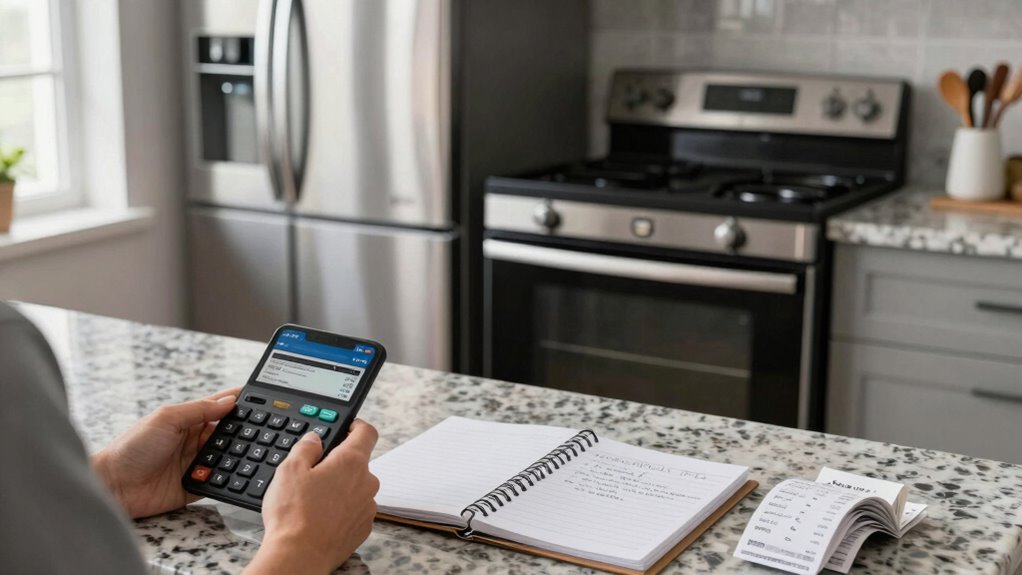

To financially prepare for replacing expensive appliances, start by evaluating their lifespan and planning ahead for potential costs like disposal or recycling. Budget for these expenses early to avoid surprises and consider including extended warranties for added protection. Focus on energy-efficient models to save on future utility bills, and understand warranty details to reduce repair costs. Staying proactive with your planning ensures you’re ready when it’s time to upgrade—all the important tips you need are right here.

Get everyday essentials delivered free with Prime
- Fast, free delivery on millions of items
- Prime Video, Amazon Music and more included
- Member-only deals all year
Key Takeaways
- Create a dedicated savings fund specifically for appliance replacement costs.
- Research energy-efficient models to reduce long-term utility expenses.
- Review warranty options and consider extended plans for potential repairs.
- Budget for disposal or recycling fees to avoid unexpected expenses.
- Calculate total lifecycle costs, including maintenance and energy use, to make informed choices.

Replacing appliances is an inevitable part of homeownership, but it can catch you off guard if you’re not financially prepared. When your refrigerator, washer, or oven finally gives out, the last thing you want is to scramble for funds or settle for a less-than-ideal replacement. To avoid this stress, it’s smart to plan ahead by understanding the costs involved and how to manage them effectively. One of the most important considerations is energy efficiency. Modern appliances are designed to consume less power, which can lead to significant savings on your utility bills over time. When budgeting for a replacement, prioritize energy-efficient models that will cut your long-term expenses and lessen your environmental impact. Although these appliances may have a higher upfront cost, their lower energy consumption often results in savings that offset the initial investment. By choosing energy-efficient appliances, you also benefit from newer technology that might come with advanced features, making your daily routines more convenient and sustainable.
Another critical aspect of financial preparation is understanding warranty coverage. When you buy a new appliance, check the warranty details thoroughly. Many appliances come with warranties that cover repairs or replacements for a certain period, which can save you a lot of money if problems arise early on. Knowing what is covered allows you to plan your finances better and avoid unexpected expenses. Keep documentation of your warranty and register the product if required, so you can easily access support if needed. Additionally, consider whether extended warranties or service plans make sense for your situation. These options can provide peace of mind, especially for high-cost appliances, but they should be weighed against the likelihood of needing repairs and the terms offered. Being aware of energy efficiency and its long-term savings can help you make smarter choices about your appliance investments, ensuring your financial plan remains comprehensive and effective. Moreover, understanding the cost of disposal or recycling options can prevent unexpected expenses during the replacement process. Being proactive about budgeting for replacement costs can help you avoid financial strain when the time comes to upgrade.
A thorough understanding of appliance lifecycle costs, including maintenance and energy use, also plays a key role in financial planning.
As an affiliate, we earn on qualifying purchases.
Frequently Asked Questions
How Do I Estimate the True Cost of New Appliances?
To estimate the true cost of new appliances, start by researching their purchase price and warranty considerations, which can save you money on repairs later. Consider energy efficiency ratings too, as energy-efficient appliances may have higher upfront costs but lower utility bills over time. Add installation and maintenance expenses to get an all-encompassing view. This way, you’ll understand the real financial impact and make an informed decision.
Should I Prioritize Replacing Multiple Appliances at Once?
You should prioritize replacing appliances when their lifespan nears its end, especially if multiple units are approaching replacement timing. Doing so can prevent breakdowns and save you money on repairs. While replacing several at once might seem efficient, it’s wise to evaluate each appliance’s condition and your budget. Focusing on those most critical or most likely to fail soon helps you manage costs and ensures your home runs smoothly.
What Are the Best Financing Options for Expensive Appliances?
You should explore financing options like retailer credit cards, personal loans, or promotional financing offers. Check if the appliance comes with warranty options that include financing plans or extended coverage. Your credit score plays a crucial role; a higher score often gets you better terms. Always compare interest rates, repayment periods, and fees to find the best fit. This way, you can afford your expensive appliance without straining your finances.
How Can I Minimize the Impact on My Monthly Budget?
Did you know that 60% of households struggle with appliance expenses? To minimize the impact on your monthly budget, prioritize budget planning and adopt savings strategies. Set aside a small amount each month dedicated to future appliance replacements. Consider delaying non-essential purchases and look for sales or discounts. This way, you spread out costs, avoid financial strain, and stay prepared without sacrificing your overall financial stability.
When Is the Right Time to Replace Old Appliances Financially?
You should replace old appliances when appliance maintenance becomes costly or when energy efficiency declines considerably. Keep an eye on energy bills and performance issues, as these indicate it’s time for an upgrade. Waiting too long can increase expenses and energy consumption. Replacing appliances at the right time guarantees you save on maintenance costs, enjoy better energy efficiency, and prevent sudden breakdowns that could disrupt your daily routine.
Conclusion
By planning ahead, you’ll turn what feels like a financial storm into a manageable breeze. Setting aside savings and budgeting wisely transforms your finances from fragile glass to unbreakable steel. When that expensive appliance finally calls it quits, you’ll be ready—no panic, no chaos, just smooth sailing through the replacement process. Remember, a little preparation today can save you from a financial hurricane tomorrow, making your home life as steady as the North Star.
Halloween Picks
halloween
As an affiliate, we earn on qualifying purchases.