TL;DR

Get everyday essentials delivered free with Prime
- Fast, free delivery on millions of items
- Prime Video, Amazon Music and more included
- Member-only deals all year
Hungary has made three categories of communist-era state-security records freely searchable online under a new disclosure law. Estimates put the total number of agent names in the released records at 50,000 to 60,000, but archive officials warn that the documents are incomplete and are not necessarily accurate in every case. A further batch covering about 9,000 informants is due in February.
Hungary has opened three categories of communist-era state-security records to the public through an online search tool, a move that could expose the names of an estimated 50,000 to 60,000 former agents. The disclosure follows a law introduced by Prime Minister Peter Magyar’s government and marks a major expansion of public access to files from before the 1990 democratic transition.
The records became searchable on Wednesday through the nyitottaktak.hu website. They include registration cards for network members, a register of recruitment from 1957 to 1962, and a database containing former agents’ personal details and code names. The search tool allows users to look across the published records using names, birth details and code names.
A registration card, known as a “6 card,” can include a person’s name, birthplace and birth date, mother’s name, occupation, and details about their activity for the state-security network. The records may also describe the circumstances and motivations behind recruitment and how long a person was listed as a member. The government says a second release covering about 9,000 informants is planned for February.
Politicians, clergy members and television personalities appear in the registries, according to the report. But archive director Bendeguz Gergo Cseh said a large proportion of listed informants were people who had not become nationally prominent. The government also plans to establish hotlines offering emotional support and counselling for people affected by the disclosures and their families.
A Wider Public Record of Surveillance
The opening gives researchers and members of the public access to substantially more information about how Hungary’s former state-security system recruited and recorded informants. For people who were monitored, the files may help identify who was listed as reporting on them; for families, they may reveal information that was not previously available to them.
The disclosure also carries a risk of misinterpretation. Being named in a file does not by itself establish what a person did, whether they supplied reports, or whether those reports were truthful. Historian Laszlo Eorsi has described cases in which people were recruited but did not report and instead took risks opposing the authorities. The records may affect reputations and family relationships, making their limitations and the circumstances of each case central to how the release is understood.
Popular right now

KitchenAid Artisan 5-Qt Tilt-Head Stand Mixer – Dried Rose (KSM150PS)

Ninja NC501 CREAMi XL Deluxe 11-in-1 Ice Cream and Frozen Treat Maker

KitchenAid Classic Series 4.5-Quart Tilt-Head Stand Mixer, Onyx Black
As an affiliate, we earn on qualifying purchases.
Decades of Disputed Access
Hungary was under one-party communist rule from 1949 to 1989, and state authorities used informants to monitor public sentiment and suspected dissent. People were sometimes recruited through coercion and asked to report on colleagues, friends or relatives. Estimates cited in the report put the total number employed as agents over the communist period at about 150,000, while only about one-third of their names are known and detailed substantive information exists for roughly 10 percent.
Efforts to open the files have been contested since the end of communist rule. In 2002, then-Prime Minister Peter Medgyessy faced a political scandal after reports that he had worked as an agent; a 2003 law allowed people who had been monitored to learn who had reported on them. The latest law, introduced by Magyar in September, grants public access to records on a broader basis. Magyar said the change fulfilled a promise associated with the 1990 regime change that had gone unmet for decades.
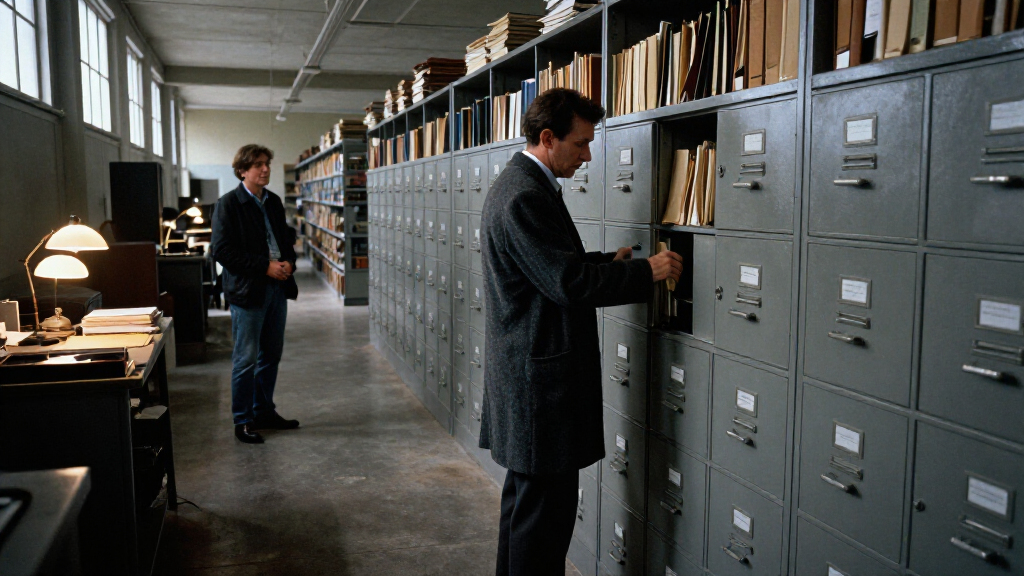
The archive’s holdings include about 10,000 files and hundreds of thousands of pages, according to Cseh. Some records were lost in 1956 and during the change of regime, while others remained with the Interior Ministry until the Historical Office was established in 1997. The surviving material is not a complete account of the surveillance system.
“After 36 years, we are finally fulfilling what was once one of the key promises of the 1990 regime change — a promise that was later denied and lied about.”
— Prime Minister Peter Magyar
What the Files Cannot Establish
The estimate of 50,000 to 60,000 names refers to the disclosure as a whole; the report does not specify how many distinct people are represented in the three categories now online or how much information is available for each. The archive has warned that surviving records are incomplete and may not be truthful in every instance.
A name in a registry alone does not show whether someone submitted reports, how much pressure they faced, or what their motives were. Nor is it clear how many people will be identifiable from the data, or whether every record can be independently corroborated. The source does not provide details on how disputes over an entry can be reviewed or corrected.
February Files and Public Support
The next announced milestone is the planned February release, which is expected to add further detail on about 9,000 informants. The government has also said it will establish hotlines for emotional support and counselling, though the report does not give a launch date or explain how those services will operate.
As people search the newly opened records, the archive’s warnings about gaps and reliability remain relevant. Further details on the February batch, the scope of the support services, and any process for checking or challenging entries have not yet been provided in the source report.
Key Questions
What has Hungary released?
Three categories of state-security records from before 1990 are now available through an online search tool: network-member registration cards, a recruitment register covering 1957 to 1962, and a database of former agents’ personal details and code names.
How many former agents are named?
Estimates cited in the report put the total number of agent names across the disclosure at 50,000 to 60,000. The report does not state how many distinct people are represented in the three categories already online.
No. Archive director Bendeguz Gergo Cseh said the records are incomplete and not necessarily accurate in every case. Historian Laszlo Eorsi has also described people who were recruited but did not submit reports.
When will more records be released?
A further batch with additional detail on about 9,000 informants is planned for February. The source report does not specify a precise release date.
Source: euronews.com