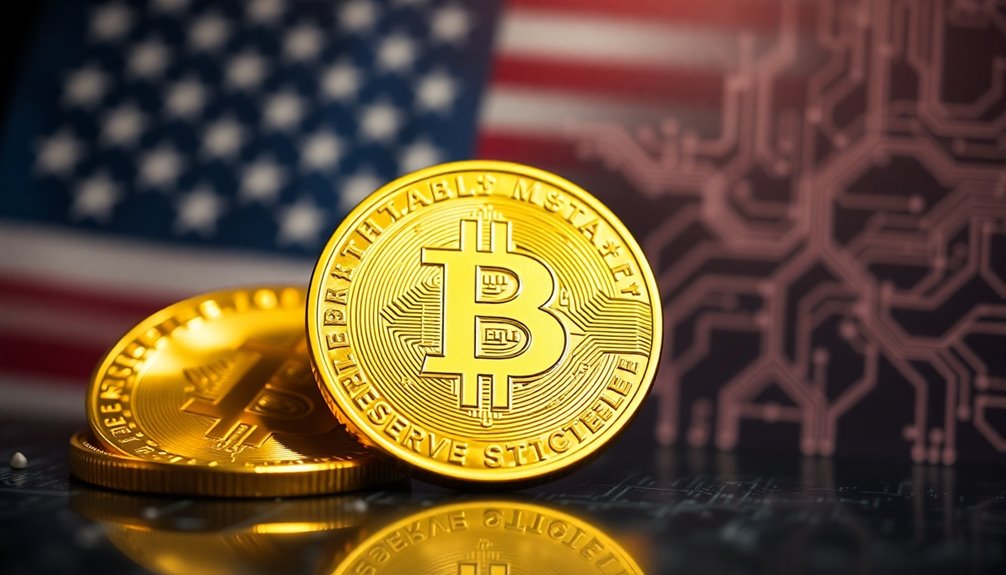

The recent announcement of the US government's Crypto Reserve strategy has shifted the landscape for Bitcoin and other cryptocurrencies. You might notice Bitcoin's impressive 8% surge, signaling growing investor confidence. This strategic approach aims to stabilize the volatile crypto market, and it's not just Bitcoin that's benefiting—altcoins are also seeing significant gains. What does this mean for the future of digital currencies and your investment strategy?

As the US government takes a bold step into the digital age, the announcement of a Crypto Reserve marks a significant shift in its stance towards cryptocurrencies. This move has led to a remarkable rally in crypto prices, reversing a downward trend that many investors had grown accustomed to. Major players like Bitcoin and Ethereum saw impressive gains of 8% and 11%, respectively, while altcoins like XRP, Solana's SOL, and Cardano's ADA surged even higher. This newfound endorsement from the government has instilled a sense of confidence in the market, paving the way for a more robust crypto ecosystem.
The reserve's primary purpose is to diversify US financial reserves by including digital assets, which could help stabilize the notoriously volatile crypto market. The reserve will include Bitcoin, Ether, XRP, Solana, and Cardano, acknowledging the potential of cryptocurrencies, the government could shape global regulatory standards and position the US as the "Crypto Capital of the World."
The reserve aims to diversify US financial assets, stabilizing the volatile crypto market and positioning the US as a global leader in cryptocurrency.
As an investor, you might appreciate how this shift contrasts with previous skepticism, creating a more favorable climate for crypto investment. Including major cryptocurrencies like Bitcoin and Ethereum as core assets in the reserve is a strategic decision.
Still, the addition of altcoins like XRP, Solana, and Cardano has sparked debate among enthusiasts. Some argue that these altcoins dilute Bitcoin's dominance, while others believe their inclusion can stimulate innovation within the sector. The recent price surges of these altcoins—XRP jumped 33%, Solana's SOL increased by 22%, and Cardano's ADA rose over 60%—illustrate the excitement this announcement has generated.
The regulatory environment also seems to be shifting, with recent SEC actions favoring crypto businesses. Although challenges remain regarding the classification of cryptocurrencies, this evolving landscape could reduce compliance hurdles for investors and companies alike.
You might find it reassuring that policies under the current administration aim to create a more business-friendly environment for crypto, which could lead to future clarity in regulations. While the potential for market stabilization and investment opportunities is promising, uncertainties linger.
Key details about funding and execution of the reserve are still unclear, leaving many investors eager for more information. As the community reacts to this monumental change, you can't help but wonder how this will affect your investment strategy in the months to come. With the US government taking such a decisive step, the future of cryptocurrencies looks brighter than ever.
Top picks for "crypto reserve strategy"
Open Amazon search results for this keyword.
As an affiliate, we earn on qualifying purchases.