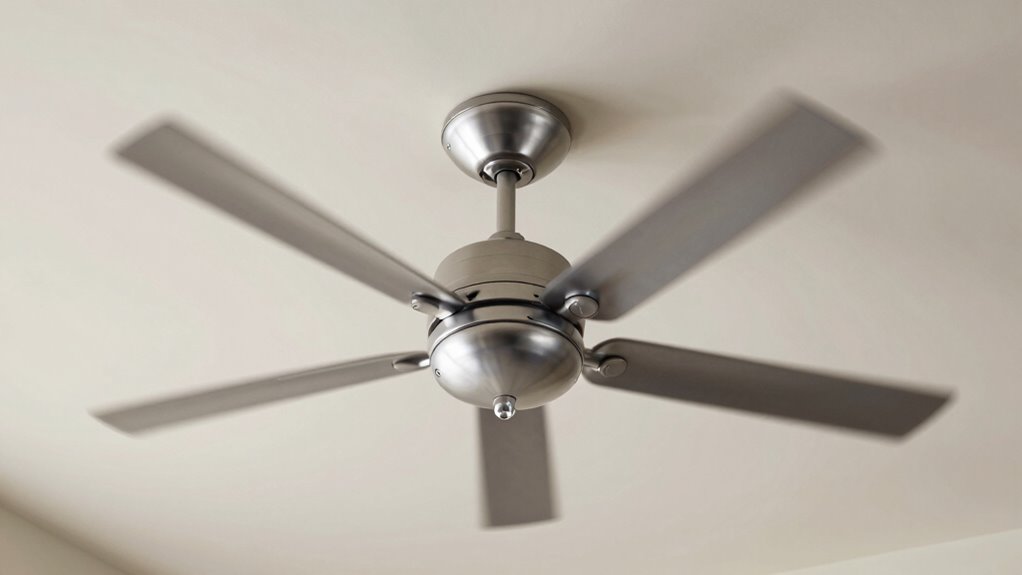

Your ceiling fan’s blade size directly affects how much air it moves, so choosing the right size is key for efficient cooling. Generally, fans with blades between 42 to 52 inches work well in standard rooms with 8-foot ceilings, while larger blades are better for bigger spaces or higher ceilings. Smaller blades suit smaller or low-ceiling rooms. If you want to understand how to pick the perfect blade size for your space, keep exploring these guidelines.
Key Takeaways
- Larger blades generally move more air, enhancing airflow and cooling efficiency in a room.
- Blade size should match room dimensions and ceiling height for optimal airflow distribution.
- Standard blade sizes (42-52 inches) suit rooms with 8-foot ceilings; larger blades are better for high ceilings.
- Proper installation and secure mounting are crucial for safe, effective airflow, especially with larger blades.
- Selecting the correct blade size improves energy efficiency and prevents unnecessary operational strain.
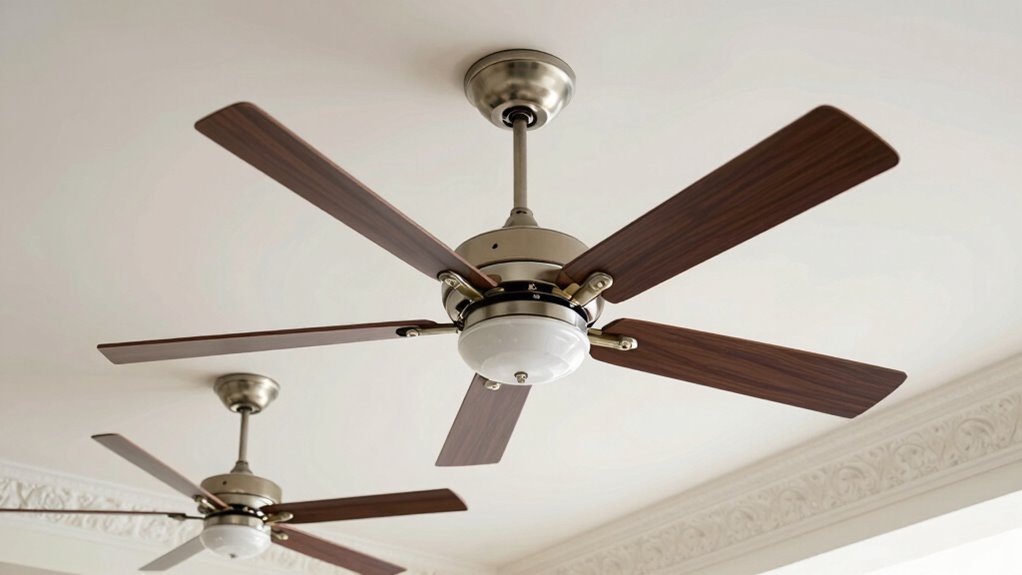
When choosing a ceiling fan, understanding the blade size rule is essential for ideal comfort and efficiency. The size of the blades directly influences how well the fan moves air and how effectively it cools or circulates air in your space. Larger blades generate more airflow, making them suitable for bigger rooms, while smaller blades work better in compact areas. Picking the right blade size not only guarantees comfort but also impacts energy efficiency. A properly matched fan doesn’t have to work as hard to deliver the desired airflow, which can lead to lower energy bills. Conversely, using a fan with blades that are too small or too large for your room can cause it to run inefficiently, wasting energy and possibly increasing your utility costs.
In addition to energy efficiency, installation safety is a critical aspect when selecting a ceiling fan. Larger blades tend to be heavier, so guaranteeing the fan is securely mounted to withstand the weight and vibrations is crucial. Improper installation can lead to wobbling, noise, or even the risk of the fan falling, which endangers anyone nearby. That’s why following the blade size rule is vital—not just for airflow and efficiency but also to maintain safe installation standards. Always confirm that your mounting bracket and ceiling box are rated for the fan’s weight and that the blades are properly balanced. If you’re unsure about installation safety, it’s worth hiring a professional to ensure everything is installed correctly, preventing potential hazards.
Additionally, considering the fan’s blade material can influence durability and noise levels, further enhancing your setup’s safety and performance. Moreover, the blade size should complement your ceiling height. For standard 8-foot ceilings, fans with blades between 42 to 52 inches typically work best. If your ceiling is higher, consider fans with larger blades, which can push air down more effectively across the space. Conversely, in low-ceiling rooms, smaller blades reduce the risk of bumping into the fan and improve safety. Always measure your room dimensions and ceiling height before selecting a fan, so you can adhere to the blade size rule that maximizes airflow efficiency without compromising safety.
Frequently Asked Questions
How Do Blade Pitch and Size Interact to Affect Airflow?
You can control airflow by understanding how blade pitch and size interact. Increasing the blade angle, which is the blade pitch, makes blades push more air with each rotation, boosting airflow. Larger fan diameters also move more air overall. When you combine a bigger fan diameter with an ideal blade angle, you maximize airflow efficiently. So, adjusting both blade pitch and size lets you tailor your ceiling fan’s performance to your needs.
Can a Larger Blade Size Cause Excessive Noise?
A larger blade size can indeed cause excessive noise, like a busy street echoing in your home. This noise often comes from blade imbalance or lower blade durability, which struggle to handle bigger, heavier blades. While larger blades boost airflow and add aesthetic appeal, they may also produce more sound if not properly balanced or made from quality materials. Ensuring high durability and correct installation keeps your fan running smoothly and quietly.
Are Bigger Blades Always More Energy-Efficient?
Bigger blades aren’t always more energy-efficient, but they can enhance energy savings if chosen wisely. Larger blades move more air at lower speeds, reducing power consumption while providing better cooling. Plus, they boost aesthetic appeal, making your space look stylish and modern. However, verify your fan’s size matches your room’s dimensions; otherwise, it might waste energy or create noise. Proper selection optimizes both efficiency and visual appeal.
How Does Ceiling Height Influence Blade Size Choice?
Did you know that in rooms over 10 feet high, a ceiling fan with larger blades can enhance airflow by up to 15%? When choosing a fan, consider ceiling height considerations—higher ceilings often need fans with longer blades for effective circulation. Also, decorative blade designs can add style without sacrificing function. You’ll want a larger fan for tall ceilings to ensure both comfort and aesthetic appeal.
Do Blade Materials Impact Airflow Performance?
Blade materials do impact airflow performance by affecting blade durability and aesthetic appeal. You’ll notice that lightweight materials like plastic or composite offer good airflow with less strain on the motor, while wooden or metal blades are more durable but may be heavier, influencing efficiency. Choosing the right material balances airflow, longevity, and style, so you’ll get a fan that performs well and looks great in your space.
Conclusion
Remember, when choosing a ceiling fan, the blade size is your secret weapon for superior airflow. Bigger blades stretch out like a trusty quill, moving air more effectively across the room. Don’t forget, even in this modern age, the right blade size makes all the difference—just like a well-placed feather in a bygone era. So, measure carefully, pick wisely, and enjoy the breeze you’ve created—no need for a magic spell, just smart choices.