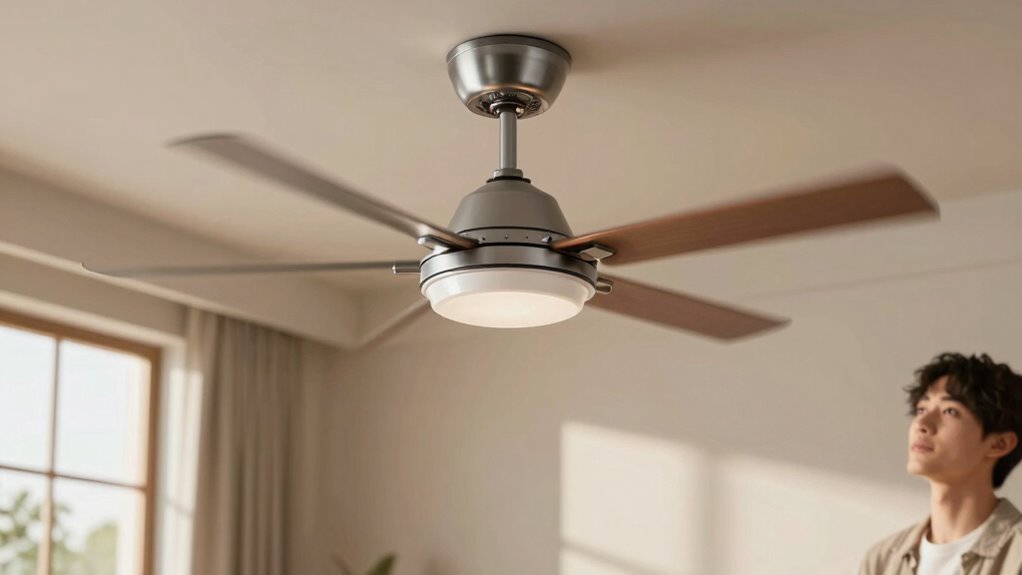

Ceiling fans change perceived temperature more than expected because they create a breeze that accelerates sweat evaporation, making you feel cooler even if the room’s actual temperature stays the same. The air movement affects your body’s heat exchange, helping to distribute heat evenly and eliminate hot or cold spots. Proper fan placement and settings boost this effect. If you want to understand how to maximize comfort and energy savings, keep exploring how fan design and operation influence your environment.

Get everyday essentials delivered free with Prime
- Fast, free delivery on millions of items
- Prime Video, Amazon Music and more included
- Member-only deals all year
Key Takeaways
- Ceiling fans increase air movement, enhancing sweat evaporation and creating a cooler sensation regardless of actual temperature.
- The breeze from fans accelerates heat exchange between the skin and surrounding air, altering perceived warmth or coolness.
- Proper fan placement and direction optimize air circulation, amplifying the feeling of temperature change beyond actual measurements.
- Fans improve thermal comfort by distributing heat evenly and eliminating stagnant air pockets, influencing perception more than real temperature.
- Automated fan controls and design features enhance perception of comfort, making temperature feel cooler or warmer than actual conditions.
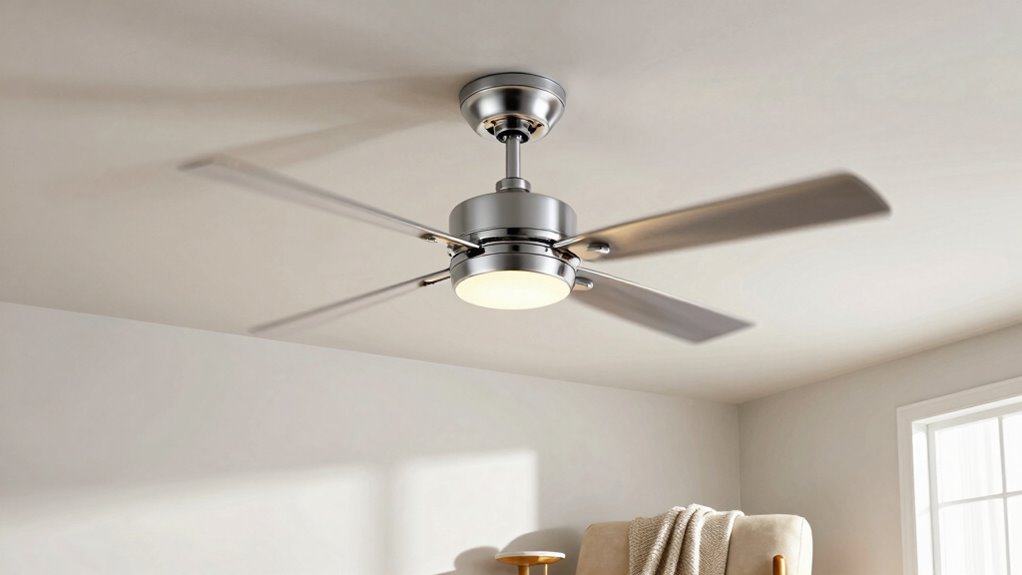
You might think ceiling fans only help cool a room by circulating air, but they actually influence how warm or cold you perceive the space to be more than you realize. This perception hinges on a combination of factors, primarily air circulation and the way fans impact your body’s heat exchange. When a ceiling fan spins, it creates a breeze that accelerates the evaporation of sweat from your skin, making you feel cooler even if the room’s temperature stays the same. This is why, in warmer weather, a fan can give you a noticeable comfort boost without actually lowering the air temperature.
Beyond comfort, ceiling fans also play an essential role in energy efficiency. By improving air circulation, fans help distribute both warm and cool air more evenly throughout a space. During winter, running a ceiling fan clockwise at a low speed pushes warm air that tends to rise toward the ceiling back down to the living area, reducing the need for constant heating. Conversely, in summer, a fan running counterclockwise creates a breeze that enhances evaporative cooling on your skin, allowing you to set your thermostat a few degrees higher without sacrificing comfort. This ability to modulate perceived temperature means you can save on energy costs while maintaining a cozy environment. Properly adjusting the fan’s operation can further optimize its impact on thermal comfort and energy savings.
Ceiling fans improve air circulation, helping distribute heat evenly and reduce energy costs by enhancing comfort year-round.
The way ceiling fans influence perceived temperature is also tied to their capacity to promote air movement, which prevents stagnant pockets of air from forming. Without proper air circulation, a room can feel stuffy or unevenly heated or cooled, impacting your comfort. A well-placed ceiling fan can make a room feel more uniformly comfortable, eliminating hot or cold spots and making the space feel more inviting. Additionally, understanding how air circulation affects thermal comfort can help you optimize your fan settings for maximum efficiency. Properly adjusting the fan’s direction and speed can significantly enhance its effectiveness in modulating perceived temperature. Knowing how fan design features contribute to energy savings can further optimize your usage and comfort. Implementing smart control systems can also help automate fan operation based on room conditions, further enhancing efficiency and comfort. When you optimize your fan’s operation—using the right speed and direction—you enhance air circulation and maximize comfort while keeping energy use low.
ceiling fan with adjustable speed
As an affiliate, we earn on qualifying purchases.
As an affiliate, we earn on qualifying purchases.
Frequently Asked Questions
Do Ceiling Fans Reduce Actual Room Temperature?
Ceiling fans don’t actually lower the room’s temperature, but they make you feel cooler through air circulation and humidity control. By moving air across your skin, fans help evaporate sweat, which enhances your comfort. This improved airflow can reduce perceived temperature, especially in humid conditions. So, while the room stays the same temperature, you’ll feel more comfortable because of better air circulation and humidity management.
How Does Fan Blade Size Affect Cooling?
Larger fan blades generally improve airflow efficiency, enhancing cooling by moving more air across your space. Blade design also matters; wider or curved blades distribute air better, making you feel cooler. When choosing a fan, opt for those with bigger blades and efficient designs, as they generate more airflow without needing to spin faster. This results in a more comfortable environment and saves energy while keeping you cool effectively.
Can Ceiling Fans Be Used in Winter?
A stitch in time saves nine, and the same applies to your ceiling fan in winter. Yes, you can use it, but switch the direction to clockwise to push warm air down. Proper fan placement near the ceiling helps distribute heat evenly, reducing winter heating costs. Using your ceiling fan efficiently keeps your home cozy without cranking the heater, turning a simple switch into a smart winter move.
What’s the Best Fan Speed for Comfort?
You should set your ceiling fan to a low or medium speed for comfort, balancing airflow without excessive noise. A lower speed minimizes fan noise, making it less distracting. Additionally, selecting a fan with a sleek design enhances aesthetic appeal, blending seamlessly with your room decor. This way, you enjoy a comfortable environment, quiet operation, and stylish aesthetics, ensuring your fan contributes positively to your space.
Do Ceiling Fans Save Energy?
Yes, ceiling fans save energy by reducing your reliance on air conditioning, which consumes more power. When used correctly, they act like a gust of fresh air for your energy bills, helping you keep cool without escalating your environmental impact. While they don’t cool rooms directly, their ability to circulate air makes them an eco-friendly alternative, making your home more energy-efficient and environmentally conscious.
Conclusion
So, next time you crank up that ceiling fan, remember it’s not just about cooling down—it’s about tricking your mind into feeling cooler than you really are. Ironically, the fan’s real job isn’t just airflow, but making you believe you’re more comfortable. So, while it might seem like a simple breeze, it’s actually a clever illusion, proving that sometimes, perception really is everything—even when it’s just a fan’s subtle magic at work.
Columbus Day / Indigenous Peoples' Day Picks
long weekend sales
As an affiliate, we earn on qualifying purchases.