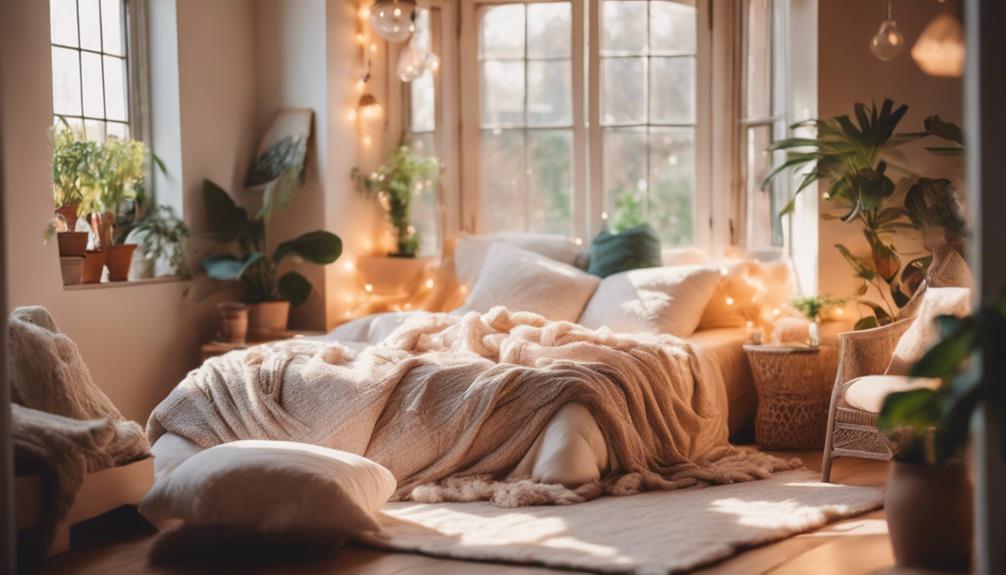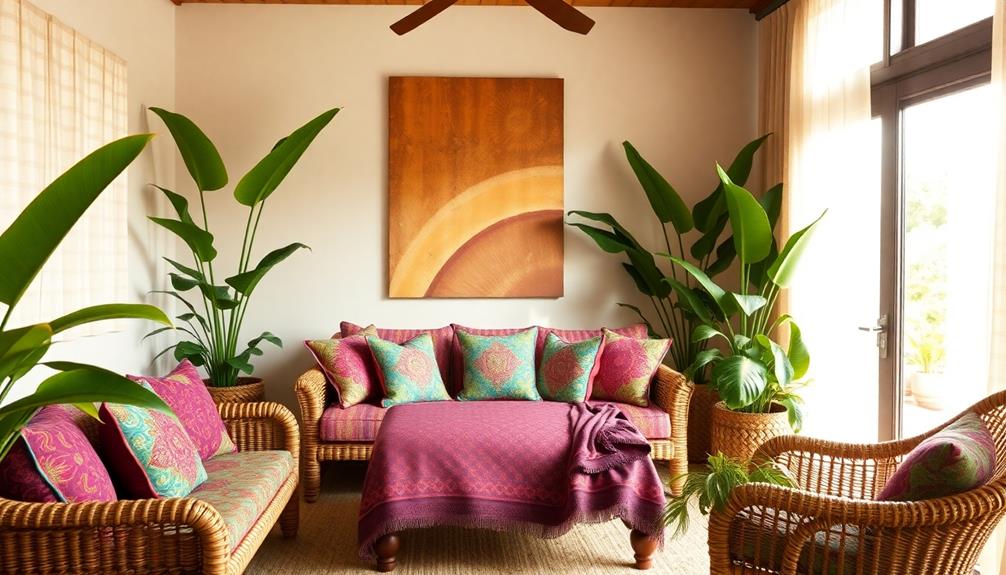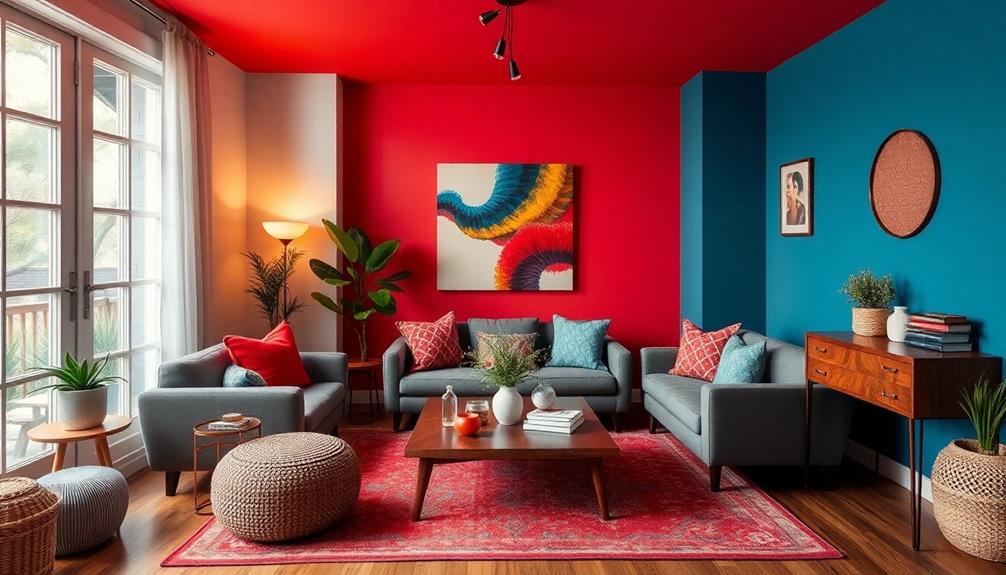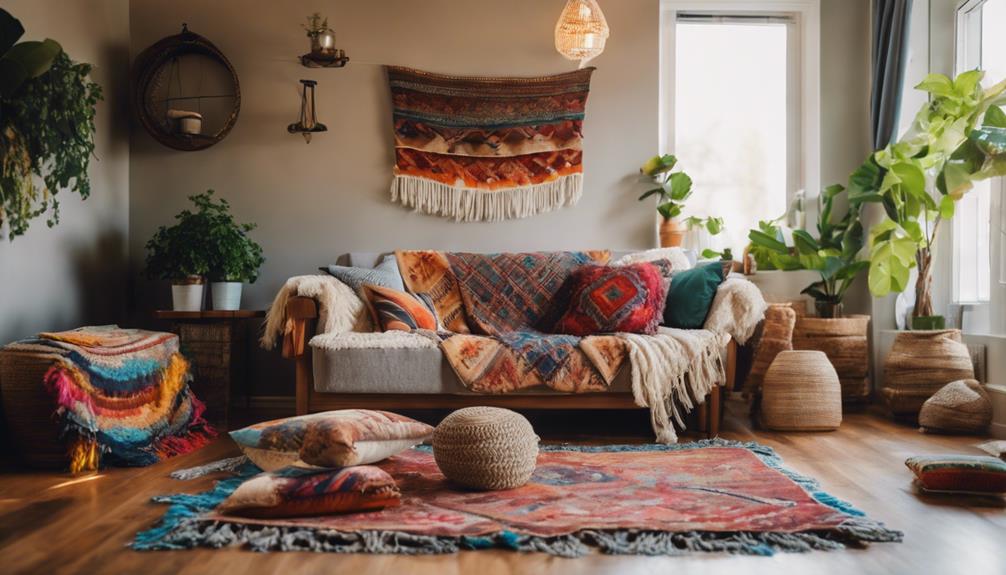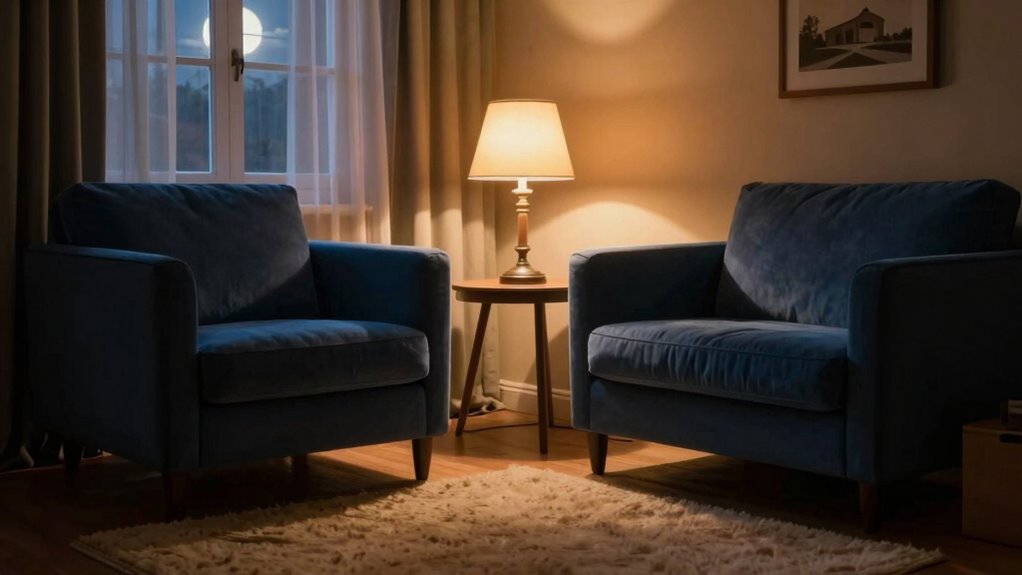

To change your room’s atmosphere at night, use smart lighting with adjustable color temperature. Switching to warmer tones between 2,700K and 3,500K creates a cozy, relaxing space, while cooler tones around 5,000K to 6,500K boost alertness and focus. Dimming or adjusting your lights can instantly transform the mood, making your room more inviting or energizing. If you want to learn how small changes can make a big impact, keep exploring these simple tricks.

Get everyday essentials delivered free — and shop member deals
- Fast, free delivery on millions of items
- Access to Prime Big Deal Days deals on October 6–7
- Prime Video, Amazon Music and more included
Key Takeaways
- Adjusting artificial lighting from warm (2,700K–3,500K) to cooler (5,000K–6,500K) creates a dramatic shift in room ambiance at night.
- Using dimmable lights allows seamless transition between cozy warmth and energetic coolness based on mood or activity.
- Incorporating warmer tones in evening lighting fosters relaxation, while cooler tones promote alertness and focus.
- Matching artificial lighting color temperature with natural sunset hues enhances a harmonious nighttime environment.
- Small changes in light temperature can significantly transform the room’s atmosphere and emotional feel at night.
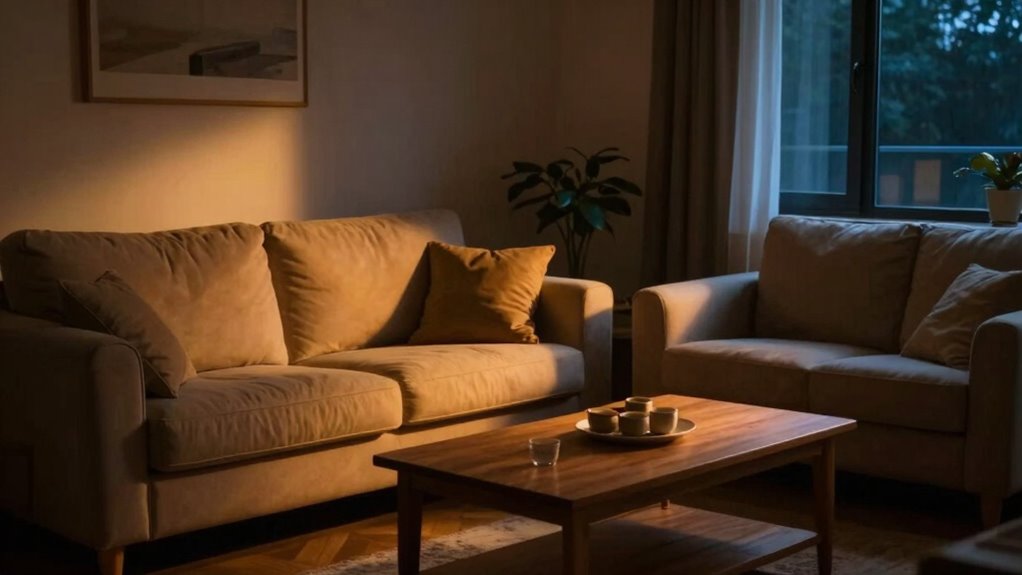
If you’ve ever struggled with making your space look natural or inviting, understanding the color temperature trick can make a big difference. When night falls, and the artificial lighting takes over, your room can suddenly feel cold, harsh, or unwelcoming. That’s where knowing how to manipulate color temperature comes into play. It’s all about choosing the right lighting to influence the atmosphere and mood of your space, transforming it from a stark environment into a cozy retreat.
Artificial lighting varies in color temperature, measured in Kelvins (K). Cooler temperatures, around 5,000K to 6,500K, produce bright, bluish light that’s similar to daylight. Warm temperatures, from 2,700K to 3,500K, emit a softer, yellowish glow that mimics sunset or candlelight. When the sun sets, our natural light shifts to the warmer end of the spectrum, signaling relaxation and winding down. By adjusting your artificial lighting to match this natural transition, you can create a harmonious environment that feels inviting and comfortable at night.
Adjust your lighting to match natural sunset warmth for a cozy, inviting nighttime atmosphere.
Using warm lighting in your living space during the evening promotes mood enhancement. It softens the room’s ambiance, making it easier to unwind after a long day. Warm, amber-toned bulbs or dimmable lights set to a lower Kelvin count can make your space feel more intimate and cozy. Conversely, if you need to focus or work late into the night, cooler lighting can boost alertness and concentration. The trick is to balance these choices based on your activity and the mood you want to foster.
The color temperature trick isn’t just about aesthetics; it influences your emotional response and overall well-being. If your room feels too clinical or uninviting at night, switching to warmer artificial lighting can instantly change that. It’s a simple switch, but it has a profound impact on how you experience your space. You’ll notice how it affects your mood—making you feel calmer, more relaxed, or more energized, depending on your choice of lighting.
In essence, understanding and applying the color temperature trick allows you to craft a space that’s tailored to your needs at night. Whether you want to create a peaceful sanctuary or a stimulating environment, adjusting your artificial lighting to match the desired mood makes all the difference. It’s a small change that offers big results in transforming your room into a welcoming, night-time haven. Recognizing the importance of artificial lighting variation can help you make smarter lighting choices for your space. Additionally, choosing the right lighting temperature can contribute to your overall comfort and well-being during evening hours. Being aware of color temperature effects can further enhance your ability to tailor your environment to your emotional needs.
Furthermore, incorporating dimmable lighting options allows for greater control over your room’s ambiance, emphasizing the importance of lighting control in setting the perfect mood.
As an affiliate, we earn on qualifying purchases.
Frequently Asked Questions
Does Color Temperature Affect Sleep Quality?
Yes, color temperature affects your sleep quality. Cooler, blue-toned light can disrupt your circadian rhythm, making it harder for your body to produce melatonin, the hormone that signals sleep. Conversely, warmer, amber light promotes melatonin production, helping you fall asleep faster and enjoy deeper rest. To improve sleep, switch to warmer lighting in the evening and avoid screens before bed.
Can Changing Color Temperature Save Energy?
Yes, changing color temperature can save energy. When you switch to warmer tones, you often use LED lighting technology, which is highly efficient and consumes less power. By adjusting color temperature, you optimize your lighting, reducing unnecessary energy use. This coincidence of energy savings and improved ambiance demonstrates how smart lighting choices can lower your electricity bills while enhancing your space’s mood and comfort.
What Color Temperature Is Best for Relaxation?
You should choose warm, low color temperature lighting—around 2700K—for relaxation. Decorative lighting with these soft, amber hues creates a calming atmosphere, ideal for winding down. Seasonal adjustments can enhance this effect, as warmer tones promote comfort during colder months. Avoid bright, cool lighting, which can be stimulating. Instead, opt for dim, warm-colored lights to foster a peaceful environment perfect for relaxation and restful sleep.
How Does Color Temperature Influence Mood?
Color temperature deeply influences your mood through lighting design, shaping your emotional response. Warm tones create cozy, inviting atmospheres that soothe and relax you, while cool tones evoke alertness and focus, energizing your space. As you switch from a calm amber glow to a crisp, bluish hue, you feel the contrast—calmness versus alertness—highlighting how lighting can steer your emotions effortlessly.
Are There Health Risks With Certain Light Temperatures?
Certain light temperatures can pose health risks, especially if they disrupt your circadian rhythms. In lighting design, using cool, blue-rich lights at night may interfere with your sleep patterns, leading to fatigue and other health issues. To protect your well-being, opt for warmer, amber lighting in the evening. This helps maintain your body’s natural rhythm and promotes better sleep, reducing potential health risks linked to improper lighting choices.
Conclusion
As you switch to warmer tones, imagine the room softly glowing like a cozy ember, wrapping you in a gentle embrace. The cool night fades into a comforting hue, turning your space into a tranquil retreat. With just a simple change in color temperature, you transform your environment into a peaceful haven, inviting calm and quiet. This clever trick lets you craft a soothing sanctuary, where every night feels like a serene, warm sunset.
Halloween Picks
halloween
As an affiliate, we earn on qualifying purchases.