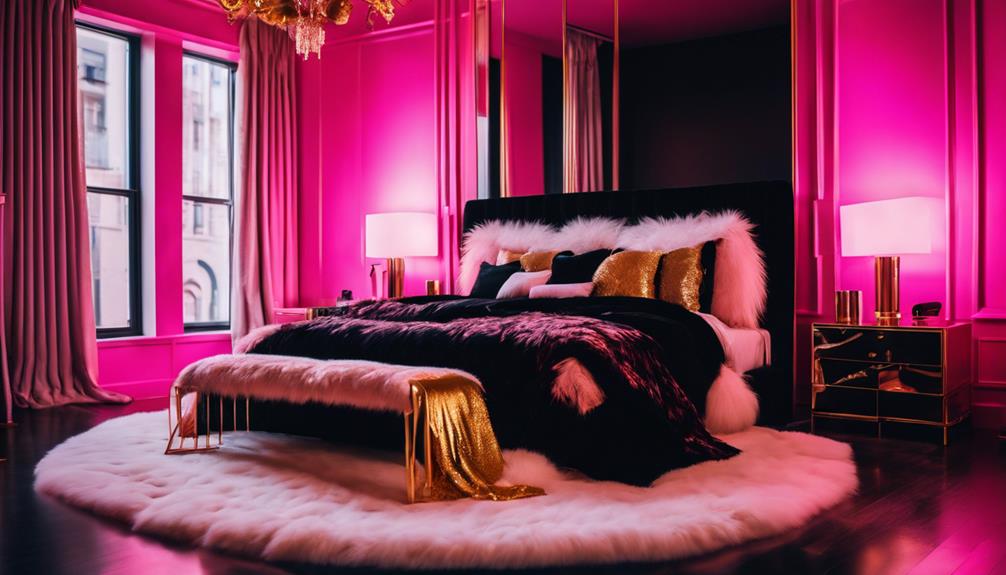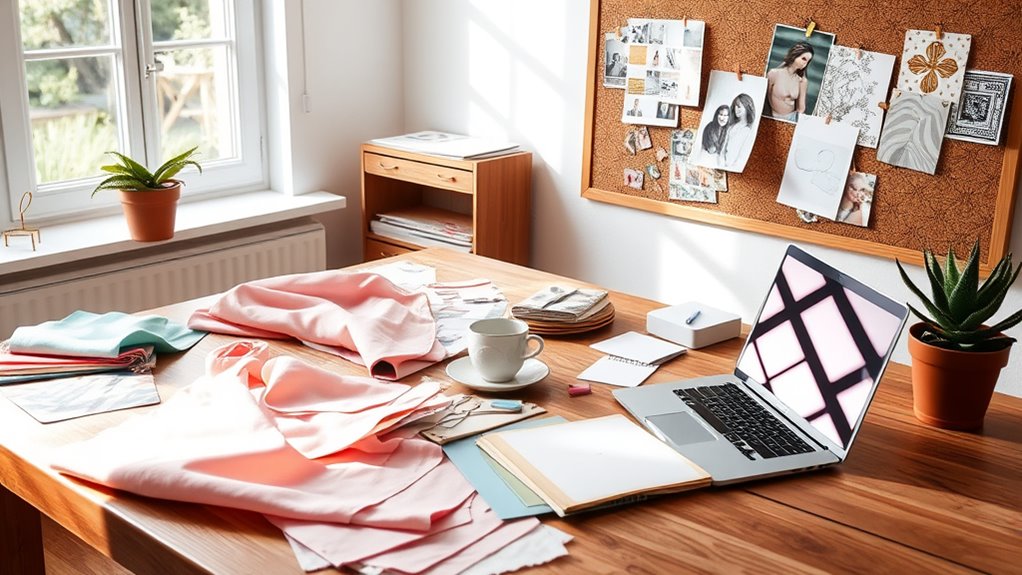
To create a mood board for your space, start by gathering inspiring images from magazines, Pinterest, or personal photos that evoke the feeling you want. Establish a cohesive color palette and collect material samples like fabric swatches or paint chips to visualize textures. Incorporate style elements that match your theme, ensuring everything works together harmoniously. If you keep exploring, you’ll discover how to refine your ideas and bring your vision to life effortlessly.
Key Takeaways
- Gather inspiration images that reflect your desired style and mood from magazines, Pinterest, or personal photos.
- Select a cohesive color palette that supports your design vision and guides material choices.
- Collect material samples like fabric swatches, paint chips, or tiles to visualize textures and finishes.
- Arrange images, color swatches, and samples on a board to see how elements complement each other.
- Incorporate style-specific details and tactile samples to enhance the mood and ensure your concept is achievable.
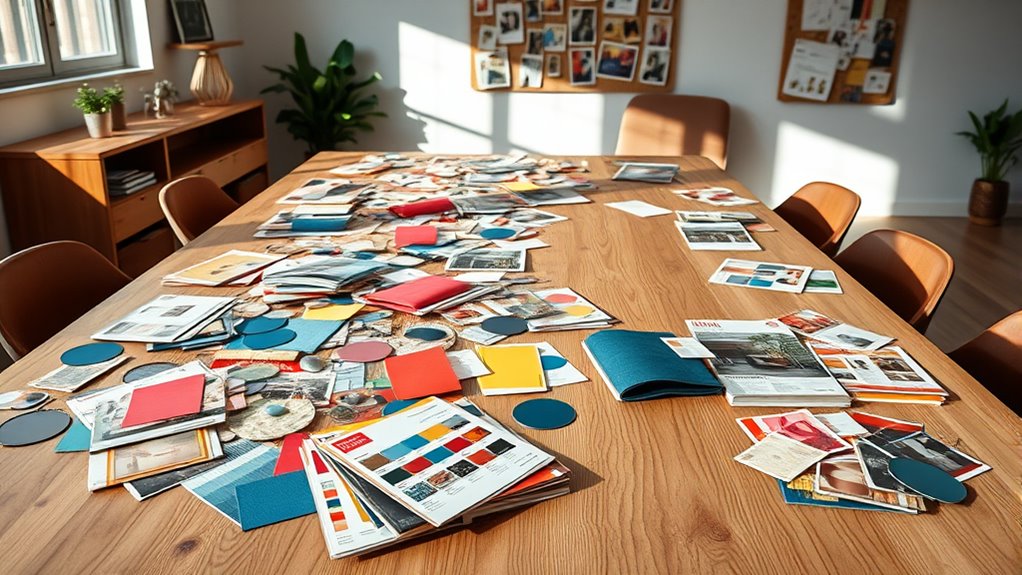
Have you ever struggled to visualize how different design elements will come together in your space? Creating a mood board is a fantastic way to bring clarity to your vision and see how everything fits before making any commitments. Start by gathering your inspiration: magazines, Pinterest boards, or even your own photos. Focus on images that evoke the feeling you want your space to have—be it cozy, modern, or eclectic. As you collect these visuals, pay close attention to your color palette. Picking a cohesive set of colors helps unify your design and guides your choices throughout the process. Jot down or note the key hues that appeal to you; these will be the foundation of your mood board.
Next, incorporate material samples into your collection. Physical swatches like fabric pieces, paint chips, or small tiles allow you to see how textures and finishes complement each other. Placing these samples alongside your images helps you visualize how different materials will look together in real life. For example, a plush fabric sample next to a sleek, matte paint swatch can give you an immediate sense of whether the textures balance well or clash. Keep your samples organized and accessible as you build your board, so you can easily compare and adjust as needed. The tactile aspect of material samples adds depth to your concept, ensuring your design choices are realistic and achievable. Additionally, consider incorporating elements that reflect the rustic charm characteristic of farmhouse bedrooms to enhance your mood board.
Frequently Asked Questions
Can I Use Digital Tools Instead of Physical Materials?
Yes, you can definitely use digital tools instead of physical materials. Digital mood boards allow you to easily gather, arrange, and modify images, colors, and textures without the need for physical samples. Tools like Canva or Pinterest make the process simple and accessible, giving you flexibility to experiment with different ideas. Plus, digital boards are easy to share and update, making them a convenient alternative to physical materials.
How Many Images or Items Should I Include?
Start with a handful of images—about 10 to 15—that strike a balance between variety and harmony. Too many images can clutter your board, disrupting visual balance and thematic cohesion, while too few might leave gaps. Focus on selecting items that evoke emotion and reflect your style, ensuring each piece contributes to a cohesive story. This careful curation keeps your mood board both engaging and cohesive.
Should My Mood Board Be Color-Themed Only?
Your mood board doesn’t have to be color-themed only. While color coordination helps create harmony, including different textures, patterns, and thematic elements can add depth and interest. Focus on maintaining thematic consistency so everything complements each other, whether through color, style, or mood. Mixing these aspects allows you to explore various ideas without feeling confined, resulting in a more dynamic and inspiring visual representation of your space.
How Often Should I Update My Mood Board?
You should update your mood board whenever you feel your decor needs a refresh or seasonal changes inspire new ideas. Typically, a decor update or seasonal refresh every few months keeps your space feeling fresh and aligned with your style. Regular updates help you incorporate new trends or personal tastes, ensuring your mood board stays relevant and inspiring. Don’t wait too long—your space deserves a constantly evolving vibe!
Can I Incorporate Personal Photos Into My Mood Board?
Yes, you can absolutely incorporate personal photos into your mood board to add a unique touch. Personal photos serve as powerful creative expressions, making your space feel more meaningful and authentic. They evoke emotion, inspire your design choices, and reflect your personality. By blending personal photos with other visual elements, you create a mood board that truly represents your style, turning your vision into a heartfelt, inspiring reality.
Conclusion
Now that you know how to create a mood board, you’re ready to bring your vision to life. Trust your instincts and don’t be afraid to experiment—your perfect space is just around the corner. Remember, Rome wasn’t built in a day, so patience is key. Keep tweaking and refining until your space reflects your true self. Soon enough, you’ll have a space that feels just right, like a gust of fresh air.