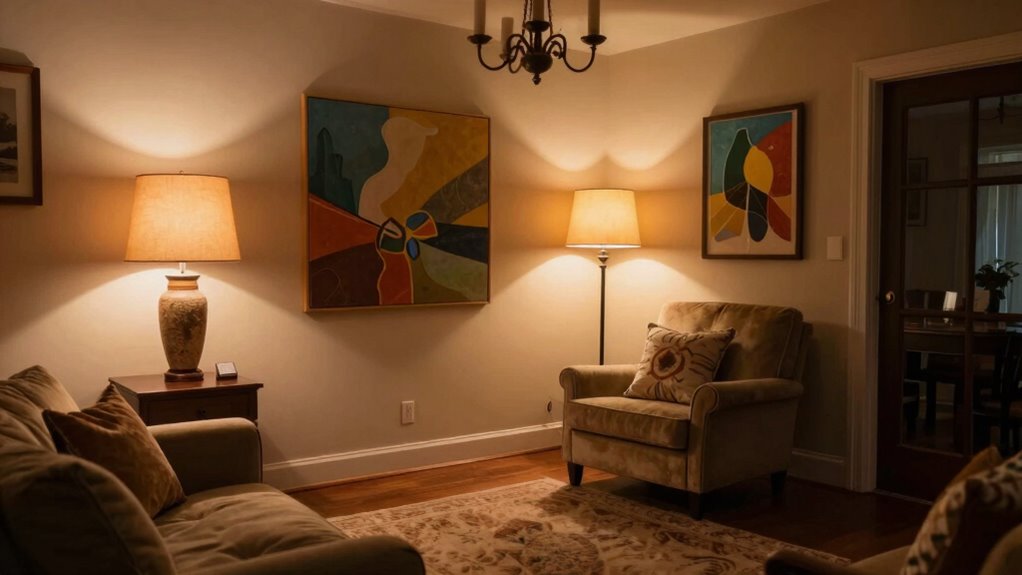

To prevent a room from feeling flat, layer different types of lighting like ambient, task, and accent lights to add depth and dimension. Use overhead fixtures for general illumination, task lights for specific activities, and accent lights to highlight features. Adjust and control the light levels to create a balanced, inviting atmosphere. If you want to discover how to master these techniques and make your space truly stand out, keep exploring this essential approach.

Get everyday essentials delivered free with Prime
- Fast, free delivery on millions of items
- Prime Video, Amazon Music and more included
- Member-only deals all year
Key Takeaways
- Combine ambient, task, and accent lighting to create depth and visual interest.
- Use dimmers and controls to adjust light intensity and establish a dynamic atmosphere.
- Highlight architectural features or decor with focused accent or decorative lights.
- Incorporate varied fixture styles and heights for added dimension and texture.
- Ensure each lighting layer complements others without overpowering the space.
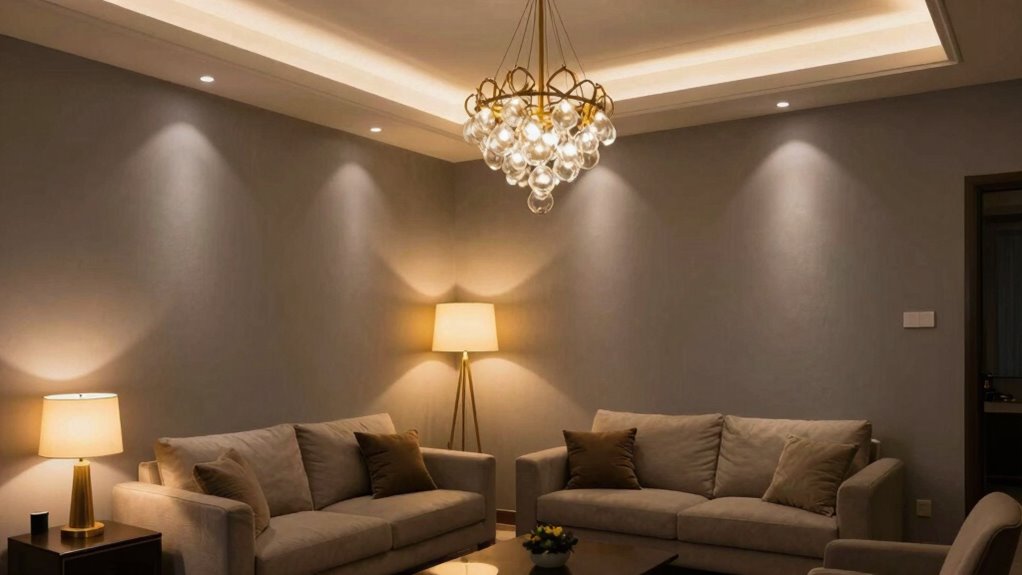
Have you ever wondered how to create a warm, inviting space that feels perfectly lit? The secret lies in layering your lighting to add depth, dimension, and ambiance. When you think about lighting, it’s not just about brightening a room; it’s about crafting an environment that feels dynamic and comfortable. To do that, you need to combine different types of lighting—ambient, task, accent, and decorative—to avoid a flat, lifeless space.
Start with ambient lighting, which sets the overall tone. This could be a ceiling fixture, recessed lighting, or wall sconces that evenly distribute light across the room. It’s your foundation, providing general illumination so the space doesn’t feel dark or dull. Once you have your ambient layer in place, add task lighting where specific activities happen. Think about reading lamps next to a sofa or under-cabinet lighting in the kitchen. If you’re aiming for a cozy cooking corner, consider culinary lighting options that highlight your workspace without overpowering the room. Good task lighting ensures you see what you’re doing and adds a layer of practicality. Additionally, understanding lighting layers can help you balance the different illumination types effectively.
Start with ambient lighting to set the tone and provide even, welcoming illumination.
Next, incorporate accent lighting to highlight features or create visual interest. This is where you can showcase artwork, architectural details, or decorative objects. Use spotlights or picture lights to draw attention and add a sense of sophistication. If you have an outdoor space, outdoor illumination plays a key role in extending your living area and creating curb appeal. Pathway lights, string lights, or wall-mounted fixtures can turn your yard into an inviting oasis after sunset. Proper outdoor illumination not only enhances safety but also adds a warm glow that balances the entire lighting scheme. Understanding layering techniques is essential for designing a well-balanced space. To achieve a cohesive look, it’s important to consider the balance of light across different layers, ensuring no element overwhelms another. Finally, don’t forget decorative lighting, which injects personality and style into your room. Chandeliers, pendant lights, or ornate lamps serve as focal points and make your space feel complete. When layered thoughtfully, these lighting elements work together to create a room that’s vibrant, cozy, and inviting. Remember, the key to avoiding flatness is to vary the intensity and direction of light, ensuring each layer complements the others without competing. Incorporating lighting control systems can further optimize your lighting setup and adapt it to different moods and times of day. With a strategic approach to lighting layering, your space transforms into a harmonious environment that feels warm, lively, and perfectly lit—whether indoors or outdoors.
As an affiliate, we earn on qualifying purchases.
Frequently Asked Questions
How Do I Choose the Right Bulb Color Temperature?
To choose the right bulb color temperature, consider the mood you want to create. For a warm, cozy feel, opt for bulbs around 2700K to 3000K. If you prefer a cooler, more energetic vibe, go for 4000K to 5000K. When selecting bulbs, think about how the color temperature complements your space and other lighting layers. Good bulb selection enhances ambiance and guarantees your lighting feels balanced and inviting.
Can Layered Lighting Save Energy?
Layered lighting can definitely save energy when you choose energy-efficient bulbs and smart controls. You control the brightness, reducing unnecessary power use, and create a balanced ambiance. Think of it as a symphony of light, where each layer harmonizes to illuminate only what’s needed. By embracing sustainable lighting, you conserve resources and lower your energy bills, making your space both beautiful and eco-friendly.
What Is the Ideal Height for Installing Lighting Fixtures?
You should install decorative fixtures at a height that complements your ceiling height, typically around eye level or slightly above for tables and counters. For general lighting, aim for about 7 to 8 feet if you have standard ceilings, ensuring the fixtures don’t hang too low or feel out of place. Adjust based on ceiling height, so your decorative fixtures enhance the space without overwhelming it or creating shadows.
How Do I Balance Natural and Artificial Light?
Did you know that natural light can account for up to 80% of your room’s brightness? To balance natural and artificial light, start by maximizing daylight with large windows and light-colored curtains. Use decorative fixtures and light diffusers to soften harsh artificial light, creating a warm, inviting atmosphere. Switch between natural and artificial sources seamlessly by adjusting window coverings and strategically placing fixtures, ensuring a well-lit, comfortable space throughout the day.
Are Dimmers Necessary for Layered Lighting?
Dimmers aren’t strictly necessary, but they’re highly recommended for layered lighting. They let you adjust your smart switches easily, creating the perfect ambiance. Plus, they enhance light diffusion, preventing harsh shadows or glare. With dimmers, you can fine-tune brightness levels throughout the day, making your space more comfortable and versatile. Overall, dimmers give you better control, helping your layered lighting scheme truly shine.
Conclusion
Think of your room as a stage, where lighting is the cast that brings the scene to life. By layering different types of light—ambient, task, and accent—you create a rich, dynamic atmosphere that invites you in. Just as a story unfolds with depth and nuance, your space gains character and warmth through thoughtful illumination. When every layer plays its part, your room transforms from flat to fabulous—an enchanting scene that feels alive and welcoming.
Halloween Picks
halloween
As an affiliate, we earn on qualifying purchases.