
When choosing between foam, latex, and hybrid mattresses, consider how each suits your sleep needs. Foam mattresses often offer good pressure relief and bounce, especially gel-infused options that help you stay cool. Latex is natural, durable, and breathable, providing long-lasting support and a more eco-friendly choice. Hybrids combine layers of foam and latex for a balance of comfort and responsiveness. Keep exploring to discover how these materials can give you a better night’s sleep.
Key Takeaways
- Foam mattresses incorporate various foams like gel-infused options for cooling and responsiveness.
- Latex mattresses, especially organic latex, offer natural durability, breathability, and eco-friendly qualities.
- Hybrid mattresses combine foam layers with innerspring or latex for balanced support and comfort.
- Gel-infused foams regulate temperature, preventing overheating, ideal for hot sleepers.
- Latex provides long-lasting support with natural elasticity, while foam options may vary in durability.
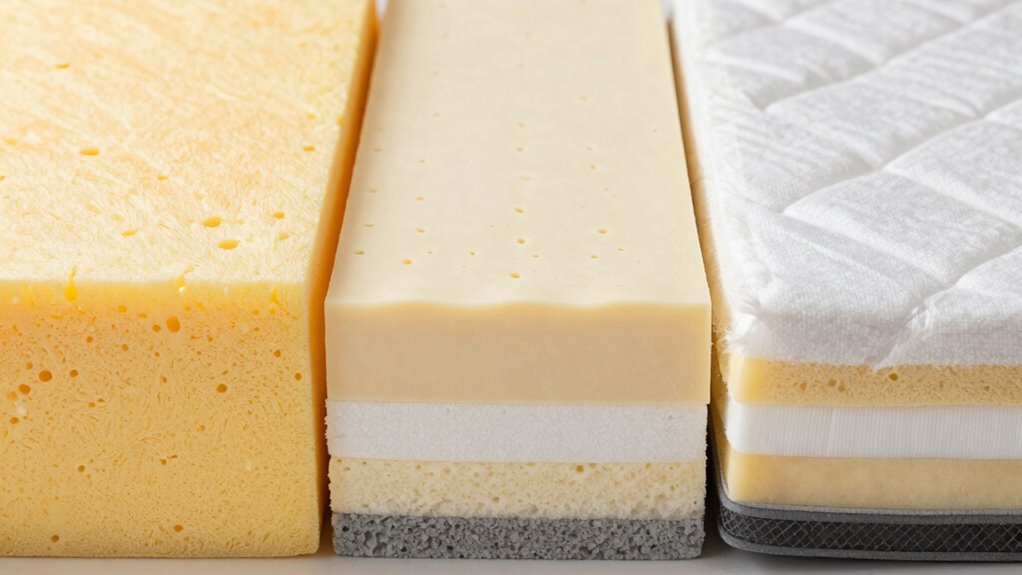
Are you wondering what materials make a mattress comfortable and supportive? It all comes down to the type of foam or latex used and how they’re constructed. When exploring your options, you’ll notice that gel infused foams and organic latex are popular choices that can profoundly impact your sleep quality. Gel infused foams incorporate tiny gel beads or particles within the foam, which help regulate temperature and prevent overheating during the night. This feature makes gel-infused foams especially appealing if you tend to sleep hot, as they absorb and dissipate body heat, maintaining a cooler surface. These foams also offer good pressure relief and bounce, making them a versatile choice for many sleep preferences.
Gel-infused foams regulate temperature, offering pressure relief and bounce for a cooler, more comfortable sleep.
On the other hand, organic latex presents a different set of benefits. Derived from natural rubber trees, organic latex is prized for its eco-friendly qualities and durability. It’s inherently breathable, thanks to its open-cell structure, which promotes airflow and helps keep you cool. Organic latex also provides excellent pressure point relief, contouring gently to your body without feeling too soft or too firm. Because it’s natural, it’s less likely to contain harmful chemicals or synthetic additives, making it a healthier option for those with sensitivities or allergies. Additionally, organic latex tends to last longer than many foam options, so investing in a mattress with this material can pay off over time. Durability of latex is one of its most significant advantages, especially for those seeking a long-term sleep solution.
Choosing between gel infused foams and organic latex depends on what you prioritize most in your sleep experience. If temperature regulation and quick responsiveness are key, gel-infused foam might be the better pick. Its cooling properties and bounce are ideal for restless or hot sleepers. Conversely, if you prefer a more natural, eco-conscious approach with long-lasting support, organic latex is an excellent choice. Its natural elasticity provides consistent comfort and helps reduce motion transfer, which is beneficial if you share your bed.
Both materials have their strengths, but understanding how they work helps you make an informed decision. Gel infused foams blend technology and comfort, offering a cooler sleep surface with good pressure relief. Organic latex emphasizes sustainability and natural support, providing a resilient, breathable, and healthier sleep environment. Ultimately, the right material depends on your individual needs, whether it’s temperature control, eco-friendliness, or durability. By knowing what these materials bring to the table, you can find a mattress that truly supports your sleep and helps you wake up refreshed each morning.
Frequently Asked Questions
Are There Hypoallergenic Options for Each Mattress Type?
Yes, there are hypoallergenic options for each mattress type. Look for mattresses with hypoallergenic certifications, which guarantee they meet strict standards for reducing allergens. For foam mattresses, choose those made with hypoallergenic foam or memory foam. Latex mattresses often come in natural or organic latex, which can help minimize material allergy issues. Hybrid mattresses can combine these features, offering hypoallergenic covers and core materials to suit allergy sufferers.
How Do Temperature Regulation Features Differ Among Materials?
You might worry about overheating at night, but different materials have cooling features. Foam mattresses with cooling gel infuse temperature regulation, helping you stay cool. Latex naturally offers excellent breathability, allowing air to circulate and wick away heat. Hybrids combine foam and coil layers, providing both contouring comfort and enhanced breathability. So, no matter your preference, there are options designed to keep you comfortable and cool throughout your sleep.
What Is the Typical Lifespan of Foam, Latex, and Hybrid Mattresses?
You can expect foam mattresses to last about 7 years, latex around 10-15 years, and hybrid mattresses roughly 8-10 years. Durability concerns often influence your choice, especially since latex tends to be more durable and eco-friendly, reducing environmental impact. Foam may degrade faster, impacting longevity and sustainability. When selecting a mattress, consider how durability aligns with your comfort preferences and environmental values.
Are Hybrid Mattresses Suitable for All Sleeping Positions?
Yes, hybrid mattresses suit most sleeping positions because they offer balanced pressure distribution and good motion isolation. If you sleep on your side, hybrids can cushion your shoulders and hips, reducing pressure points. For back or stomach sleepers, they provide support and maintain spinal alignment. Their combination of foam and coil layers guarantees you stay comfortable, minimize movement transfer, and get restful sleep regardless of your preferred sleeping position.
How Do Maintenance and Cleaning Vary Across Mattress Materials?
A stitch in time saves nine, so proper maintenance matters. Cleaning routines vary across mattress materials: foam needs gentle vacuuming and spot cleaning, while latex resists stains better and requires less frequent cleaning. Hybrid mattresses combine features, so follow manufacturer instructions carefully. Regularly airing out your mattress and using a mattress protector helps with stain resistance and prolongs lifespan. Keep up with maintenance to guarantee your sleep surface stays fresh and supportive.
Conclusion
Choosing the right mattress material depends on your comfort preferences and needs. For instance, if you prefer a balance of support and bounce, a hybrid might suit you best. Imagine someone with joint pain switching to a latex mattress and experiencing relief due to its pressure-relieving qualities. Ultimately, understanding foam, latex, and hybrid options helps you make an informed decision, ensuring restful nights and better mornings. Prioritize what matters most to you for a truly personalized sleep experience.