
Mid-century modern design features clean, streamlined lines and functional furniture made from natural materials like wood, fiberglass, and metal. You’ll find uncluttered spaces with simple silhouettes that blend form and function seamlessly. Use neutral tones as a base, then add bold accent colors like teal or mustard for vibrancy. Incorporate iconic pieces like the Eames lounge chair to create stylish, livable rooms. Keep exploring to discover how to transform your space with these timeless elements.
Key Takeaways
- Characterized by minimalist designs with clean lines and functional forms, emphasizing simplicity and uncluttered spaces.
- Utilizes natural materials like wood, fiberglass, and metal for durability and aesthetic appeal.
- Features neutral color palettes with bold accent colors such as mustard yellow and teal for vibrancy.
- Prioritizes versatile furniture with sleek silhouettes that look good from all angles.
- Incorporates iconic pieces like the Eames lounge chair and Tulip table to blend form and function.
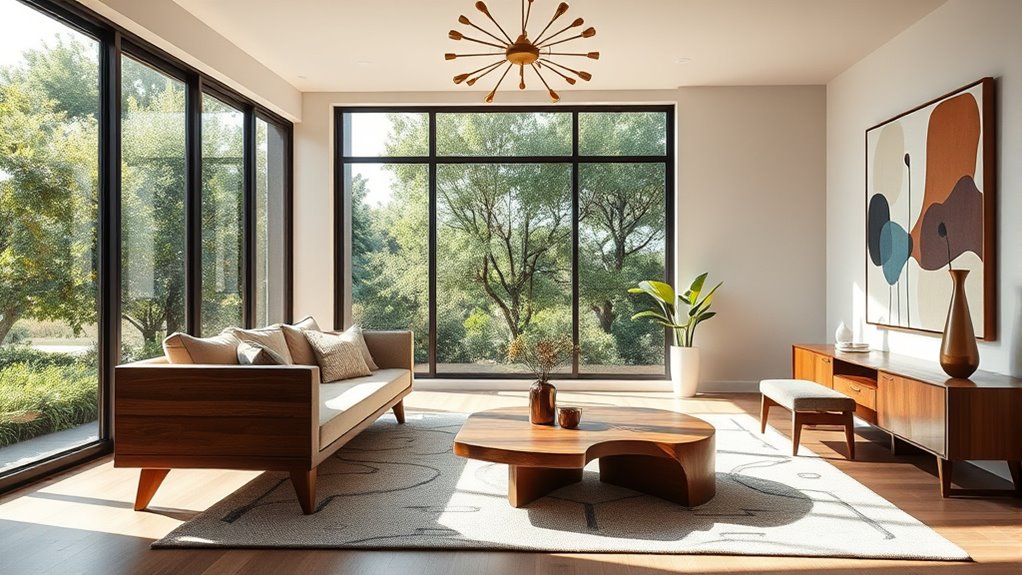
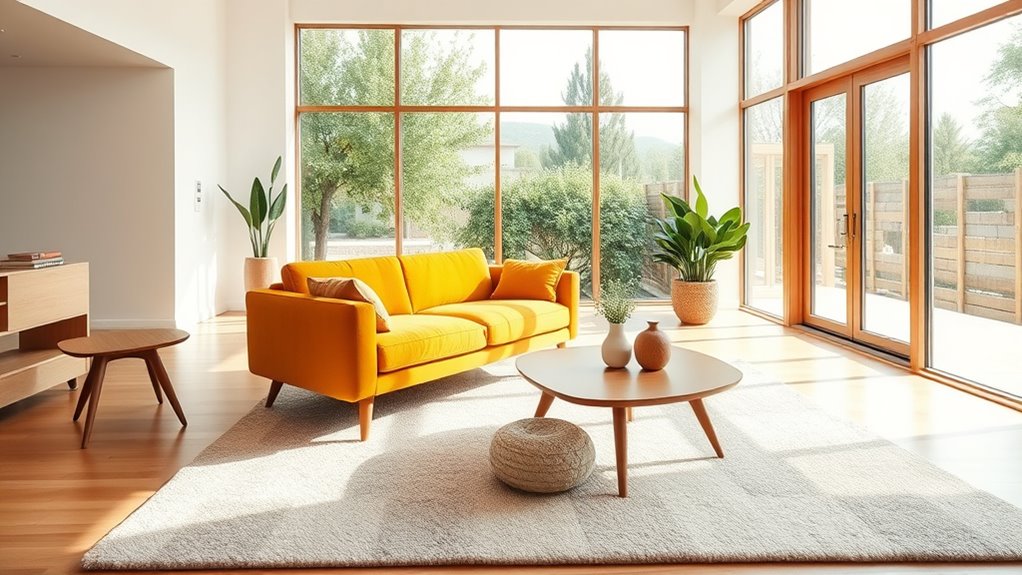
Mid-Century Modern is a design movement that revolutionized interior and furniture styles from the mid-1940s to the late 1960s. It brought a fresh, minimalist approach that emphasized clean lines, functional forms, and an uncluttered aesthetic. When you explore this style, you’ll notice that furniture styles play a central role. Pieces are characterized by sleek, simple silhouettes, often crafted from natural materials like wood, fiberglass, and metal. You’ll find iconic designs such as the Eames lounge chair or the Tulip table, which combine form and function seamlessly. These pieces are not only visually striking but also practical, making your space feel open and inviting. The furniture’s emphasis on simplicity means you’ll want to choose items that are versatile and look good from every angle. This focus on functional beauty is a hallmark of Mid-Century Modern, so avoid overly ornate or bulky furnishings that disrupt the clean aesthetic. Additionally, understanding the design principles of Mid-Century Modern can help guide your choices in creating a cohesive space. Color palettes are equally important when creating a Mid-Century Modern room. You’ll want to stick with a mix of neutral tones—think warm beiges, soft greys, and crisp whites—as a base. These colors serve as a calm backdrop that highlights the furniture’s sleek lines. To add vibrancy, incorporate bold accent colors like mustard yellow, teal, orange, or avocado green. These hues pop against the neutral backdrop without overwhelming the space, creating a lively yet balanced environment. You can introduce these colors through accent pillows, rugs, or decorative accessories. The overall color scheme should feel fresh and optimistic, reflecting the optimism of the era. When choosing your palette, consider how the colors complement each other and the natural light in your room. Mid-Century Modern design thrives on contrast, so don’t hesitate to pair a neutral sofa with bright, colorful artwork or accessories. This approach keeps your space feeling dynamic and engaging. In essence, capturing the spirit of Mid-Century Modern involves selecting furniture styles that are streamlined and functional, paired with a thoughtfully curated color palette that mixes neutrality with bold accents. Keep your furniture uncluttered and purposeful, and choose colors that energize the room without overpowering it. This style invites you to create a space that’s both stylish and livable, blending form and function effortlessly. Whether you’re furnishing a living room, dining area, or office, these key elements ensure your space embodies the timeless appeal of Mid-Century Modern design.
Frequently Asked Questions
What Are the Main Color Palettes Used in Mid-Century Modern Design?
You’ll notice that mid-century modern design often features color schemes with warm neutrals like beige and browns, complemented by bold accent hues such as teals, mustard yellows, and oranges. These palettes create a balanced yet vibrant look. You should incorporate these accent hues through furniture, accessories, or artwork to add visual interest. The key is to use contrasting shades thoughtfully, making your space feel lively without overwhelming it.
How Can I Incorporate Vintage Mid-Century Modern Furniture Into Modern Spaces?
You can incorporate vintage mid-century modern furniture into modern spaces by thoughtfully placing key pieces to create focal points, ensuring they blend seamlessly with your contemporary decor. Mix and match textures and colors to enhance compatibility, and keep the overall aesthetic clean and uncluttered. This approach highlights the vintage furniture’s unique character while maintaining a fresh, modern vibe, making your space feel both stylish and cohesive.
What Are Common Materials Found in Mid-Century Modern Decor?
Think of mid-century modern decor like a well-crafted recipe—simple, yet rich in flavor. You’ll find common materials like teak, walnut, and other warm woods, often paired with sleek metals. Scandinavian influences bring light-colored woods, while geometric patterns in textiles and ceramics add visual interest. These materials create a timeless, inviting feel, making your space both stylish and comfortingly familiar.
How Does Lighting Influence Mid-Century Modern Room Aesthetics?
Lighting greatly influences your mid-century modern space by creating ambiance and highlighting key design elements. You should use ambient lighting to provide a warm, inviting glow that complements the clean lines and minimalism. Statement fixtures, like sleek pendant lights or geometric chandeliers, add visual interest and serve as focal points. Proper lighting enhances the room’s functionality and aesthetic, making your space feel both stylish and comfortable.
Are There Specific Flooring Styles Typical of Mid-Century Modern Homes?
You’ll often find wooden parquet or patterned linoleum in mid-century modern homes. Wooden parquet adds warmth and texture with its geometric patterns, creating visual interest underfoot. Meanwhile, patterned linoleum offers a practical, stylish option with bold designs that highlight the era’s playful aesthetic. Both choices reflect the clean lines and functional beauty typical of mid-century modern style, making your space feel authentic and inviting.
Conclusion
Embracing mid-century modern design transforms your space into an unstoppable force of style and sophistication. It’s not just furniture or colors; it’s a lifestyle that turns your home into a timeless masterpiece, leaving visitors in awe and envy. When you incorporate these key elements, you don’t just decorate—you create an environment so iconic, so undeniably cool, that it becomes the heartbeat of your entire life. Get ready to live in a design revolution!