To plan security camera coverage without blind spots, position your cameras at key points like entrances, driveways, and high-traffic areas. Adjust their angles slightly downward to capture faces and license plates clearly. Avoid obstructions such as trees or structures and guarantee each camera covers vulnerable spots. Regularly review and tweak angles for changes in your property’s layout. To discover additional tips on creating effective coverage, keep exploring expert advice and best practices.

Get everyday essentials delivered free with Prime
- Fast, free delivery on millions of items
- Prime Video, Amazon Music and more included
- Member-only deals all year
Key Takeaways
- Position cameras at strategic points like entrances, driveways, and high-traffic areas, avoiding obstructions and blind spots.
- Adjust camera angles downward and ensure unobstructed views to capture faces and license plates effectively.
- Incorporate external lighting and night vision to maintain clear visibility in low-light conditions.
- Regularly review and modify camera placement and angles as the property layout changes.
- Conduct periodic assessments to identify and address emerging blind spots for comprehensive coverage.
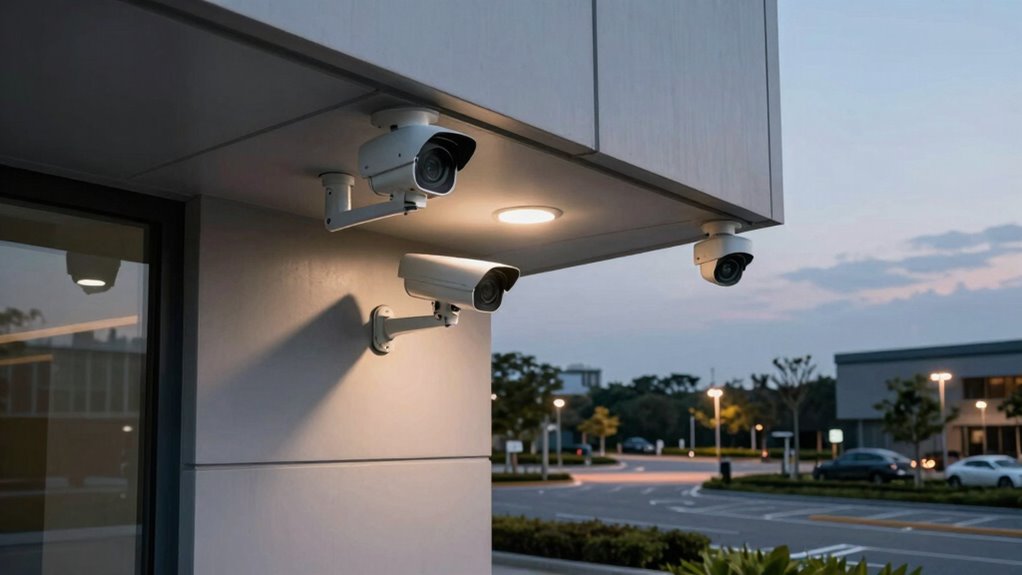
Planning effective security camera coverage is essential to prevent blind spots that could compromise your safety. You need to think carefully about where to position your cameras to maximize coverage and guarantee no area is left vulnerable. Proper camera placement is critical; you want to install cameras at strategic points that cover entrances, driveways, backyards, and any other high-traffic spots. Avoid placing cameras too high or too low, as this can limit their field of view or make them easy to tamper with. Aim for a height that provides a clear, unobstructed view while remaining out of easy reach. When positioning cameras, consider their angle and orientation to eliminate blind spots. For example, angle cameras slightly downward to capture faces and license plates without distortion.
Lighting considerations play a crucial role in camera effectiveness, especially at night. You should evaluate the lighting conditions around your property before installing cameras. If an area is poorly lit, consider adding external lighting to enhance visibility and reduce shadows that could obscure details. Infrared or night vision cameras are helpful in low-light environments, but they work best when there’s some ambient light. Avoid pointing cameras directly toward bright lights or headlights, as glare can impair image quality. Additionally, if you have motion-activated cameras, ensure they’re positioned to avoid false alarms caused by changing light conditions or reflections. Proper lighting not only improves image clarity but also deters intruders who prefer dark, hidden spots. Considering camera placement in relation to the environment can greatly improve overall security effectiveness. Regularly reviewing your camera angles and lighting setup can help you identify and address any blind spots that might develop over time. This ongoing assessment ensures your surveillance system remains effective and reliable, adapting to changes in your property’s layout or lighting conditions. Keeping an eye on camera angles and coverage ensures your system remains effective as your property changes. Remember, the goal isn’t just to install cameras but to create an all-encompassing surveillance system that offers continuous, reliable coverage. By combining strategic camera placement with thoughtful lighting considerations, you greatly reduce blind spots, creating a safer environment for you and your property.
outdoor security cameras with night vision
As an affiliate, we earn on qualifying purchases.
As an affiliate, we earn on qualifying purchases.
Frequently Asked Questions
What Are the Best Camera Types for Coverage?
You should choose camera types that offer wide camera angles, like dome or PTZ cameras, to maximize coverage and minimize blind spots. Consider cameras with dependable power sources, such as wired or solar-powered options, to guarantee continuous operation. Fixed cameras work well for specific areas, while adjustable PTZ cameras give you the flexibility to cover multiple zones. Balancing camera angles and power sources helps you create an all-encompassing security system.
How Do Lighting Conditions Affect Camera Placement?
Lighting conditions can make or break your camera placement. The lighting impact is vital, as poor lighting can create shadows that hide activity, making shadow management necessary. Bright lights might cause glare, reducing visibility, while low light can obscure details. To avoid blind spots, position cameras where natural or artificial light enhances visibility, and use supplementary lighting if needed. Proper lighting ensures clear footage and maximizes your security system’s effectiveness.
Can Cameras Be Integrated With Existing Security Systems?
Yes, you can integrate cameras with existing security systems. When doing so, consider surveillance ethics and privacy concerns to guarantee responsible use. You’ll want to verify compatibility and update your system accordingly, avoiding blind spots. Be transparent about camera placements and access, respecting privacy laws. Proper integration enhances security efficiency, but always prioritize ethical practices to prevent misuse and address privacy issues effectively.
How Often Should Camera Lenses Be Cleaned?
You should clean your camera lenses regularly, ideally once every one to two months, to maintain peak image quality. Regular lens maintenance prevents dirt, dust, and smudges from obstructing the view. Adjust cleaning frequency based on your environment—more frequent cleaning might be necessary if your cameras are exposed to harsh weather or pollutants. Use a soft cloth and gentle cleaner to avoid scratching the lens and guarantee clear footage.
What Legal Considerations Exist for Surveillance Coverage?
You must guarantee legal compliance by respecting privacy concerns, avoiding intrusive or unnecessary surveillance, and following local laws. You’ll want to inform people about camera presence through signage, secure footage properly, and restrict access to authorized personnel. Regularly review your policies to stay updated on regulations, and always balance security needs with individual privacy rights. Doing so helps you maintain lawful, respectful surveillance that protects your property without infringing on privacy.
Conclusion
So, next time you’re tempted to cut corners on security camera placement, remember: blind spots are the ultimate free-for-all for troublemakers. Think of your cameras as the vigilant watchdogs who never sleep—unless you want your property to turn into a crime scene. Cover every corner, angle, and shadow; after all, who wants to be the owner of the “perfect” house with a giant, hideout-friendly blind spot? Stay vigilant, stay secure, and don’t give burglars a scenic route!
Halloween Picks
halloween
As an affiliate, we earn on qualifying purchases.