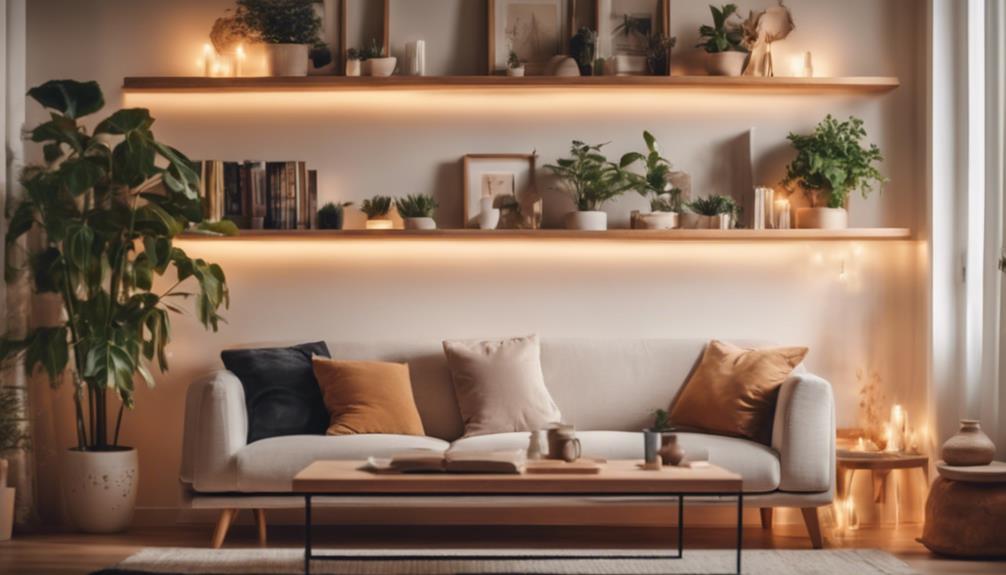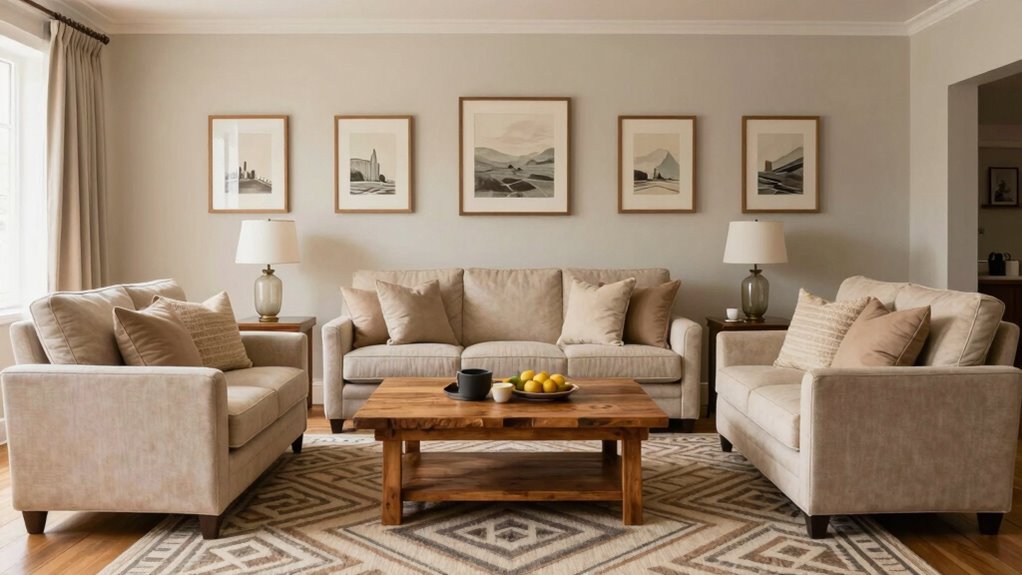

Repetition in interior design helps you create a sense of unity and cohesion, making your space feel intentional and well-curated. By repeating patterns, colors, or textures, you guide the eye smoothly across the room and prevent it from feeling disjointed. This visual consistency fosters harmony and comfort, giving your space a polished look. When you use repetition thoughtfully, your interior becomes more pulled together—stay with us to discover how these elements work in harmony.

Get everyday essentials delivered free with Prime
- Fast, free delivery on millions of items
- Prime Video, Amazon Music and more included
- Member-only deals all year
Key Takeaways
- Repetition creates visual harmony, making spaces feel cohesive and unified.
- It guides the eye smoothly through the room, enhancing overall flow.
- Repeated patterns and elements establish a sense of intentional design and balance.
- Consistent use of color and texture reinforces theme and prevents chaos.
- Natural patterns and rhythm promote calmness and a connected, curated environment.
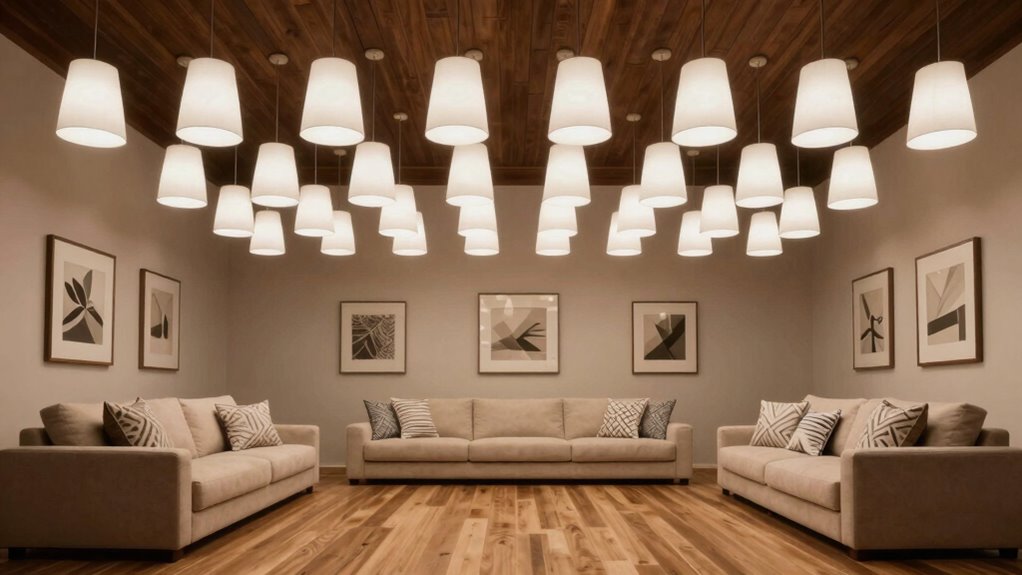
Have you ever noticed how repeating patterns and elements can transform a space? It’s a subtle yet powerful way to create a sense of harmony and cohesion in your interior design. When you incorporate repetition, you’re fundamentally guiding the eye through the room, making everything feel more unified and thoughtfully curated. One of the key aspects of achieving this is through color coordination. By repeating specific hues across different elements—whether it’s throw pillows, rugs, artwork, or furniture—you establish a visual thread that connects various parts of the space. This consistency in color helps prevent the room from feeling disjointed or chaotic, creating a calm and inviting atmosphere. For example, if you choose a soft blue as your accent color, repeating it in curtains, decorative accessories, and even subtle wall art reinforces that theme, making the room feel complete and intentional.
Repeating colors throughout a space creates harmony, unity, and a calm, intentional atmosphere.
Texture consistency also plays an imperative role in reinforcing the feeling of cohesion. When you repeat similar textures, such as woven fabrics, matte finishes, or smooth surfaces, you add tactile harmony that complements the visual repetition. This consistency guarantees that different materials don’t clash or distract from the overall design. Imagine pairing a plush velvet sofa with velvet throw pillows and a soft wool rug—these textures echo each other, tying the space together seamlessly. When textures are consistent, the room feels more curated and polished, as your eyes aren’t constantly jumping from one contrasting surface to another. Instead, they glide smoothly over the repeated textures, creating a sense of balance and stability. Recognizing how visual rhythm influences the overall flow of a space can help you intentionally incorporate repetitive elements that enhance the design. Additionally, understanding how biodiversity influences natural patterns can inspire more organic repetitions in design, creating environments that feel more connected to nature. Incorporating natural elements and repetition can also introduce a sense of calm and wellness into your living space. Emphasizing pattern recognition in your decor can further strengthen the visual coherence and make your interior feel thoughtfully curated.
Ultimately, repetition isn’t about monotony; it’s about intentional design choices that bring all the elements together. When you focus on color coordination and texture consistency, you craft an environment that feels cohesive and well-thought-out. The repeated elements act as a visual glue, unifying diverse components into a harmonious whole. That’s how repetition makes interiors feel more pulled together—by creating a seamless flow that’s both aesthetically pleasing and comforting to be in.
repetition pattern throw pillows
As an affiliate, we earn on qualifying purchases.
As an affiliate, we earn on qualifying purchases.
Frequently Asked Questions
How Many Repetitions Are Ideal for a Balanced Interior Design?
You should aim for about three to five repetitions of key elements to achieve pattern harmony and visual consistency in your space. This balance prevents overwhelming the room while creating a cohesive look. Focus on repeating colors, shapes, or textures across different areas, like throw pillows, rugs, and artwork. This consistency ties everything together naturally, making your interior feel more pulled together and harmonious without feeling monotonous.
Can Repetition Work in Small or Cluttered Spaces Effectively?
Repetition can work in small or cluttered spaces if you pay attention to scale contrast and pattern consistency. Use smaller, subtle repetitions to avoid overwhelming the area, creating a cohesive look without adding visual chaos. Incorporate consistent patterns or colors in accents like pillows, rugs, or art to unify the space. This balance keeps the room feeling intentional and pulled together, even in limited or busy environments.
What Are Common Mistakes to Avoid When Using Repetition?
Don’t bite off more than you can chew when using repetition; overdoing it can turn your space into a visual jumble. Be mindful of pattern consistency and decorative rhythm to keep your design balanced. Avoid mixing too many different styles or colors, which can disrupt harmony. Instead, use subtle repetitions to create cohesion. This approach guarantees your space feels intentional and polished, not chaotic or disjointed.
How Does Repetition Influence the Perception of Space Size?
Repetition enhances visual harmony and creates a spatial illusion, making a room feel larger. When you repeat colors, patterns, or shapes, it guides the eye smoothly across the space, reducing visual clutter. This consistent flow tricks your mind into perceiving the room as more expansive. By thoughtfully repeating elements, you strengthen the connection within your interior, giving it a cohesive and open feel that makes the space seem bigger than it actually is.
Are There Specific Colors or Textures Best Suited for Repetition?
You should choose colors that create harmony, like shades within the same family, to reinforce repetition and unify the space. Opt for textures with subtle variation—such as smooth and matte finishes or woven and plush fabrics—to add interest without disrupting cohesion. This combination of consistent color harmony and thoughtfully varied textures helps your interior feel balanced and pulled together, making the space more inviting and visually satisfying.
Conclusion
By incorporating repetition into your interior design, you create a rhythm that guides the eye and unifies the space. Think of it as a well-conducted orchestra, where each instrument plays its part to produce harmony. When you repeat colors, shapes, or patterns, your room feels more intentional and polished. It’s like weaving a tapestry where every thread connects, making your space feel naturally pulled together and beautifully complete.
Halloween Picks
halloween
As an affiliate, we earn on qualifying purchases.