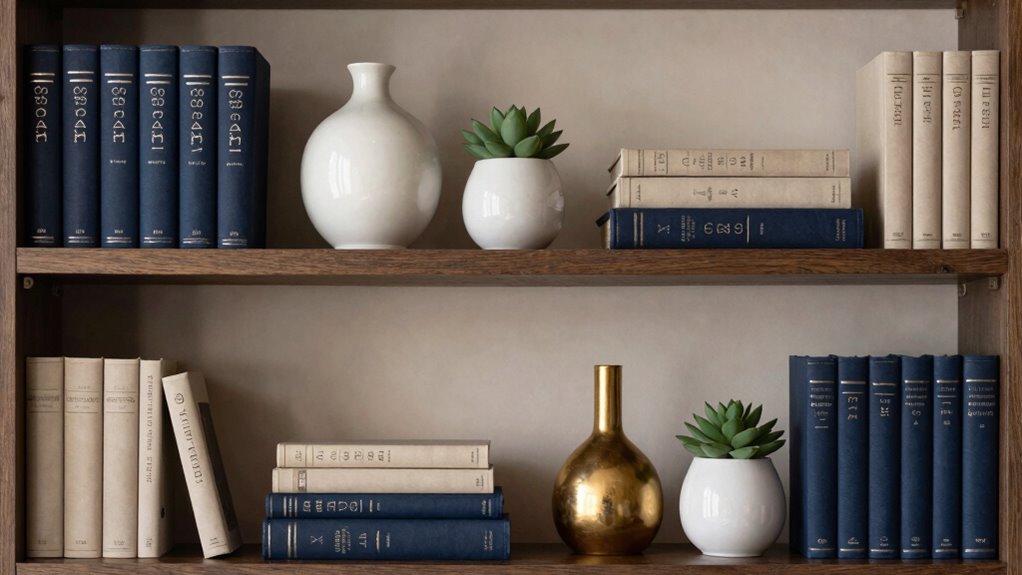

To keep your decor balanced, aim for a thoughtful shelf styling ratio that combines visual weight, material contrast, and spacing. Use larger, anchoring pieces evenly spaced, with smaller objects filled in to add detail. Incorporate different textures and finishes to create depth while leaving negative space to prevent clutter. Focus on harmony in color and proportions to guide the eye smoothly across your display. Keep refining these elements, and you’ll master a perfectly balanced shelf setup.

Get everyday essentials delivered free with Prime
- Fast, free delivery on millions of items
- Prime Video, Amazon Music and more included
- Member-only deals all year
Key Takeaways
- Maintain a balanced ratio of larger statement pieces to smaller decorative items for visual stability.
- Use negative space strategically to prevent clutter and enhance overall harmony.
- Incorporate material and texture contrast to add depth without overwhelming the display.
- Distribute visual weight evenly across the shelf, balancing colors, sizes, and finishes.
- Follow a well-thought-out color palette to create cohesive and pleasing visual flow.
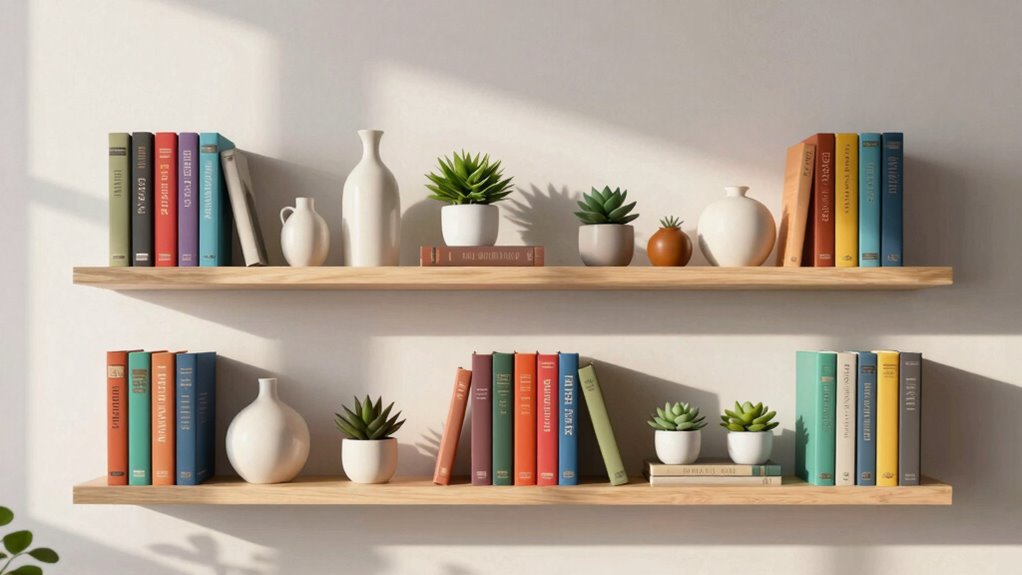
A well-balanced shelf styling ratio makes your display visually appealing and harmonious. When you arrange your items thoughtfully, you create a space that feels both inviting and organized. One of the key factors in achieving this balance is understanding how to use color coordination effectively. Instead of scattering colors randomly, pick a color palette that complements your room’s decor. For example, if your walls are neutral, add pops of color with decorative objects that share similar hues or shades. This creates a cohesive look that draws the eye naturally across the shelf without overwhelming it. You don’t need to match everything perfectly; instead, aim for a harmonious flow where colors enhance each other and the overall ambiance.
Material contrast plays an essential role in elevating your shelf styling. Mixing different textures and finishes—such as matte ceramics, shiny metals, or rustic wood—adds depth and interest. You might place a sleek glass vase next to a textured ceramic bowl or pair a smooth metal sculpture with a rough-hewn wooden box. This contrast not only highlights each piece’s unique qualities but also prevents your display from feeling flat or monotonous. When balancing material contrast, consider the overall theme you want to communicate. A modern, minimal look benefits from sleek, polished items, while a cozy, eclectic vibe might thrive on rougher, more tactile objects. Recognizing material contrast as a crucial element helps you craft a more engaging and dynamic display. Additionally, maintaining a sense of visual weight ensures your shelf remains balanced and aesthetically pleasing. Being mindful of visual hierarchy further helps in guiding the viewer’s eye and creating a natural flow.
To keep your decor balanced, think about the visual weight of each item. Larger pieces should be spaced out evenly, serving as anchors for the arrangement, while smaller objects fill in gaps and add detail. Avoid clustering similar items too closely, which can make the display feel crowded. Instead, create a rhythm—alternating between larger and smaller pieces, smooth and textured surfaces, vibrant and muted colors. This approach guides the eye naturally across the shelf, preventing any one area from feeling too heavy or too sparse.
Finally, don’t forget to incorporate negative space intentionally. Leaving empty areas ensures your display doesn’t look cluttered and gives each item room to breathe. When you consider color coordination, material contrast, and spacing together, you craft a balanced shelf that feels intentional and aesthetically pleasing. It’s about creating a visual harmony that reflects your style while maintaining order and interest. With practice, you’ll develop an instinct for the perfect shelf styling ratio that keeps your decor balanced and engaging.
decorative shelf display accessories
As an affiliate, we earn on qualifying purchases.
As an affiliate, we earn on qualifying purchases.
Frequently Asked Questions
How Do I Determine My Ideal Shelf Styling Ratio?
To determine your ideal shelf styling ratio, start by balancing color coordination and textural contrast. Aim for a mix of 60% functional or larger items and 40% decorative pieces, ensuring your shelf isn’t overcrowded. Incorporate contrasting textures to add visual interest, and coordinate colors to create harmony. Regularly step back and assess; if it feels too busy or sparse, adjust items accordingly to maintain a balanced, appealing look.
Does the Ratio Change With Different Shelf Sizes?
Yes, the ratio changes with different shelf sizes to maintain decorative balance and visual harmony. On smaller shelves, you’ll want fewer, carefully curated items to prevent clutter, while larger shelves can accommodate more decor without overwhelming the space. Adjusting the ratio ensures each shelf feels balanced and cohesive, regardless of size. Focus on creating a pleasing visual flow, keeping the right mix of objects and empty space for ideal decor balance.
Can the Ratio Be Adjusted for a Minimalist Look?
Yes, you can adjust the ratio for a minimalist look by emphasizing minimalism balance and visual harmony. Keep fewer, carefully chosen items on your shelf, focusing on negative space to create a clean, uncluttered feel. Use a simple color palette and varied heights to maintain balance without overwhelming the space. This approach enhances the minimalist aesthetic while ensuring your shelf remains visually harmonious and stylish.
How Often Should I Update My Shelf Decor?
You should update your shelf decor every few months to keep it fresh. Imagine rearranging items, adding new pieces with vibrant color coordination, and contrasting materials like wood and metal to refresh the look. As seasons change, your space evolves, so a quick refresh keeps everything balanced and inviting. Regular updates prevent clutter from building up and allow you to showcase new finds or seasonal accents, keeping your shelves lively and stylish.
What Are Common Mistakes in Shelf Styling Ratios?
A common mistake in shelf styling ratios is ignoring color coordination, which can make your decor look chaotic. Avoid overcrowding with too many plants or objects, and be mindful of plant placement; too many tall plants can overwhelm the space, while uneven distribution disrupts balance. Keep a good mix of sizes and heights, and guarantee your decor doesn’t overshadow each other, maintaining visual harmony.
Conclusion
Remember, finding the perfect shelf styling ratio is like mastering a delicate dance—balance is key. When you mix objects thoughtfully, you create a visual harmony that invites the eye to wander and linger. Think of it as composing a symphony, where each element plays its part without overpowering the others. Trust your instincts, experiment, and soon your shelves will tell a story as compelling as a well-loved novel—balanced, beautiful, and uniquely yours.
Halloween Picks
halloween
As an affiliate, we earn on qualifying purchases.