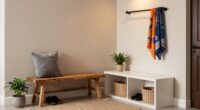
To make small spaces look intentional, focus on creating cohesion through a well-thought-out design plan. Keep the color palette light and neutral to reflect light and foster openness, while using subtle accent colors for interest. Maximize organization with multi-functional furniture, vertical storage, and clear pathways. Light plays a key role—maximize natural light and layer your lighting. Pay attention to balance and harmony in furniture placement, decor, and zones—master these, and your space will feel purposefully designed. If you keep exploring, you’ll discover even more tips to elevate your space.

Get everyday essentials delivered free with Prime
- Fast, free delivery on millions of items
- Prime Video, Amazon Music and more included
- Member-only deals all year
Key Takeaways
- Establish a cohesive color palette with neutral tones and subtle accents for visual harmony.
- Maximize space by using multi-functional furniture and strategic placement along walls.
- Enhance natural light with minimal window treatments and layered lighting for warmth and depth.
- Declutter and utilize vertical storage to maintain order and purposeful design.
- Define specific zones and use consistent decor elements to create a balanced, intentional layout.
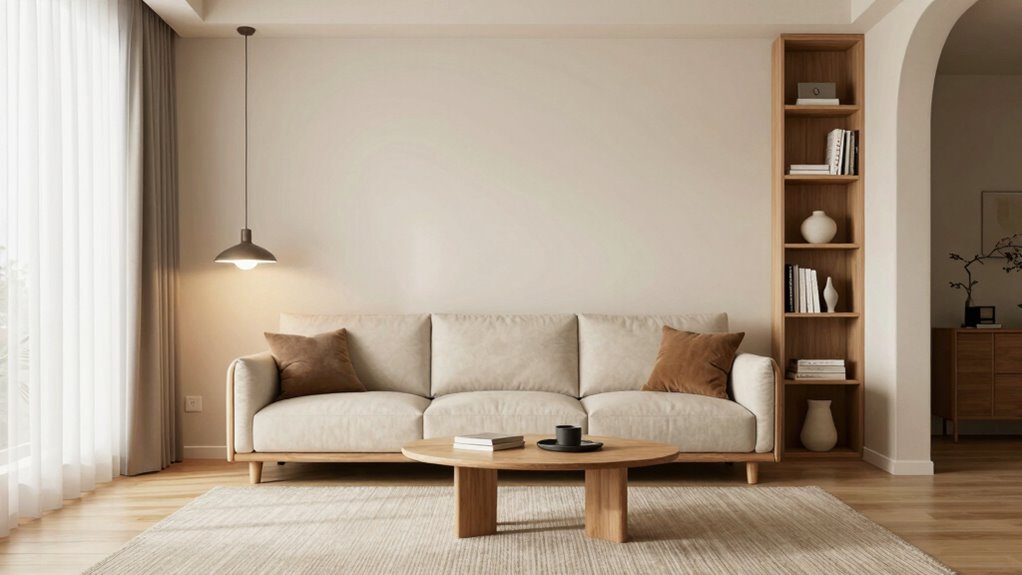
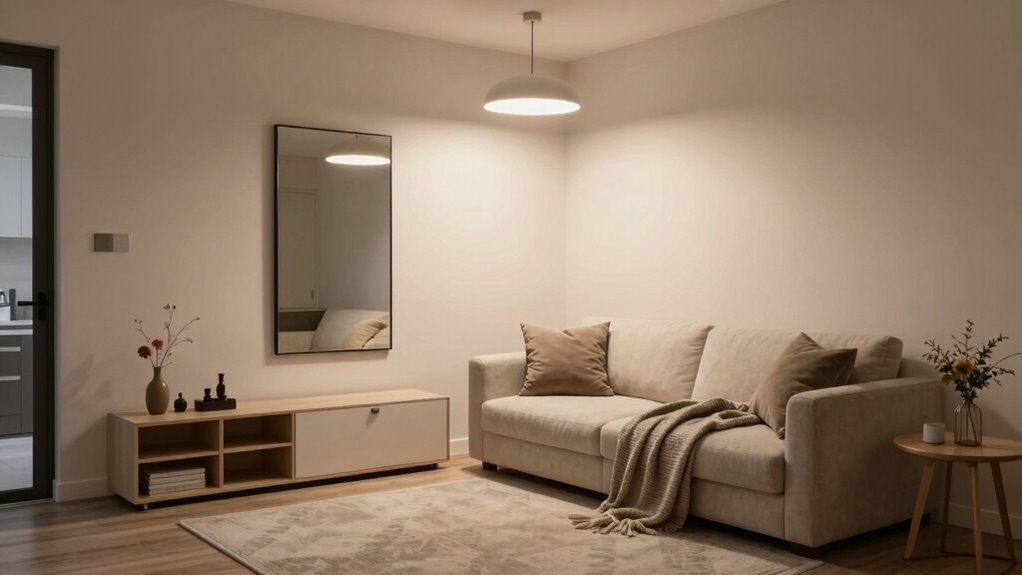
Living in a small space can be challenging, but with the right design principles, you can make it feel spacious and functional. The key lies in creating an intentional look that maximizes every inch without making the space feel cluttered. One of the most effective ways to achieve this is by carefully choosing your color schemes. Light, neutral tones—such as whites, beiges, and soft grays—reflect more light and give the illusion of openness. These colors serve as a clean backdrop, making your space feel larger and more cohesive. If you want to add some personality, incorporate subtle accent colors through accessories or artwork rather than overwhelming the room. This keeps the space feeling intentional and balanced, rather than chaotic.
Using light, neutral tones creates a spacious, balanced, and cohesive small space.
Equally important is furniture placement. Instead of filling your room with bulky pieces, opt for multi-functional furniture that serves multiple purposes. For example, a sofa bed or an ottoman with storage helps you save space while maintaining functionality. When arranging furniture, keep it aligned along the perimeter of the room to open up the central area. Avoid blocking pathways or creating islands of furniture that fragment the space. Instead, position pieces in a way that encourages easy flow and sightlines, making the room appear larger and more inviting. Use mirrors strategically—placing them opposite windows can reflect natural light and expand the visual space. Additionally, biodiversity-friendly design elements, like incorporating natural materials or plant life, can enhance the sense of harmony and well-being in your small space. Incorporating space-efficient storage solutions is essential for maintaining a clutter-free environment. Creating visual continuity, which can be achieved through consistent color palettes and design elements, helps the room feel cohesive and well-planned. Establishing designated zones within a small space can also help define different functions and maintain a sense of order.
Lighting also plays a pivotal role in creating an intentional design. Maximize natural light by keeping window treatments minimal or sheer. Supplement this with layered lighting—overhead fixtures, task lighting, and accent lights—to add depth and warmth. Good lighting emphasizes your color schemes and highlights your furniture placement, reinforcing the sense of a thoughtfully curated space.
To truly make your small space feel intentional, focus on decluttering and organizing. Keep surfaces clear and store items out of sight when not in use. Use vertical storage solutions, like shelves or hooks, to free up valuable floor space. Every piece of furniture or decor should serve a purpose or contribute to the overall aesthetic. When you plan your layout, think about how you move through the room and prioritize arrangements that make your daily routines easier. Incorporating organized storage strategies can significantly enhance the sense of order and calm in your environment.
By applying these design principles, you can transform your small space into a comfortable and visually appealing home that feels both intentional and welcoming.
multi-functional furniture for small spaces
As an affiliate, we earn on qualifying purchases.
As an affiliate, we earn on qualifying purchases.
Frequently Asked Questions
How Do I Choose the Right Color Palette for Small Spaces?
To choose the right color palette for small spaces, consider color psychology to create the desired mood and opt for light, neutral shades to make the area feel larger. Focus on color harmony by selecting colors that complement each other, enhancing the overall flow. Use accent colors sparingly to add interest without overwhelming the space. This approach helps you create a balanced, inviting environment that feels intentionally designed.
What Furniture Size Is Best for Maximizing Small Rooms?
Choose furniture that’s proportionate to your space, opting for multifunctional pieces like sofa beds or extendable tables to maximize utility. Incorporate vertical storage solutions such as wall-mounted shelves or tall cabinets to free up floor space. Keep furniture streamlined and avoid bulky items, which can overwhelm a small room. This approach creates an open, inviting environment while providing ample storage and functionality without sacrificing style.
How Can Lighting Enhance Small Space Design?
Imagine transforming your small space with the right lighting. You can enhance ambient ambiance by adding soft, warm lights that make the room feel cozy and inviting. Incorporate task illumination near areas where you need focused light, like reading nooks or workspaces. By balancing these lighting layers, you’ll create a functional yet stylish environment where every corner feels intentionally designed and welcoming, despite the compact size.
Are There Specific Patterns or Textures That Work Best?
You should use pattern contrast and texture layering to make small spaces feel intentional. Incorporate bold, contrasting patterns like geometric and striped designs to add visual interest without overwhelming. Layer different textures, such as soft throws, smooth ceramics, and rough wood, to create depth and warmth. This combination keeps the space dynamic and inviting, ensuring it feels thoughtfully designed rather than cluttered or cramped.
How Do I Incorporate Personal Style Without Clutter?
You can add your personal style to a small space by choosing decorative accents that reflect your personality, like unique vases or artwork, while keeping the overall look minimalist decor. Think of how a bold cushion or a quirky lamp can stand out without cluttering the room. Balance is key—select a few meaningful pieces to make the space feel like you, yet still clean and intentional.
Conclusion
So, next time you cram your tiny space with every trendy decor piece, remember the secret: less truly is more. Who knew that embracing simplicity could make your small space seem so deliberate? It’s almost funny—by intentionally keeping things minimal, you actually create a room that feels intentional and stylish. So go ahead, embrace the irony: sometimes, the best design rule for small spaces is just doing less. Who knew simplicity could be so clever?
Halloween Picks
halloween
As an affiliate, we earn on qualifying purchases.