
When choosing between performance fabric, leather, and linen for your sofa, consider your lifestyle and maintenance. Performance fabrics resist stains, fading, and pilling, making them ideal for busy households. Leather offers a sleek look, is naturally stain-resistant, but needs regular conditioning and can fade in sunlight. Linen is breathable and casual but wrinkles easily and requires careful cleaning. To find the best fit for your home and learn more about each option, keep exploring.
Key Takeaways
- Performance fabrics are synthetic, stain-resistant, and low-maintenance, ideal for durability and vibrant color retention.
- Leather offers a sleek look, ages well, resists many stains, but needs regular conditioning and can fade in sunlight.
- Linen is breathable and natural, but prone to wrinkling and color fading, requiring careful cleaning and maintenance.
- Performance fabrics generally withstand sunlight and washing better than linen, which may lose colorfastness over time.
- Choosing between them depends on lifestyle, aesthetic preference, and willingness to perform regular upkeep.
Are you unsure which sofa fabric is best for your space? Choosing the right material can seem overwhelming, especially when considering factors like durability, comfort, and style. One of the most important aspects to contemplate is how the fabric handles everyday use, including colorfastness issues and maintenance requirements. If you have kids or pets, or if your lifestyle involves frequent gatherings, you’ll want a fabric that stays looking fresh and requires minimal upkeep.
Performance fabrics are designed with durability in mind. They’re often made from synthetic fibers like polyester or acrylic, which resist stains, fading, and pilling. When it comes to colorfastness issues, performance fabrics typically hold their vibrant hues longer than natural options, even after repeated cleaning or exposure to sunlight. This makes them a smart choice if you want your sofa to maintain its appearance over time. Maintenance requirements are generally low; many performance fabrics are stain-resistant and clean up easily with a damp cloth or gentle soap. Some even come with protective coatings that repel spills, reducing the need for professional cleaning or harsh chemicals. This ease of upkeep appeals to busy households or anyone seeking a sofa that looks good without constant fuss.
Performance fabrics resist stains, fading, and pilling, maintaining vibrant color and easy cleaning for busy households.
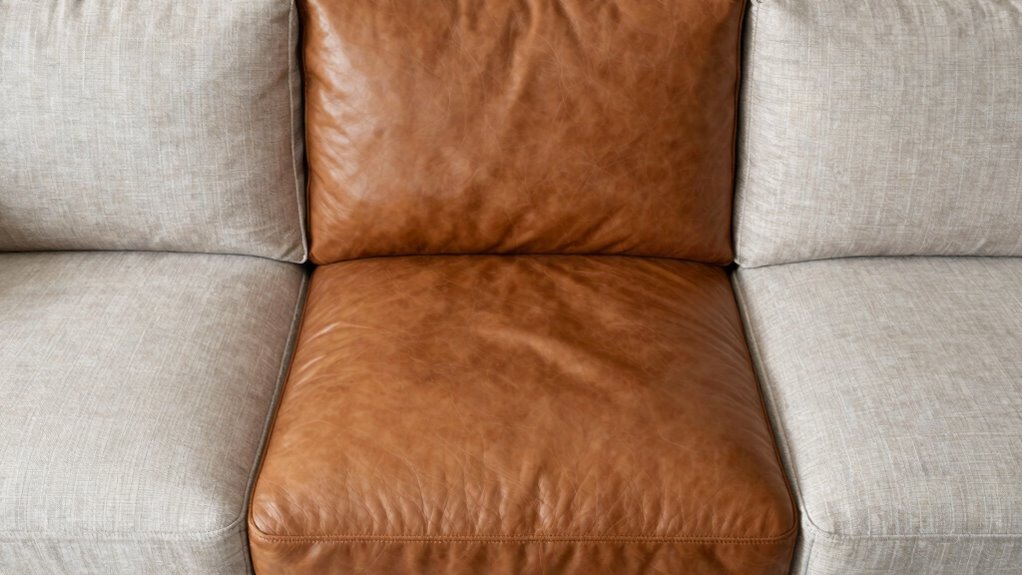
Leather, on the other hand, offers a sleek, sophisticated look and tends to age well if cared for properly. It’s naturally resistant to many stains and spills, but it’s not immune to scratches or cracking over time. In terms of colorfastness issues, leather can sometimes fade if exposed to direct sunlight for prolonged periods, so placement matters. Regular maintenance involves conditioning the leather to keep it supple and prevent cracking, which adds a bit of effort but pays off in longevity. Cleaning leather is straightforward—wiping with a soft, damp cloth usually does the trick—but you should avoid harsh cleaners that can damage the surface. Leather does require consistent upkeep to stay looking its best, but many find it worth the effort for its luxurious feel and timeless appeal.
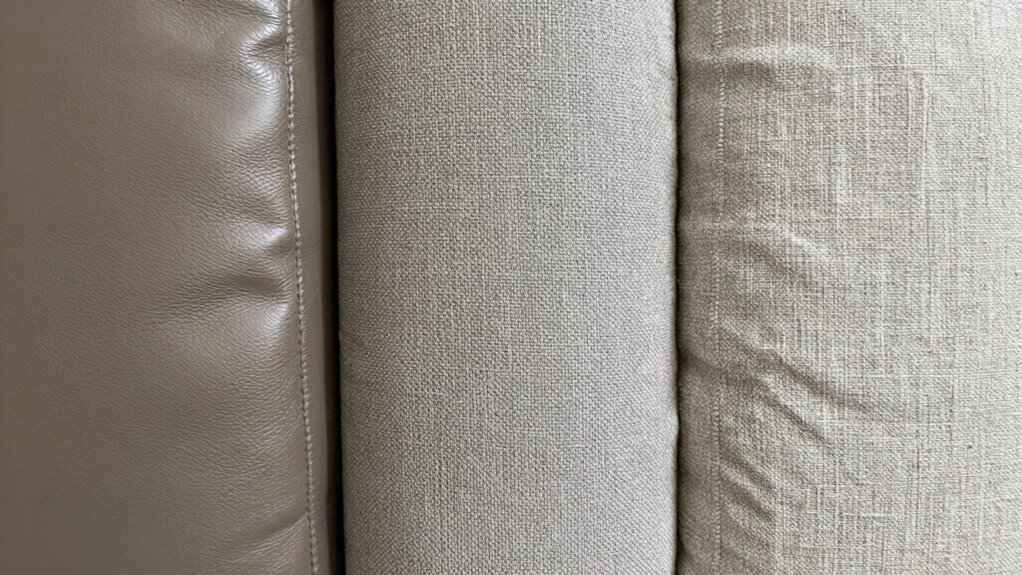
Linen presents a different set of considerations. It’s a natural fiber known for its breathability and relaxed charm, making it a popular choice for casual or coastal interiors. However, linen tends to have more colorfastness issues than synthetic fabrics, especially if exposed to sunlight or frequent washing. It’s prone to wrinkling and may require regular steaming or pressing to maintain a neat appearance. Linen also demands careful maintenance—most often dry cleaning or gentle washing—to prevent shrinking and preserve its texture. While it may not be as stain-resistant as performance fabrics, linen’s natural beauty and comfort often outweigh the extra care needed.
Frequently Asked Questions
Which Fabric Is Most Eco-Friendly for Sofas?
The most eco-friendly sofa fabric for you is linen, especially if you choose sustainable options. Linen is made from flax, which requires minimal water and pesticides, making it a truly eco-conscious choice. Look for brands that prioritize eco-conscious manufacturing practices to guarantee your sofa aligns with sustainability. Leather and performance fabrics can also be eco-friendly if sourced responsibly, but linen generally has a lower environmental impact, making it your best option.
How Do Performance Fabrics Handle Pet Stains?
Ironically, your performance fabric’s pet stain resistance makes it a hero in disguise. When your furry friend leaves a mess, you can quickly tackle pet stain resistance issues with simple fabric cleaning tips like blotting, mild soap, or specialized cleaners. Unlike leather or linen, performance fabrics are designed to withstand pet-related accidents, making cleanup easier and keeping your sofa looking fresh despite your pet’s best efforts.
Are Leather Sofas Suitable for Humid Climates?
Leather sofas are generally suitable for humid climates because of their durability and natural resistance to moisture. You’ll find leather ages well in humidity, as long as you keep it clean and conditioned. Avoid excessive heat or direct sunlight, which can cause cracking. With proper maintenance, leather remains a stylish, long-lasting choice even in humid environments, making it a smart investment for your space.
Can Linen Fabrics Be Used Outdoors?
Linen fabrics are like a delicate flower, not ideal for outdoor use. You shouldn’t use linen outdoors because it lacks outdoor durability and isn’t designed to withstand weather elements. For outdoor furniture, it’s better to choose fabrics specifically made for the outdoors, which resist moisture and fading. Linen requires careful fabric maintenance indoors, but it’s not suited for outdoor environments where exposure to sun and rain can quickly damage it.
What Are the Allergy Considerations for Each Fabric Type?
You should consider allergy triggers and fabric sensitivities when choosing your sofa fabric. Leather is hypoallergenic, resisting dust mites and mold, making it ideal if you’re allergy-prone. Performance fabrics are usually treated to resist allergens and stains, but some may still cause sensitivities. Linen, being natural, can harbor dust and mold if not properly maintained, so if you have sensitivities, guarantee regular cleaning and good ventilation.
Conclusion
When choosing your sofa fabric, think of it as selecting a cozy outfit—you want comfort, style, and a bit of personality. Whether you opt for the durability of performance fabrics, the timeless charm of leather, or the breezy feel of linen, each brings its own charm to your space. Ultimately, it’s about creating a welcoming spot where you can unwind and enjoy life’s simple pleasures. Trust your instincts, and your perfect sofa will find you.