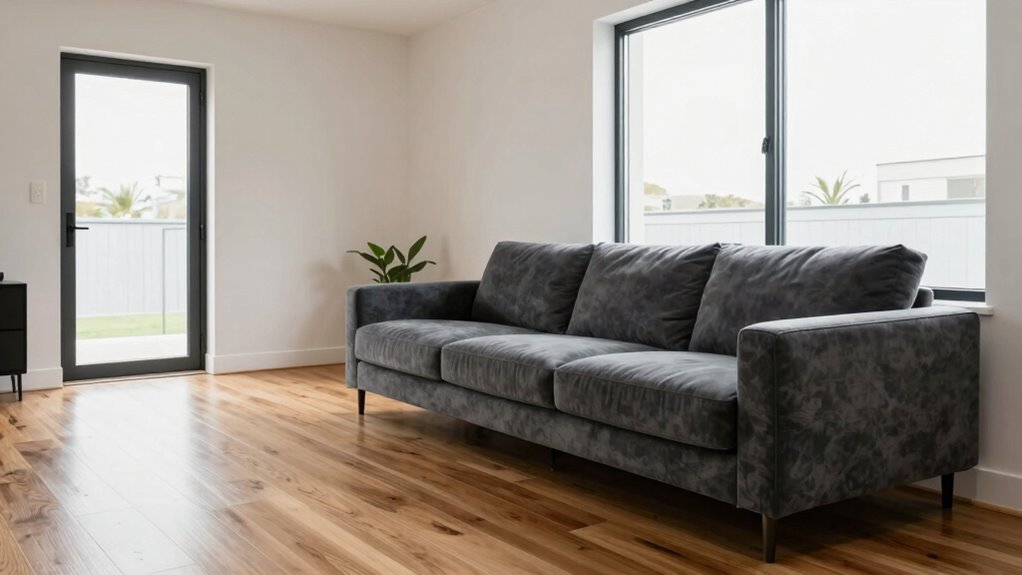

To improve traffic flow fast, reposition your sofa away from walls or from blocking doorways, and create clear pathways through the room. Angle or shift it to open up the center space and avoid tight corners or narrow walkways. Focus on directing movement naturally around focal points like windows or fireplaces, and leave enough room for easy navigation. Want to discover more simple tips to optimize your space? Keep going to find out how small adjustments make a big difference.

Get everyday essentials delivered free with Prime
- Fast, free delivery on millions of items
- Prime Video, Amazon Music and more included
- Member-only deals all year
Key Takeaways
- Move the sofa away from walls to create open pathways and reduce congestion.
- Angle or shift the sofa to align with main traffic routes and focal points.
- Ensure the sofa does not block doorways or high-traffic areas for smooth movement.
- Position the sofa to open up the room’s center, enhancing flow and accessibility.
- Clear clutter around the sofa to maintain unobstructed, natural pathways.
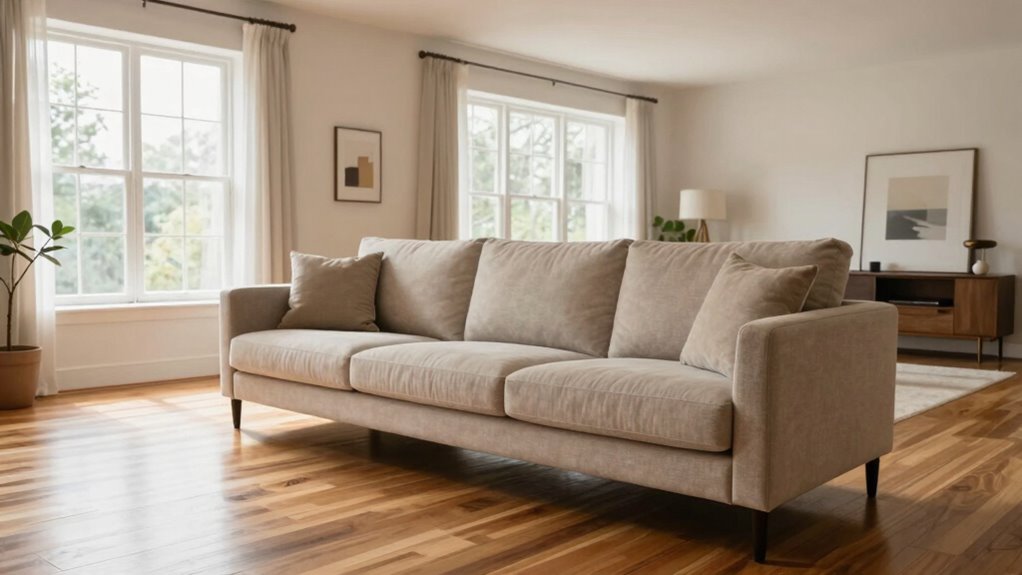
Sometimes, repositioning your sofa can dramatically enhance your living space’s comfort and functionality. The way you place your furniture influences not just the look of the room but also how easily people move through it. When you focus on effective furniture arrangement, you create a more inviting environment that encourages conversation and makes everyday activities smoother. One of the simplest yet most impactful changes you can make is adjusting your sofa’s position to improve traffic flow.
Rearranging your sofa can instantly boost comfort, flow, and the overall harmony of your living space.
Start by evaluating your current layout and identifying areas where traffic feels congested or awkward. If your sofa is blocking a doorway or a main walkway, shifting it to a different spot can instantly clear the path. For example, pulling the sofa away from walls or repositioning it to a corner can open up the center of the room, making it easier for people to navigate without dodging furniture. When you move your sofa, consider how it relates to other pieces of furniture—think about creating a natural, unobstructed flow from room entrance to seating areas. This improves not just movement but also the visual harmony within your space. Incorporating traffic flow principles into your layout can help you make more strategic decisions about your furniture arrangement.
Color coordination plays a subtle but essential role in how spacious and welcoming your room feels after repositioning. When you move your sofa, choose a placement that highlights its color or pattern, complementing other elements in the room. A well-coordinated color palette can make the space feel larger and more cohesive. For instance, if your sofa is a bold color, placing it against a neutral wall or with matching accent pillows can draw attention without overwhelming the room. Conversely, aligning your furniture arrangement with your color scheme can create a balanced look that feels intentional and well-designed. Consider also how biodiversity in your decor, such as natural materials or plant accents, can enhance the room’s inviting atmosphere. Incorporating furniture placement principles can further optimize your space’s functionality and aesthetic appeal. Additionally, understanding how traffic flow principles influence the overall layout can help you make more strategic decisions about your furniture arrangement.
As you experiment with different placements, keep in mind the overall flow and function of the space. Avoid positioning the sofa in a way that creates tight corners or narrow pathways. Instead, aim for a layout that invites easy movement and natural conversation zones. This might mean angling your sofa slightly or shifting it to align with focal points like a fireplace or a window with a view. Properly considering spatial planning can help you avoid cluttered or awkward configurations and optimize your room’s usability. Moving your sofa with purpose—considering both color coordination and furniture arrangement—can transform your living area into a more functional, inviting, and visually balanced space. In just a few quick adjustments, you’ll notice a smoother traffic flow, making your living room more comfortable for everyone.
adjustable sofa repositioning tools
As an affiliate, we earn on qualifying purchases.
As an affiliate, we earn on qualifying purchases.
Frequently Asked Questions
How Long Does It Take to See Traffic Improvements After Repositioning the Sofa?
You’ll notice traffic improvements within a few days after repositioning your sofa, especially if you consider color coordination and lighting influence. When you align your sofa to enhance visual flow and adjust lighting to highlight pathways, it guides movement more naturally. By creating a cohesive space that directs attention, you’ll see quicker traffic flow changes—usually within a week—making your space feel more inviting and functional almost immediately.
Can This Sofa Move Strategy Be Used in Small Apartments?
Yes, you can definitely use this sofa move strategy in small apartments. Focus on smart decor placement to maximize space and create clear pathways. Choose color schemes that open up the room, like light or neutral tones, to enhance flow. By thoughtfully repositioning your sofa, you’ll improve traffic flow without sacrificing style or comfort. It’s a simple, effective way to make your small space feel more open and inviting.
Does Furniture Material Affect the Effectiveness of This Move?
Yes, furniture material can affect the move’s effectiveness. Durable furniture materials, like hardwood or metal, are easier to shift without damage, helping you maintain traffic flow. On the other hand, softer or delicate materials, such as plush fabric or glass, might require extra care and can limit how effortlessly you reposition furniture. Consider both furniture durability and material aesthetics to guarantee the move looks good while improving traffic flow efficiently.
Are There Specific Room Layouts Best Suited for This Tactic?
Certain room layouts are ideal for this traffic flow tactic, especially open-concept spaces where decor arrangement and lighting placement matter. You want to position your sofa to create clear pathways, avoiding cluttered areas. In rooms with natural light, place the sofa to maximize lighting, enhancing the flow. Rectangular or L-shaped layouts work well, as they naturally guide traffic, while thoughtful decor arrangement and strategic lighting placement reinforce smooth movement.
How Often Should the Sofa Be Repositioned for Optimal Traffic Flow?
You should reposition your sofa every few months to maintain ideal traffic flow. When doing so, consider color coordination to create a cohesive look and make the space feel inviting. Also, adjust lighting to highlight new arrangements and guarantee pathways stay clear. Regular tweaks help prevent congestion, improve movement, and keep your room feeling fresh. Stay attentive to how people navigate, and make small, strategic adjustments for the best flow.
Conclusion
Think of your living room as a grand stage, where every move shapes the story. By repositioning your sofa, you’re directing the flow like a skilled conductor, turning chaos into harmony. This simple shift isn’t just furniture placement; it’s the secret to a space that breathes ease and elegance. Embrace the change, and watch as your home transforms into a well-choreographed masterpiece—ready to welcome conversations just like a timeless theater awaiting its next act.
Fall Picks
fall essentials
As an affiliate, we earn on qualifying purchases.