To soundproof your apartment, start by sealing gaps around doors and windows with weatherstripping or door sweeps to block noise leaks. Add thick curtains, acoustic panels, or window inserts to reduce outside noise transmission. Incorporate soft furnishings like rugs and cushions to absorb internal echoes. Combining these steps creates a layered noise barrier that’s affordable and easy to install. Keep exploring for more tips to create a quieter, more comfortable living space.
Key Takeaways
- Seal gaps around doors and windows with weatherstripping and door sweeps to block sound leaks.
- Use thick curtains, soundproof blinds, or acoustic panels on windows to reduce noise transmission.
- Install proper sealing around frames and add insulation for enhanced noise insulation.
- Incorporate soft furnishings like rugs and carpets to absorb internal echo and improve acoustic comfort.
- Combine multiple methods, including sealing, window treatments, and soft furnishings, for effective apartment soundproofing.
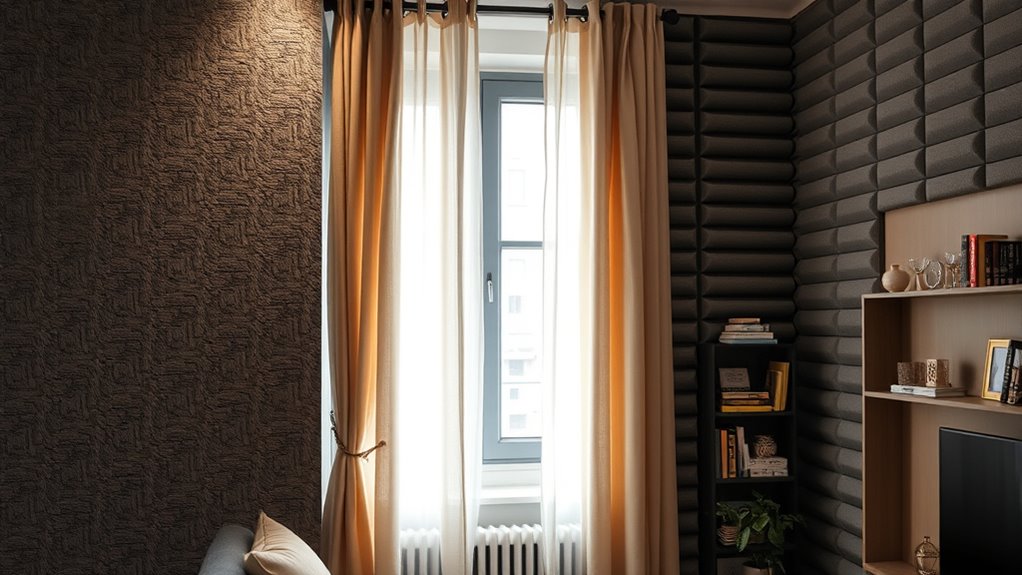
Ever wondered how to reduce noise disturbances in your apartment? One of the simplest and most effective ways is by improving your door seals and window treatments. These small upgrades can make a big difference in creating a quieter, more peaceful living space. Doors are often overlooked as sources of noise leaks, but gaps around your door frame can let in a surprising amount of sound. Installing high-quality door seals can block these gaps, preventing noise from traveling through and making your apartment feel more insulated. Look for weatherstripping or door sweep options that are easy to apply and durable. These seals not only reduce noise but can also help with temperature control and energy efficiency. When it comes to windows, they’re usually the primary entry points for outside noise. Standard window frames often have small gaps or are made of thin glass that transmits sound easily. To combat this, consider adding window treatments like thick curtains, soundproof blinds, or specialized acoustic panels. Heavy, layered curtains are a quick fix that absorbs some sound waves, especially if you choose fabrics with dense fibers. For a more permanent solution, you might explore installing double-glazed or laminated glass windows, which markedly cut down on noise transmission. However, if full window replacement isn’t an option, adding window inserts or acoustic window plugs can also help. These are removable and can be tailored to fit your window frame, providing an extra layer of soundproofing. Combining door seals with effective window treatments creates a double barrier that greatly reduces noise infiltration. Remember, sealing gaps is essential—don’t forget to check for any cracks or holes around your window frames and door frames, and seal them with appropriate materials. Additionally, using rugs or carpets can help absorb sound within your apartment, especially if you have hard flooring, but they’re more about echo control than blocking outside noise. In many cases, simple upgrades like weatherstripping and heavy curtains are affordable, quick, and remarkably effective. They’re also easy to install yourself, saving you money and time. Keep in mind that the goal is to create a layered approach: seal gaps at doors, treat windows with sound-absorbing materials, and add soft furnishings to absorb internal echoes. Together, these steps can markedly improve your apartment’s acoustic environment, making it more comfortable and less disturbed by outside noise. So, start with door seals and window treatments, and enjoy a quieter, more peaceful home.
In addition, selecting soundproofing materials designed specifically for windows and doors can further enhance your efforts and provide more substantial noise reduction.
Frequently Asked Questions
Can Soundproofing Materials Damage Apartment Walls?
Soundproofing materials can potentially cause wall damage if you don’t choose the right ones or install them improperly. Some materials, like heavy panels or adhesives, might harm your walls or peel paint if not used carefully. To avoid issues, prioritize material safety and opt for lightweight, non-invasive options. Always follow manufacturer instructions and consider consulting a professional to prevent wall damage and ensure effective soundproofing.
How Much Do Professional Soundproofing Services Cost?
Professional soundproofing services typically cost between $1,000 and $3,000, depending on your apartment’s size and the complexity of the job. You should explore different service options, such as wall insulation, acoustic panels, or sealing leaks, to find the best fit for your needs and budget. Request cost estimates from multiple providers to compare prices, and verify they include materials and labor for a transparent quote.
Are Temporary Soundproofing Solutions Effective Long-Term?
Temporary soundproofing solutions can be effective long-term if you’re consistent and proactive. DIY solutions like weatherstripping or acoustic panels are affordable and easy to update as needed, making them a cost-effective choice compared to professional services. While they may not completely block all noise, they substantially reduce sound transmission, especially when combined with other measures. Regular maintenance and upgrades ensure these temporary fixes remain effective over time.
Will Soundproofing Reduce Sound From Outside Traffic?
Yes, soundproofing can reduce noise from outside traffic. You should focus on sealing your windows with high-quality window seals to block sound leaks. Additionally, adding outdoor barriers like fences or plants can absorb and deflect noise before it reaches your apartment. Combining these methods creates a more effective sound barrier, helping you enjoy a quieter indoor environment despite busy traffic outside.
How Do I Prevent Sound Leakage Through Electrical Outlets?
To prevent sound leakage through electrical outlets, you should install soundproof outlet inserts or use electrical outlet covers specifically designed for soundproofing. First, turn off the power and remove the outlet cover. Then, insert soundproof outlet inserts into the outlet box, ensuring a snug fit. Replace the cover and turn the power back on. These steps markedly reduce noise transfer through outlets, improving your apartment’s soundproofing.
Conclusion
Think of your apartment as a delicate musical instrument—you want to protect its sound from outside noise. When I first moved in, I struggled with noisy neighbors, feeling like I was living next to a constant drum. But by applying simple soundproofing tips, I found peace and quiet. Just like tuning an instrument, small changes can transform your space into a calm sanctuary. With patience and effort, you’ll create a peaceful retreat you can truly enjoy.