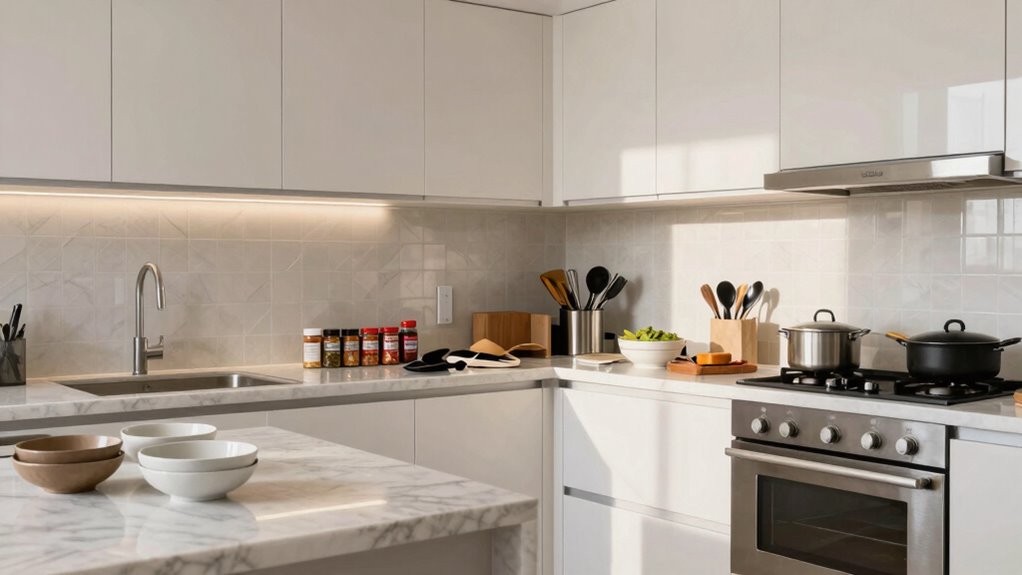

A styled kitchen focuses on visual appeal, with carefully chosen design details like coordinated colors, sleek finishes, and decorative touches that create an inviting look. In contrast, a working kitchen prioritizes efficiency, with layout planning, durable materials, and smart storage to make cooking and cleaning easier. Both styles can blend beauty and function, but one emphasizes aesthetics while the other centers on practicality. Keep exploring to discover how you can balance both in your space.

Get everyday essentials delivered free with Prime
- Fast, free delivery on millions of items
- Prime Video, Amazon Music and more included
- Member-only deals all year
Key Takeaways
- Styled kitchens prioritize aesthetics, focusing on visual impact and curated design details, while working kitchens emphasize efficiency and ease of use.
- Layout in working kitchens is optimized for the work triangle, minimizing movement for cooking and cleaning, unlike styled kitchens which focus on visual harmony.
- Storage in working kitchens is designed for accessibility and clutter reduction, whereas styled kitchens emphasize seamless, matching cabinetry and decorative elements.
- Practical materials in working kitchens support frequent use, while styled kitchens often prioritize appearance over durability.
- Many kitchens blend both styles, combining aesthetic details with functional layouts based on primary activities like entertaining or meal prep.
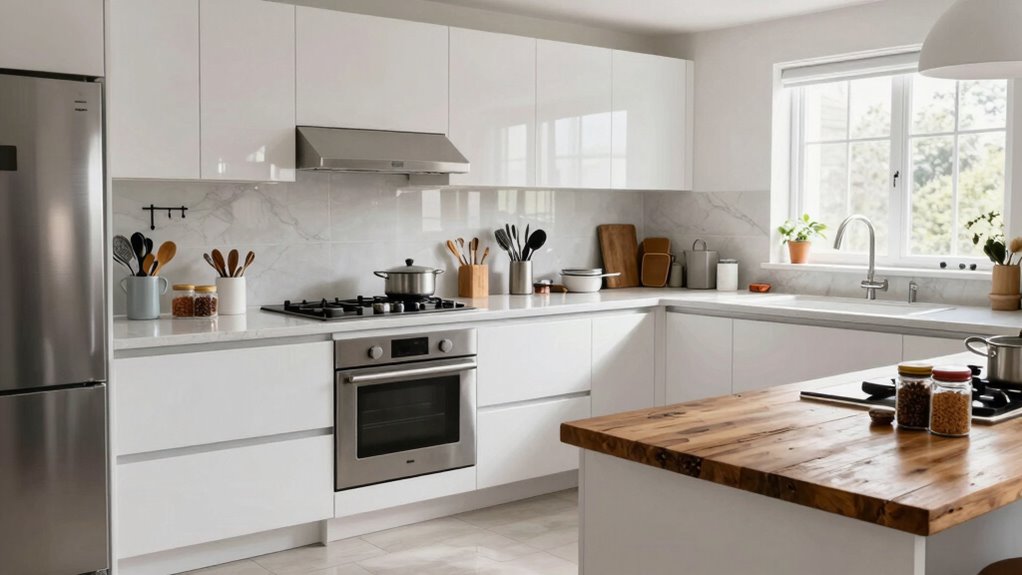
When designing a kitchen, you often face the choice between creating a space that’s visually stunning or one that’s highly functional. The distinction between a styled and a working kitchen comes down to your priorities. A styled kitchen emphasizes aesthetics, where every element, from cabinet handles to backsplash tiles, is carefully curated for visual impact. You pay close attention to appliance placement, ensuring that each piece looks sleek and integrated, rather than just practical. Color coordination becomes a key focus, with hues chosen to complement the overall design scheme, creating a harmonious and inviting environment. You might opt for a monochromatic palette or bold contrasts, aiming for a space that catches the eye and reflects your personal style.
A styled kitchen focuses on aesthetics, balancing visual impact with carefully curated design details.
In contrast, a working kitchen prioritizes efficiency and ease of use. Its layout is optimized for cooking and cleaning, with appliance placement designed for maximum convenience. For example, the refrigerator is positioned close to the prep area, and the stove and sink are arranged in a functional work triangle. This setup minimizes movement and saves time, making daily tasks smoother. While color coordination still matters, it’s secondary to practicality. You might choose durable, easy-to-clean materials and appliances that can withstand frequent use, even if they don’t perfectly match the aesthetic. The focus is on creating a space where you can cook comfortably and clean up quickly, rather than on visual harmony alone.
Additionally, understanding the importance of appliance placement can help you strike the right balance between style and function. A well-planned layout ensures that your kitchen remains both beautiful and practical, helping you avoid common design pitfalls. Proper storage solutions are also essential, as they keep clutter out of sight but within easy reach, supporting both aesthetics and efficiency. Incorporating ergonomic design principles can further enhance comfort and usability, making your kitchen more enjoyable to work in. However, many kitchens blend these two approaches, achieving both style and function. To do this, you balance appliance placement with visual flow, ensuring that appliances are accessible but also integrated into the overall design. Coordinating colors and materials helps create a seamless look, whether you’re using matching cabinetry, countertops, or accent pieces. It’s about making strategic choices; for instance, selecting appliances with sleek finishes that complement your color scheme, or hiding less attractive elements behind cabinetry for a cleaner appearance.
Ultimately, whether you lean toward a styled or working kitchen depends on how you use your space daily. If you love entertaining and want your kitchen to impress guests, prioritizing style might be your goal. If cooking and meal prep are your main activities, functionality will likely take precedence. But understanding the differences helps you create a kitchen that suits your needs, blending beauty with practicality in a way that feels right for you.
kitchen cabinet handles and knobs
As an affiliate, we earn on qualifying purchases.
As an affiliate, we earn on qualifying purchases.
Frequently Asked Questions
How Do I Balance Style and Functionality in My Kitchen?
To balance style and functionality in your kitchen, start with a cohesive color scheme that complements your decor and makes the space inviting. Incorporate decorative accents like stylish hardware and artwork to add personality. Prioritize practical storage solutions and durable materials for everyday use, ensuring your kitchen remains functional. This way, you create a space that’s both beautiful and efficient, reflecting your personal style without sacrificing convenience.
What Are the Cost Differences Between Styled and Working Kitchens?
Cost considerations clash when comparing styled and working kitchens. You’ll find styled spaces often require pricier appliances and polished finishes, boosting the budget. A sleek kitchen layout with seamless appliance integration elevates expenses but creates elegance. Conversely, a working kitchen prioritizes practicality, often featuring more affordable fixtures. So, styling tends to considerably increase costs due to design details, while functionality-focused designs keep costs lower, emphasizing essential essentials over aesthetic excess.
Can a Kitchen Be Both Stylish and Highly Functional?
Yes, you can have a kitchen that’s both stylish and highly functional. Focus on smart kitchen decor choices that blend aesthetics with practicality, like sleek cabinetry and attractive lighting. Incorporate appliance integration to keep your space clutter-free and visually cohesive. By balancing design and utility, you create a kitchen that looks great and works efficiently, giving you the perfect environment for cooking and entertaining without sacrificing style.
How Do I Choose Durable Materials for a Working Kitchen?
To choose durable materials for a working kitchen, focus on countertop materials like granite, quartz, or concrete, which resist scratches and heat. Prioritize appliances with high durability ratings, such as stainless steel or heavy-duty models, to withstand daily use. You should also consider flooring options like tile or sealed hardwood for longevity. By selecting these resilient materials, you guarantee your kitchen remains functional and looks great over time.
What Maintenance Is Required for a Styled Kitchen?
Caring for your styled kitchen is like tending to a delicate garden—you keep it looking fresh with regular cleaning and gentle touches. You’ll want to wipe surfaces to maintain kitchen aesthetics and stay on top of appliance upkeep to prevent wear. Occasionally, deep cleaning and checking for any issues keep your space beautiful and functional. With a little attention, your styled kitchen stays stunning and inviting, ready to impress at any moment.
Conclusion
Ultimately, understanding the difference between a styled and a working kitchen helps you create a space that’s both beautiful and functional. For instance, imagine a homeowner who loves hosting dinners; they might prioritize a stylish kitchen for entertaining but also need a practical setup for daily cooking. Striking the right balance guarantees your kitchen reflects your personality while supporting your lifestyle. Remember, blending aesthetics with usability turns your kitchen into a true centerpiece of your home.
Halloween Picks
halloween
As an affiliate, we earn on qualifying purchases.