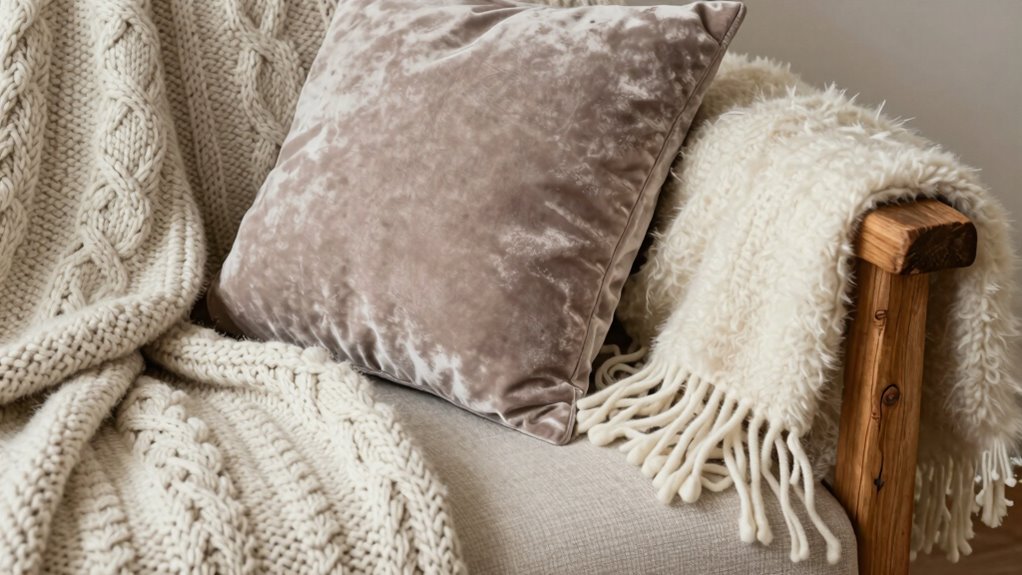

Texture layering is a simple yet effective way to make your space feel cozy without adding clutter. By combining different materials like soft textiles, natural finishes, and contrasting textures, you create depth and visual interest. Focus on balancing warm and cool tones, mixing fabrics with varying weights, and carefully selecting accents. When you understand how to assess and arrange your decor, you can effortlessly achieve a layered, inviting home—stay tuned to discover how to master this cozy trick.
Key Takeaways
- Use a variety of textures in materials and surfaces to add depth without cluttering the space.
- Incorporate seasonal accents like plush throws and velvet pillows for warmth and coziness.
- Balance contrast in color and texture to create visual interest and dimension.
- Mix different fabric weights and finishes to achieve tactile richness and layered depth.
- Focus on a cohesive color palette and intentional layering to enhance coziness without overdoing it.
What Is Texture Layering and How Does It Make Your Space Cozier?
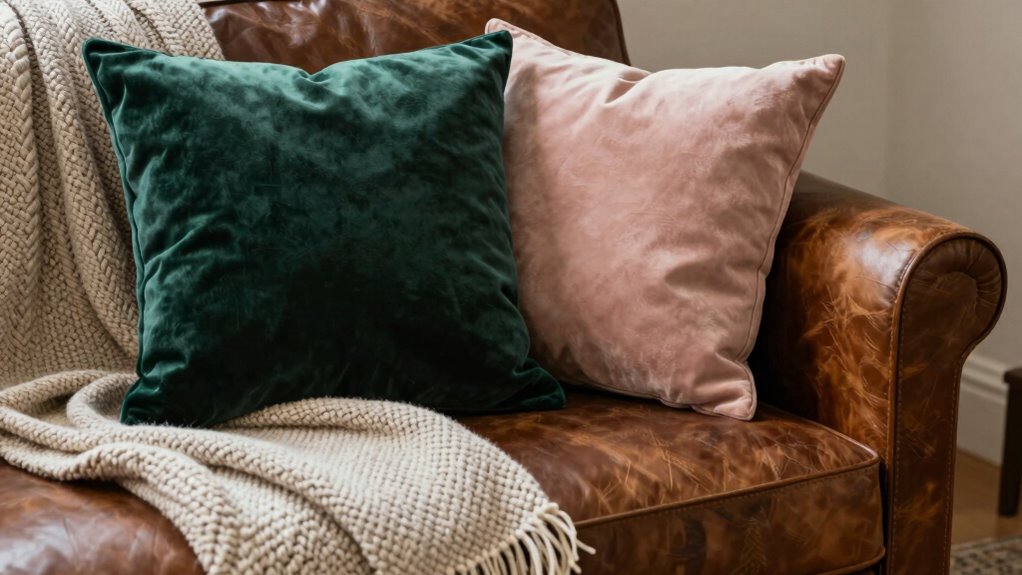
Ever wonder how to make your space feel warmer and more inviting? That’s where texture layering comes in. It’s about adding depth through different materials and surfaces, creating a cozy atmosphere without clutter. Seasonal accents, like plush throws or velvet pillows, enhance this effect, especially when paired with contrasting textures. Using color contrast also plays a key role—mixing warm and cool tones adds visual interest and comfort. Layering textures invites your touch and eye, making the space feel thoughtfully curated. It aligns with sustainable design principles, emphasizing how combining natural and eco-friendly materials can enhance coziness while being environmentally conscious. It’s not just about adding more stuff; it’s about combining elements in a way that feels natural and inviting. Whether you choose soft fabrics or textured decor, the goal is to make your space look and feel warmer, more dynamic, and undeniably cozy.
How Can You Assess Your Decor to Start Layering Textures?
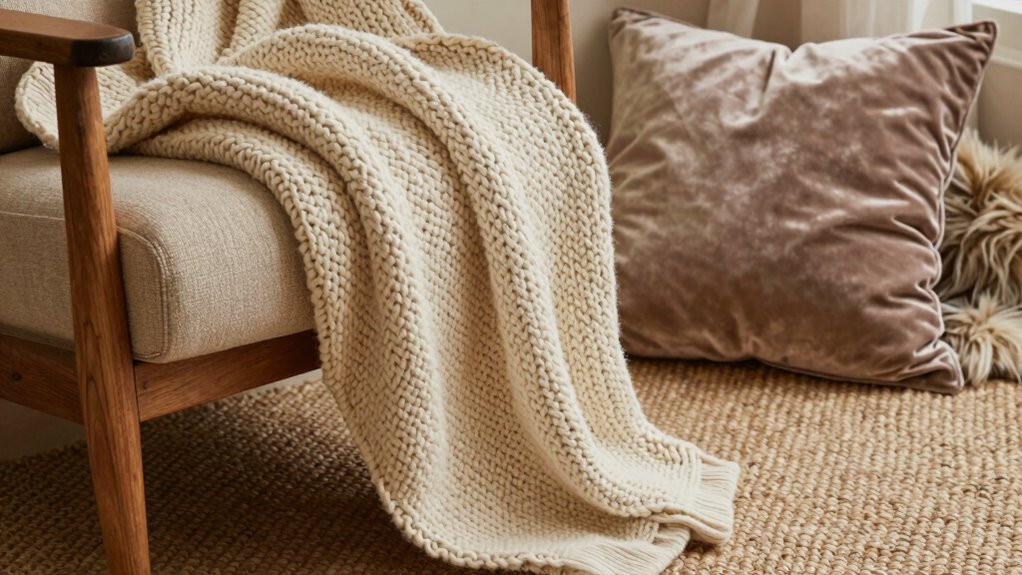
To effectively start layering textures in your space, you first need to assess what you already have. Begin by evaluating your decor style—are you minimalist, bohemian, or modern? Next, look at your color palette; identify dominant hues and how they interact with different textures. Then, examine your existing furnishings and accessories to see which materials and finishes they feature. Finally, consider the overall vibe you want—cozy, sleek, or eclectic—and how textures can reinforce that. By analyzing these four aspects, you’ll pinpoint areas where textures can add depth and interest without overwhelming your space. Paying attention to contrast ratios can help you balance light and shadow, creating a more dynamic and inviting environment. Understanding texture layering principles can further guide your choices, helping you build a cohesive, layered look that enhances your decor style and color palette seamlessly. Incorporating natural materials can also elevate the cozy feel and connect your decor to outdoor-inspired elements.
What Materials Help You Add Depth Without Cluttering Your Space?
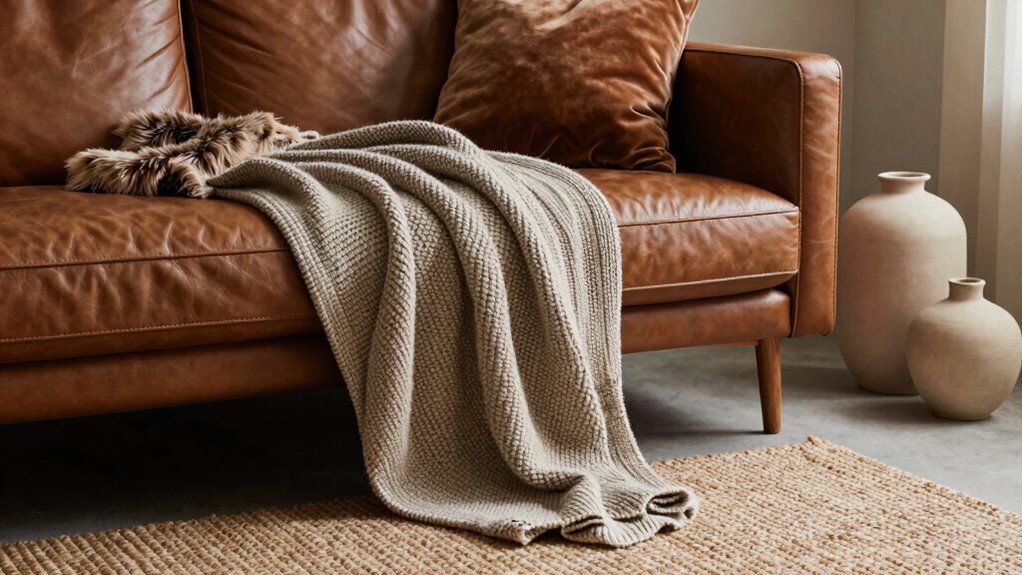
Layering textiles and fabrics can add richness without overwhelming your space. Natural materials like wood, stone, or rattan bring warmth and texture subtly. Incorporating subtle patterns through accents helps create depth without cluttering your decor. Understanding culinary layering techniques can also inspire similar approaches in interior design, emphasizing the importance of balance and harmony.
Layered Textiles and Fabrics
What materials do you choose to add depth to your space without creating clutter? Layering textiles and fabrics is your answer. Opt for fabric combinations that mix textures like velvet, linen, or knit to create visual interest. Use textile patterns thoughtfully—pair subtle stripes with solid colors or geometric designs to add dimension without overwhelming. Here are some tips:
- Mix different fabric textures to evoke warmth and richness.
- Combine patterns carefully, balancing busy designs with simple solids.
- Layer throws and cushions for a plush, inviting look.
- Choose lightweight fabrics to avoid bulky clutter and keep your space open.
- Incorporate quality textiles to ensure durability and enhance the overall aesthetic. Incorporating designer touches like hidden elements or unique textures can further elevate your decor without adding visual clutter. Additionally, selecting textiles with appropriate weight and texture can help you achieve a layered look that feels cozy yet uncluttered. For added depth, consider using textiles with rich surface qualities to create a tactile dimension that draws the eye naturally.
Natural Materials for Warmth
Have you considered incorporating natural materials to add warmth and dimension to your space? Natural fibers like wool, jute, and linen bring organic textures that instantly create a cozy atmosphere. These materials add depth without clutter, offering subtle visual interest through their tactile qualities. For example, a wool throw or jute rug introduces warmth and earthiness, making your space feel inviting. Organic textures also soften sharp lines and modern designs, balancing sleek furniture with a touch of nature. You don’t need extra accessories—just select pieces crafted from natural fibers to enhance your room’s warmth and depth. Additionally, understanding the sensory design aspects of environmental layering can help create environments that support comfort and engagement. By choosing these materials thoughtfully, you create a layered, textured environment that feels both comfortable and effortlessly stylish. Incorporating natural materials also improves indoor air quality, as they tend to emit fewer volatile organic compounds (VOCs) compared to synthetic options. Exploring personality assessments like the 16PF can offer insights into personal preferences, helping you select materials that resonate with your individual style and comfort needs. Leveraging AI tools can assist in selecting the best materials and design elements based on your preferences and space requirements.
Subtle Patterned Accents
Subtle patterned accents can add visual interest and depth to your space without overwhelming it. These accents create a layered look with minimal clutter, making your room feel richer. Consider incorporating:
- Textured throw pillows with delicate patterns that add subtle textures.
- Area rugs featuring muted geometric or floral designs for quiet patterning.
- Curtains or drapes with soft, understated motifs to add depth.
- Decorative trays or vases with subtle patterned details to enhance visual interest.
- Incorporating layered textures can further amplify the cozy, inviting atmosphere without cluttering your space. Using textural variety in your accents can help achieve a balanced, inviting look that feels thoughtfully curated rather than busy. Adding visual depth with these small details can also make your space feel more curated and intentional.
How Can You Mix Fabrics and Finishes for a Harmonious Look?
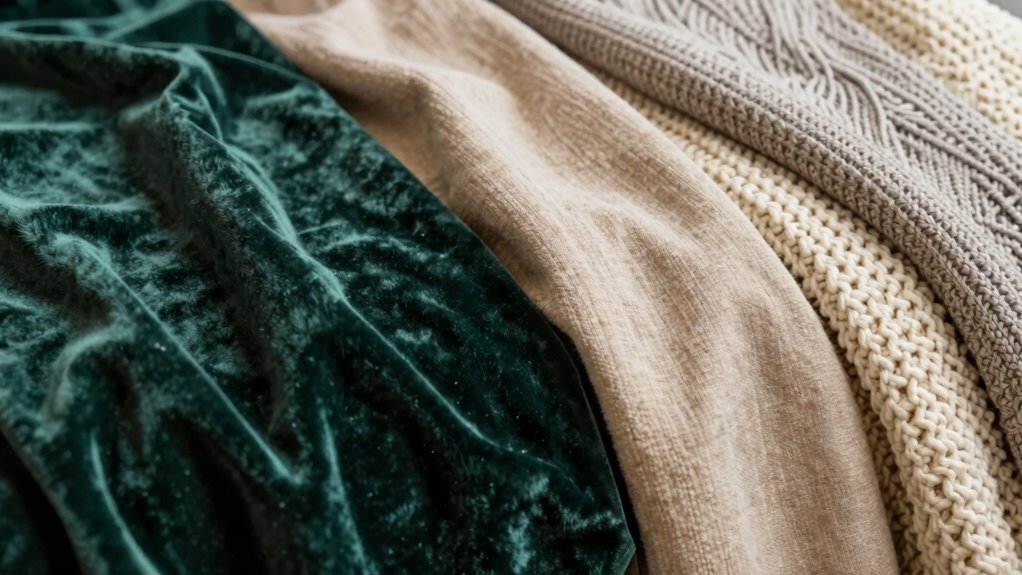
Mixing fabrics and finishes effectively starts with understanding how different textures interact. You want fabric pairings that complement rather than clash, balancing smooth and rough surfaces for visual interest. For example, pair a sleek silk with a textured linen or a soft velvet with a matte cotton. When finish mixing, consider the sheen and matte qualities—mixing shiny finishes with matte ones creates depth. Keep a common color palette to unify contrasting textures, ensuring they work harmoniously. You can also layer different fabric weights—light chiffons with heavier knits—to add dimension without overwhelm. The key is to experiment while maintaining balance, mixing textures thoughtfully so each element enhances the overall look without feeling disjointed. Recognizing how cosmic connections influence personal traits can also inspire creative choices in design and styling, emphasizing the importance of visual harmony in achieving a cohesive aesthetic.
What Are Easy Ways to Add Texture Using Items You Already Have?

Adding texture to your space doesn’t require buying new items; you can transform what you already own. Here are simple ways to do it:
- Fabric swaps: Switch out pillow covers or throws with different textures to instantly refresh your look.
- Layer rugs: Layering a smaller, textured rug over a larger one adds depth and tactile interest.
- Color contrasts: Combine items in contrasting hues and textures—smooth ceramics with rough textiles—for visual pop.
- Mix textiles: Pair silky curtains with chunky blankets or woven baskets to create a rich, layered feel.
- Curate a minimalist aesthetic by thoughtfully combining textures to maintain clean, uncluttered spaces while adding visual interest. Incorporating simple organizing strategies can help you achieve this balanced look without sacrificing functionality.
What Common Texture Layering Mistakes Should You Avoid?
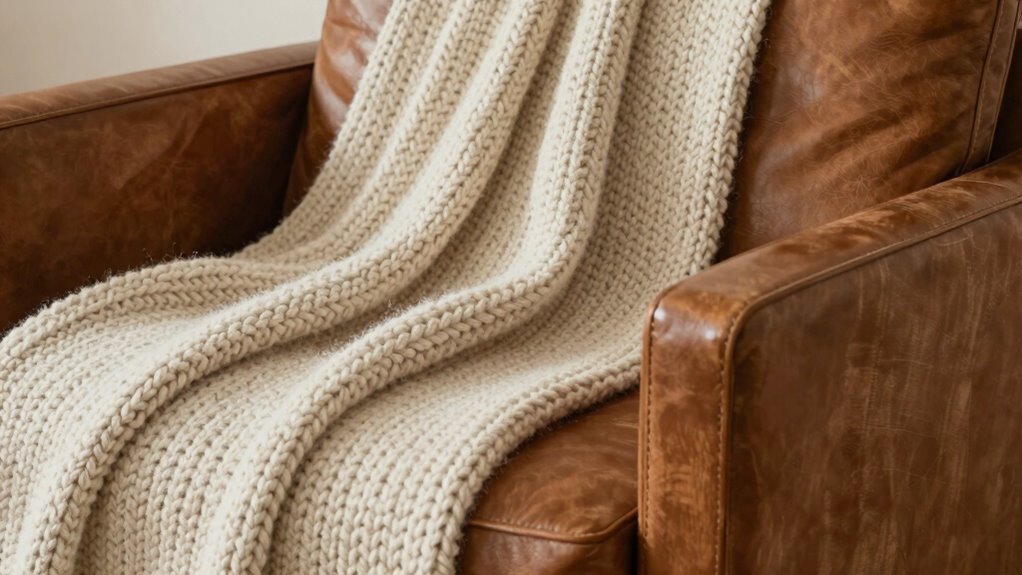
While incorporating various textures can elevate your space, it’s easy to fall into common pitfalls that disrupt the layered look. One mistake to avoid is clashing patterns, which can make your room feel chaotic rather than cozy. Stick to a cohesive color palette and mix textures within that range. Another trap is overdone layering, where adding too many textures creates visual confusion and weight. Instead, aim for balance—combine a few well-chosen textures thoughtfully. Avoid overcrowding surfaces or piling on too many different fabrics and materials at once. Keep it simple and intentional. By steering clear of these mistakes, you’ll ensure your texture layering enhances your space without feeling overwhelming or cluttered.
How Do Texture Layers Change the Feel of Your Home?

Adding texture layers creates visual depth, making your space feel more dynamic and inviting. They also bring a sense of comfort and warmth, making your home cozier. Together, these elements transform your environment into a more engaging and welcoming place.
Enhances Visual Depth
Texture layers can dramatically enhance the visual depth of your home by creating a sense of dimension and interest. By carefully combining different materials and finishes, you can make a space feel more dynamic. Consider these ways to boost depth:
- Use seasonal accents to add layers that change throughout the year, keeping your space fresh.
- Play with color contrast between textures, like matte and glossy surfaces, to make elements stand out.
- Mix smooth and rough textures to create visual tension and complexity.
- Incorporate varied fabric weights and patterns for added richness.
These techniques draw your eye around the room, making it feel more layered and engaging, without adding clutter. Texture layering subtly guides perception, transforming flat spaces into inviting, multi-dimensional environments.
Adds Comfort and Warmth
Incorporating layered textures into your home instantly makes the space feel warmer and more inviting. Seasonal textures, like cozy wool throws or plush rugs, add tactile comfort that invites you to relax. These textures create a sense of snugness, making your environment feel more personal and lived-in. By mixing soft fabrics with natural materials, you enhance the overall warmth without cluttering your space. During colder months, thicker textiles boost the cozy vibe, while lighter textures keep things fresh in summer. Texture layering subtly influences how comfortable your home feels, giving it an effortless warmth that’s both functional and inviting. Small touches, like textured pillows or tactile curtains, markedly boost the tactile comfort, making every corner feel more welcoming. Material selection plays a crucial role in achieving the right balance of comfort and style in your layered textures. Additionally, understanding how different texture types interact can help you create a cohesive and inviting aesthetic. For example, compatibility of textures ensures that contrasting materials complement each other rather than clash, enhancing the overall cozy effect. Incorporating texture variation thoughtfully can further deepen the sense of warmth and visual interest in your space. Moreover, paying attention to texture placement helps distribute tactile elements evenly, preventing clutter and maintaining a harmonious look.
How Can You Balance Texture and Keep a Minimalist Vibe?
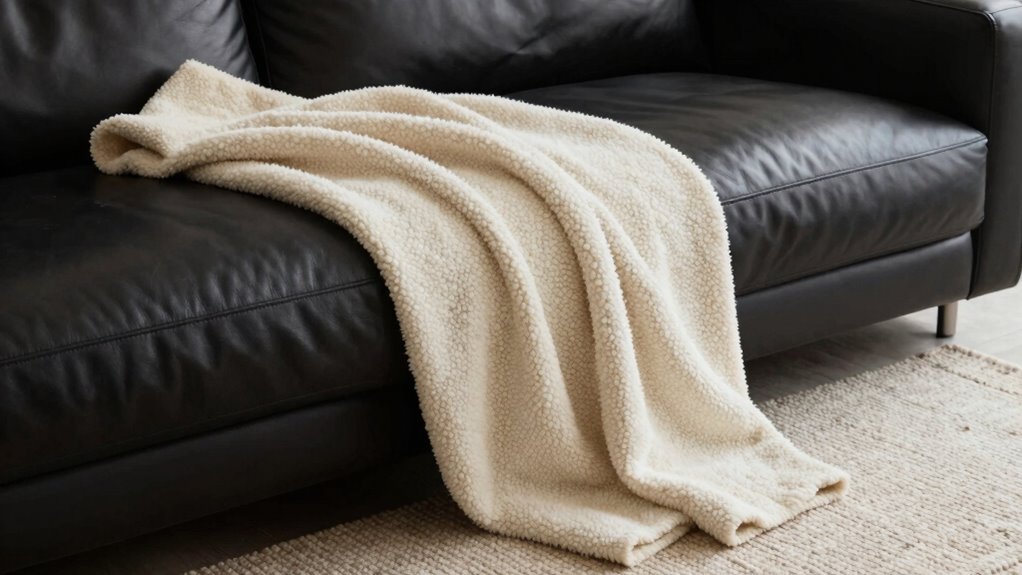
Balancing texture while maintaining a minimalist vibe requires intentional choices that enhance visual interest without cluttering the space. Focus on creating harmony through color and lighting effects that complement your textures. To keep it simple yet engaging:
Achieve harmony with subtle textures, neutral tones, and focused lighting for a minimalist yet inviting space.
- Use a neutral color palette to unify different textures, creating a cohesive and calming environment.
- Incorporate subtle lighting effects, like soft lamps or natural light, to highlight textures without overwhelming the space.
- Select a few key textures—such as smooth wood or plush fabric—and repeat them strategically for consistency.
- Keep accessories minimal, ensuring each piece adds depth through texture rather than excess.
This approach emphasizes quality over quantity, allowing your textures to shine without sacrificing the minimalist aesthetic.
How Can You Experiment With Texture Layers to Find Your Cozy Style?

After establishing a minimalist foundation, experimenting with layered textures allows you to discover what truly feels cozy and personal. Start by trying seasonal layering—adding a chunky knit throw during winter or a lightweight linen blanket in summer—to see how different textures influence your comfort. Pay attention to color coordination so your layers complement each other, creating a harmonious look that enhances your cozy vibe. Mix soft fabrics like velvet with rougher textures like burlap to add depth without clutter. Don’t be afraid to combine contrasting textures for visual interest. Adjust your layers based on how you feel, and keep experimenting until you find a combination that feels right. This process helps you craft a personalized, inviting space that reflects your unique cozy style.
Frequently Asked Questions
How Do You Maintain Balance When Layering Multiple Textures?
To maintain balance when layering multiple textures, you should use layering techniques that create visual harmony. Start by pairing smooth with rough textures, then add softer elements to balance bold ones. Pay attention to color coordination and scale to prevent clutter. By mixing textures thoughtfully and focusing on visual balance, your space will feel cozy without overwhelming, making each piece stand out beautifully without competing.
Can You Use Texture Layering in Small Spaces Effectively?
Did you know that 85% of small space dwellers find texture layering makes their rooms feel larger and more inviting? You can absolutely use texture layering effectively in small spaces. Choose wall paint with subtle sheen to add depth, and incorporate fabric swatches like cozy throws or cushions to create tactile interest without clutter. Focus on a few key textures to keep the space balanced and visually appealing.
What Are Seasonal Tips for Updating Texture Layers?
To update texture layers seasonally, start by swapping out or adding new pieces that reflect the current season. Use color coordination to match warmer tones in winter or lighter shades in summer. Mix materials like plush fabrics with sleek ones for contrast, creating visual interest. Incorporate cozy throws, textured pillows, or different fabrics to keep your space inviting and fresh without clutter, making your room feel perfectly seasonal.
How Do Lighting Choices Affect the Perception of Textures?
Think of lighting choices as a painter’s brushstrokes on textured canvas. Bright lighting highlights the details, making textures pop like shimmering waves, while softer lighting creates shadow play that adds depth and mystery. Strategic lighting effects can emphasize cozy fabrics or sleek surfaces, shaping how inviting or refined a space feels. You control the perception of textures by adjusting light angles and intensity, transforming a simple room into a tactile masterpiece.
Are There DIY Methods to Create Unique Textured Decor?
You can definitely try DIY texture techniques to create unique decor. Use upcycling decorative items like old jars, fabric scraps, or pallets and add textured finishes with paint, plaster, or mixed media. Experiment with stencils, sponges, or even natural elements like leaves for interesting patterns. These methods allow you to personalize your space, and upcycling keeps it eco-friendly while giving your decor a one-of-a-kind feel.
Conclusion
As you start layering textures, you might notice how a cozy throw draped over your favorite chair echoes the soft rug beneath your feet—like a quiet conversation between your decor pieces. Sometimes, a simple pillow or a woven basket can unexpectedly transform your space into a comforting retreat. When you embrace these small touches, you’ll find that cozy, layered home you’ve been dreaming of, almost as if it was waiting just around the corner.