In 2025, tiny home design is all about smart, eco-friendly features that maximize space and style. Expect large windows, modular furniture, and open plans that blend indoor and outdoor living. Sustainability is key, with solar panels, reclaimed materials, and energy-efficient tech. You’ll also find clever storage solutions, biophilic elements like indoor plants, and versatile layouts that adapt to your lifestyle. Stay tuned to discover how these big ideas turn small spaces into innovative, peaceful retreats.

Get everyday essentials delivered free with Prime
- Fast, free delivery on millions of items
- Prime Video, Amazon Music and more included
- Member-only deals all year
Key Takeaways
- Incorporation of flexible, modular furniture to maximize small space functionality and adaptability.
- Emphasis on sustainable materials like reclaimed wood and energy-efficient systems for eco-friendly tiny homes.
- Use of large windows, skylights, and biophilic elements to enhance natural light and indoor-outdoor connection.
- Integration of smart home technology for seamless automation and improved living convenience.
- Design trends favor open, multi-purpose layouts and outdoor extensions to create spacious, versatile environments.
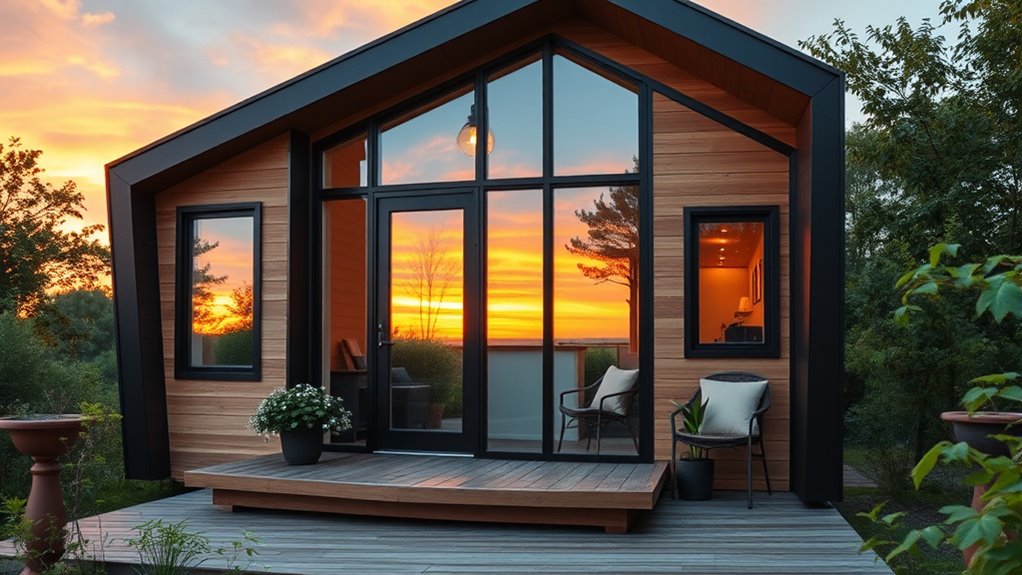
Have you ever wondered how small spaces can pack a big punch? In 2025, tiny homes are redefining what’s possible in compact living, combining innovative design with sustainability and smart technology. You’ll notice large windows, skylights, and glass doors that blur the line between indoors and outdoors, flooding your space with natural light and creating a seamless flow that makes even the tiniest footprint feel expansive. To maximize every inch, designers incorporate multipurpose furniture like Murphy beds and foldable pieces, which transform your space effortlessly—perfect for hosting guests or adapting to different needs without clutter.
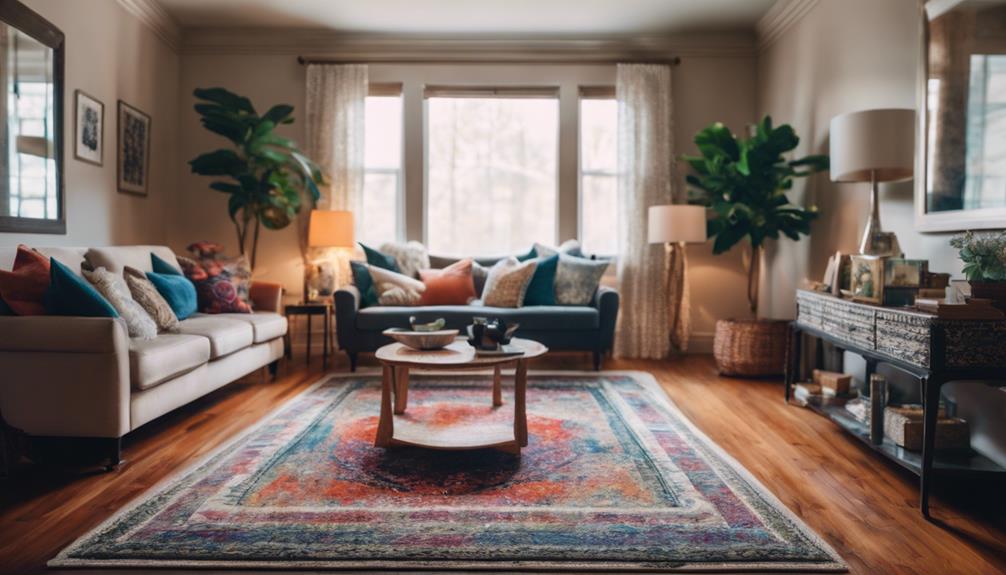
Personalization is key, and bold colors, textured wallpapers, and statement lighting fixtures help craft a home that reflects your style. Customizable modular furniture adds flexibility, letting you reconfigure your space as your needs evolve. Modern kitchens feature sleek quartz countertops paired with smart appliances, making cooking and cleaning more streamlined and efficient. These kitchens aren’t just stylish—they’re designed to elevate functionality, whether you’re preparing a quick meal or entertaining friends.
Personalized tiny homes blend bold colors, textured wallpapers, and smart kitchens for stylish, flexible living spaces.
Sustainability remains a core focus. Builders are increasingly using reclaimed wood, bamboo, and recycled metals, making your tiny home environmentally friendly. Solar panels and energy-efficient appliances cut down your carbon footprint and reduce utility bills, while rainwater harvesting and composting toilets support off-grid living. Enhanced insulation and ENERGY STAR-rated windows guarantee your home stays comfortable year-round, reducing reliance on artificial climate control. Natural light and ventilation are prioritized, further decreasing energy consumption and creating a healthier living environment. Advancements in insulation technology have made tiny homes more energy-efficient than ever before, ensuring comfort without excess energy use. Additionally, integrating smart home technology can optimize energy management and enhance overall convenience.
Smart storage solutions are crucial in small homes. Built-in storage compartments and hidden features are integrated into furniture to keep clutter at bay. Carefully planned shelving and closets maximize organization, while exterior storage options keep outdoor gear accessible but out of sight. Foldable and multi-use furniture pieces help you make the most of limited space, and decluttering becomes second nature to maintain open, functional living areas. Every element is designed to support a minimalist approach that emphasizes practicality without sacrificing style.
Biophilic design elements bring nature indoors, connecting you with the outdoors. Large windows and skylights flood your home with natural light, while natural textures like wood and stone create calming, inviting interiors. Indoor plants and green walls improve air quality and enhance tranquility. Open floor plans and seamless transitions between indoor and outdoor spaces foster a sense of harmony, making your home feel larger and more connected to nature.
Finally, adaptability is woven into every design. Whether you’re working remotely, hosting guests, or running a small business from home, modular layouts and dual-purpose spaces offer versatility. Outdoor decks and covered patios extend your living area, providing room for relaxation or entertaining. Smart technology integrates seamlessly, automating lighting, climate control, and security, giving you convenience and peace of mind. In 2025, tiny homes aren’t just small—they’re big ideas in sustainable, stylish living.
modular furniture for small spaces
As an affiliate, we earn on qualifying purchases.
As an affiliate, we earn on qualifying purchases.
Frequently Asked Questions
How Sustainable Are Tiny Home Building Materials?
You might wonder how sustainable building materials are, and the answer is that many are quite eco-friendly. You can use thermowood and heat-treated wood, which are durable and chemical-free, sourced from sustainable forests. Incorporating recycled materials like reclaimed bricks or shipping containers reduces waste. Bio-based options such as bamboo or hempcrete are renewable and biodegradable, lowering your environmental impact. Overall, choosing these materials helps make your tiny home more eco-conscious and sustainable.
What Are the Legal Zoning Restrictions for Tiny Homes?
Did you know that tiny home legality varies dramatically across states? You might find some areas, like Maine and Texas, very friendly, while others, like New York and Rhode Island, impose strict restrictions. Zoning laws often classify tiny homes differently—on wheels or permanent foundations—and local rules can limit where you can place them. To succeed, you’ll need to navigate local zoning, building codes, and possible legal strategies like permits or community zoning amendments.
Can Tiny Homes Be Off-Grid Sustainable?
You can make a tiny home off-grid and sustainable by installing solar panels and battery storage to generate and store electricity. Incorporate rainwater collection, filtration, and composting toilets to manage water and waste responsibly. Use eco-friendly materials, energy-efficient appliances, and smart technology to reduce energy consumption. Portable on wheels, your tiny home can access remote areas, fostering independence while minimizing environmental impact through minimal resource use and renewable energy.
How Do Tiny Homes Handle Extreme Weather Conditions?
Ever wonder how tiny homes brave nature’s fury? You’re equipped with reinforced steel frames that withstand high winds, storm-resistant composite panels, and fire-retardant materials. Their roofs channel water away, while SIPs and reinforced foundations resist earthquakes and tornadoes. Advanced insulation keeps temperatures steady, and water management systems reduce flood risks. Together, these features turn tiny homes into resilient havens, ready to face the harshest weather with confidence and safety.
What Financing Options Are Available for Tiny Home Buyers?
You have several financing options for tiny home buyers. Personal loans are flexible and often unsecured, while home equity loans work if you already own property. Online lenders like SoFi and LightStream offer low-interest options with quick approval. You can also pay cash, save up, or consider builder financing. Be aware that RV loans are suitable only for tiny homes on wheels classified as RVs, limiting some options.
Conclusion
As you envision your tiny home, imagine sunlight spilling through windows, illuminating clever storage and cozy corners. Every inch becomes a canvas for your dreams, turning small spaces into vibrant retreats. Embrace the simplicity, where less truly becomes more, and your space reflects your spirit. In these tiny homes, big ideas come alive—proving that sometimes, the smallest places hold the grandest possibilities, waiting for you to make them uniquely yours.
Evergreen bestsellers Picks
bestsellers
As an affiliate, we earn on qualifying purchases.