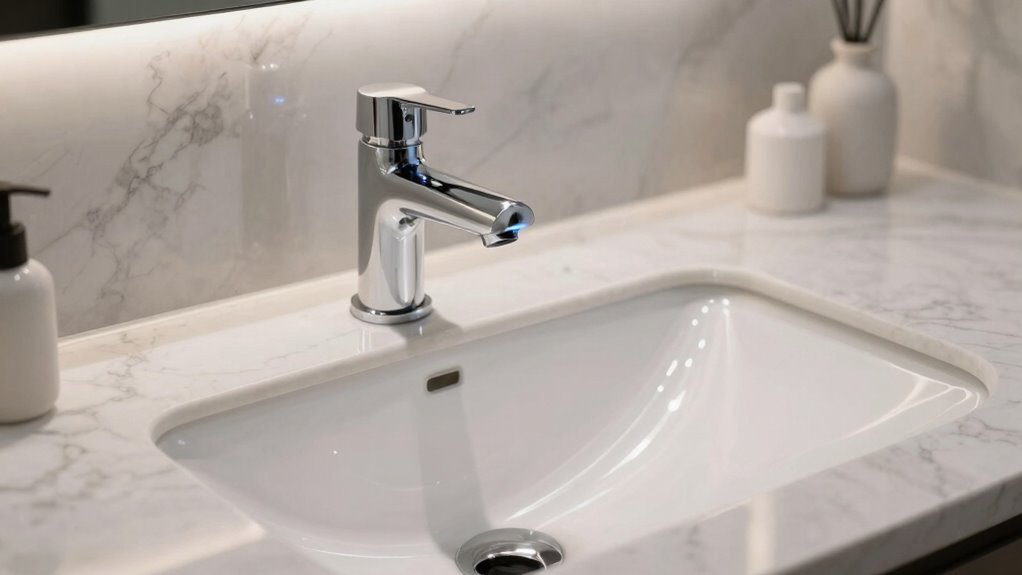

Touchless faucets improve hygiene by eliminating the need to touch handles, reducing germ spread, and offering seamless, instant water activation with smart sensor tech. They also boost water efficiency, helping lower your bills and water waste. What stays the same is their familiar design and reliable water delivery, making them easy to install and use. If you want to discover how these smart upgrades work hand-in-hand with traditional features, keep exploring the details.

Get everyday essentials delivered free with Prime
- Fast, free delivery on millions of items
- Prime Video, Amazon Music and more included
- Member-only deals all year
Key Takeaways
- Improved hygiene and convenience through sensor activation, reducing contact and germ spread.
- Enhanced water efficiency with precise control, lowering water consumption and bills.
- Technological upgrades like smart sensors and automatic temperature control for better safety and functionality.
- Maintains traditional faucet design and familiar installation process for easy upgrades.
- Core purpose of reliable water delivery and user comfort remains unchanged.
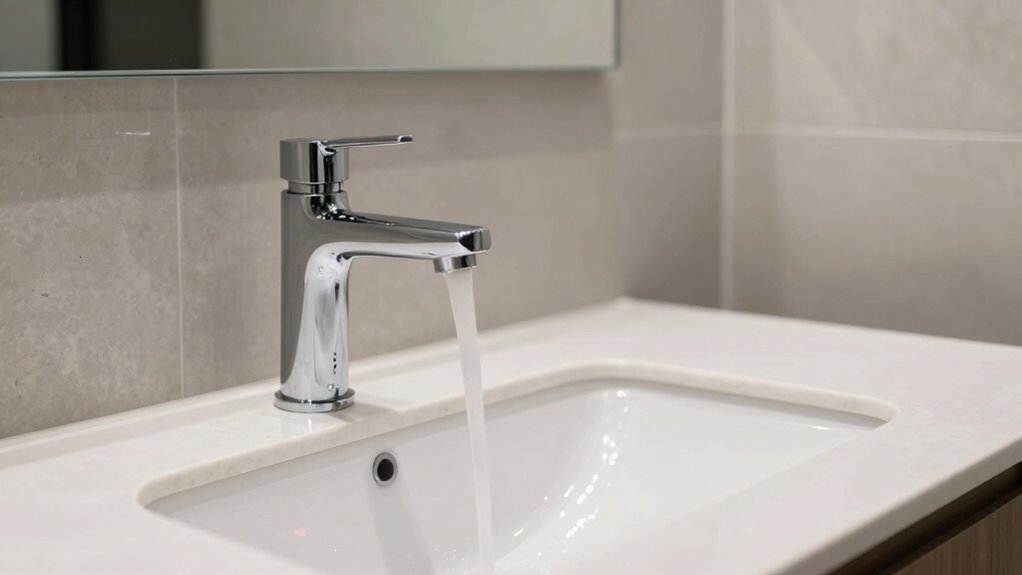
Touchless faucets have become a popular choice for modern homes and public spaces because they offer a hygienic and convenient way to wash hands without touching handles or knobs. At the core of this innovation is smart sensor technology, which detects your hands’ presence instantly, turning the water on and off automatically. This tech not only minimizes contact, reducing the spread of germs, but also enhances the overall user experience. You simply position your hands beneath the spout, and the sensor activates the water flow seamlessly. When you remove your hands, the water stops, eliminating unnecessary waste and making handwashing more efficient.
Touchless faucets offer hygienic, convenient handwashing with smart sensors that activate water seamlessly.
One of the key improvements with touchless faucets is how smart sensor technology optimizes water use. Unlike traditional faucets, which tend to run longer than needed, these advanced systems precisely control water flow based on your hand movements. This means you’re using only the amount of water necessary, which can considerably reduce water consumption over time. For you, this translates into lower water bills and a smaller environmental footprint. The sensors are designed to be highly responsive, ensuring the water turns on immediately when you need it and stops quickly once your hands are removed. This precision helps prevent waste and promotes water conservation benefits that are increasingly important in today’s eco-conscious world. Additionally, the integration of smart sensor technology ensures that the system can adapt to various usage patterns, further increasing efficiency. Incorporating eco-friendly innovations like water-saving features can further enhance the sustainability of your home. Moreover, these technologies are continually evolving to become even more energy-efficient, further reducing the ecological impact. A recent advancement is the integration of automatic temperature control, which adds to user comfort and safety. Introducing self-cleaning sensors can also help maintain hygiene and prevent buildup that might interfere with sensor performance.
Despite these technological upgrades, many features of traditional faucets stay the same. The basic design remains familiar, with the spout, handle options (if any), and overall aesthetic still recognizable. You still get a reliable source of water for everyday tasks, but now with added smart features that improve functionality. Touchless faucets are often sleek and stylish, fitting seamlessly into various bathroom and kitchen decor. The ease of installation is similar to traditional models, making it a straightforward upgrade for homeowners and facility managers alike.
Most importantly, the core purpose of a faucet—to provide a clean and consistent water source—remains unchanged. Touchless models simply elevate this experience by adding a layer of smart technology that makes water use smarter and more efficient. You benefit from a more hygienic environment, especially in high-traffic or public spaces, where touching shared surfaces can spread germs. While the operation stays familiar, the experience is enhanced by the convenience and eco-friendly advantages that come with the latest advancements in sensor technology. Ultimately, touchless faucets blend the best of traditional function with modern innovation, offering a future-forward approach to everyday hygiene and water conservation.
As an affiliate, we earn on qualifying purchases.
Frequently Asked Questions
How Long Do Touchless Faucet Sensors Typically Last?
You can expect your touchless faucet sensors to last around 3 to 5 years, depending on usage. Sensor durability varies based on the quality and brand, but most are designed to be quite reliable. Battery lifespan typically ranges from 6 months to 2 years, so you’ll need to replace batteries periodically. Proper maintenance, like keeping sensors clean, can prolong their lifespan and guarantee your faucet continues working smoothly.
Are Touchless Faucets Compatible With All Plumbing Systems?
You might think touchless faucets are a universal fit, but surprise—installation challenges can arise, especially with unique plumbing setups. While most models are compatible with standard systems, some may require adapters or modifications. The upside? They promote water conservation, making every splash count. So, before installing, check your plumbing’s compatibility; otherwise, you might find yourself fighting a faucet rather than enjoying hands-free convenience.
Do Touchless Faucets Require Special Cleaning Products?
No, you don’t need special cleaning products for touchless faucets. Regular cleaning chemicals that are safe for plumbing and fixtures work well. Just incorporate simple maintenance routines like wiping the sensor and faucet surface regularly to prevent buildup and guarantee proper function. Avoid abrasive cleaners or harsh chemicals, as they can damage the sensor. Keeping up with routine cleaning keeps your touchless faucet working smoothly and looking new.
Can Touchless Faucets Be Repaired Easily?
Think of your touchless faucet as a trusted friend—easy to repair when you understand its needs. You can fix it yourself by checking sensor calibration and power supply issues. If the sensor isn’t responding, calibrate it; if it’s unpowered, replace or recharge the batteries. While some repairs are straightforward, others might need a professional’s touch. Still, with patience, you can keep your faucet functioning smoothly and efficiently.
What Is the Average Cost of a Touchless Faucet?
The average cost of a touchless faucet ranges from $150 to $500, depending on brand and features. You’ll find that sensor calibration and water flow rate influence prices, with higher-quality models offering better calibration accuracy and efficient flow rates. When shopping, consider these factors to guarantee you get good value. Keep in mind, installation costs may add to the total, but maintenance typically remains straightforward and affordable.
Conclusion
As you explore the world of touchless faucets, remember that while technology advances, some things stay timeless—like the desire for cleanliness and convenience. These faucets evolve, offering smarter features and better efficiency, yet their core purpose remains unchanged: making your daily routines easier. Embrace these innovations, but don’t forget that beneath the sleek surface, it’s still about simple, hands-free solutions that keep your space modern and hygienic. Isn’t it time to upgrade your faucet game?
Fall Picks
fall essentials
As an affiliate, we earn on qualifying purchases.