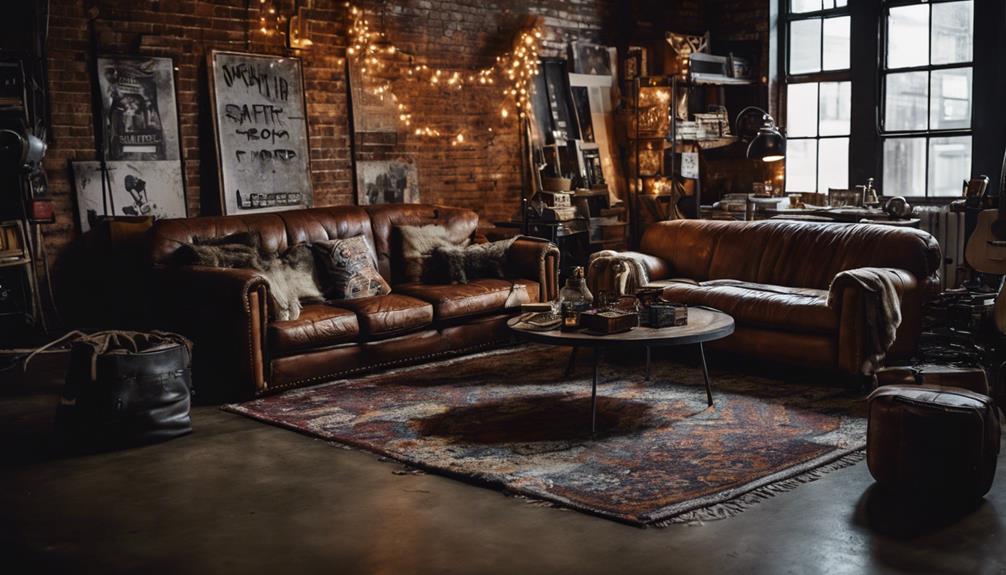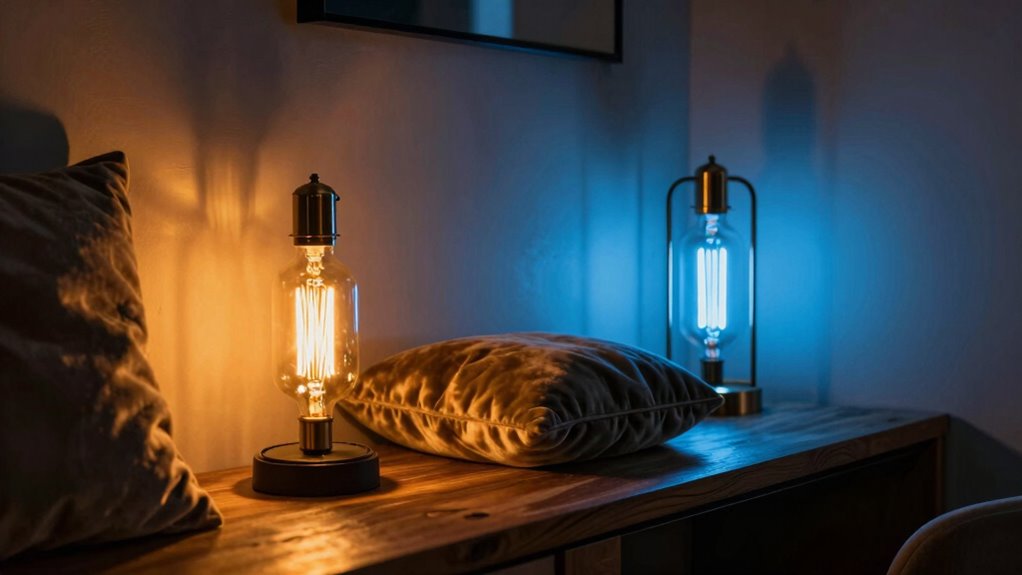

Warm and cool lighting differ mainly in their color temperature, which affects the mood of your space. Warm bulbs (around 2700K-3000K) emit a cozy, yellowish glow that makes rooms feel inviting and relaxing. Cool bulbs (above 4000K) produce a bright, bluish-white light that energizes and helps you stay focused. Choosing the right type depends on your goals; if you’d like tips on creating the perfect atmosphere, you’re in the right place.
Key Takeaways
- Warm lighting (2700K-3000K) creates cozy, relaxing atmospheres, while cool lighting (4000K+) promotes alertness and productivity.
- The color temperature of bulbs influences mood by affecting perception, with warm tones soothing and cool tones energizing.
- Mixing warm and cool bulbs in a space can enhance ambiance but requires careful planning to avoid visual discord.
- Choosing the right bulb type and temperature for each room supports the desired emotional and functional environment.
- Adjusting brightness and color temperature allows customization of mood, making lighting adaptable to activities and preferences.
What Is Warm and Cool Lighting? A Simple Explanation
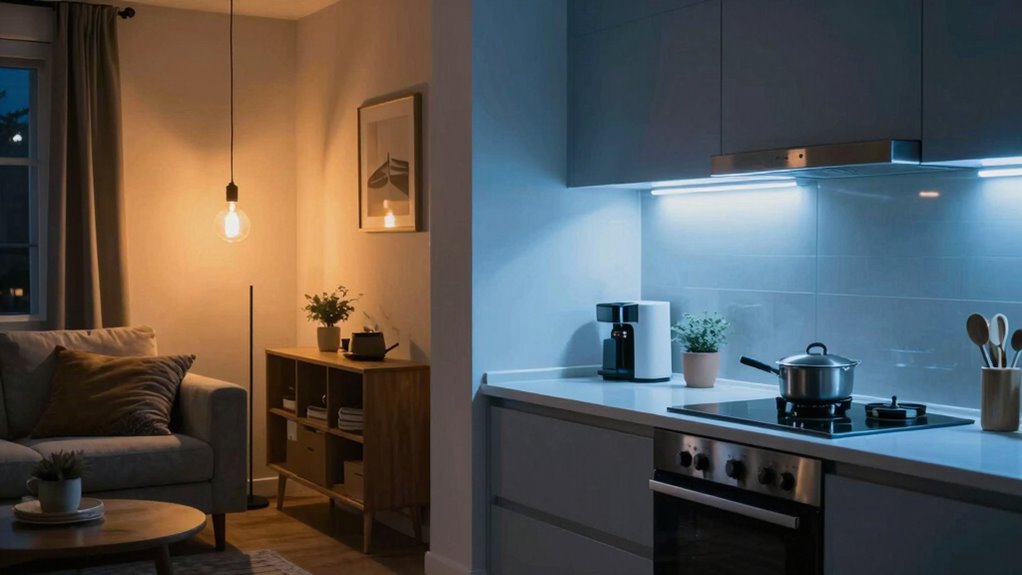
Understanding the difference between warm and cool lighting is essential when choosing the right ambiance for a space. Warm lighting typically has a lower color temperature, around 2700K to 3000K, giving off a soft, yellowish glow. This type of light enhances cozy, inviting atmospheres and promotes relaxation. In contrast, cool lighting has a higher color temperature, usually above 4000K, producing a bluish-white hue. It’s great for areas where alertness and productivity are priorities, like kitchens or workspaces. By selecting between warm and cool lighting, you directly influence the mood of a room. The right choice can make your space feel welcoming, energetic, or serene, depending on the atmosphere you want to create. Additionally, understanding how color temperature impacts visual perception can help you optimize lighting for different activities. Recognizing the effect on mood of different lighting types allows you to create environments tailored to specific needs or occasions. The lighting choices can also influence emotional well-being and overall comfort in your environment. Being aware of lighting influence on perception can help you make more informed decisions about illumination. For example, choosing the appropriate lighting technology can further enhance the desired ambiance and support your lifestyle. Ultimately, understanding color temperature helps you enhance the mood effectively.
How Do Warm and Cool Bulbs Change the Mood of a Room?

The type of bulbs you choose can considerably influence how a room feels. Warm bulbs create a cozy, inviting atmosphere that enhances comfort and relaxation, making your space feel welcoming. They tend to soften lighting aesthetics, giving rooms a more intimate and soothing vibe. On the other hand, cool bulbs produce brighter, more energetic light that can boost focus and alertness. This aligns with color psychology, which suggests cooler tones evoke clarity and efficiency. By selecting warm or cool lighting, you directly shape your room’s mood and ambiance. Warm bulbs are ideal for living areas and bedrooms, while cool bulbs suit workspaces and kitchens. Your choice subtly guides the emotional tone, making your lighting a powerful tool for setting the right mood.
How to Decide Between Warm and Cool Lighting for Your Space
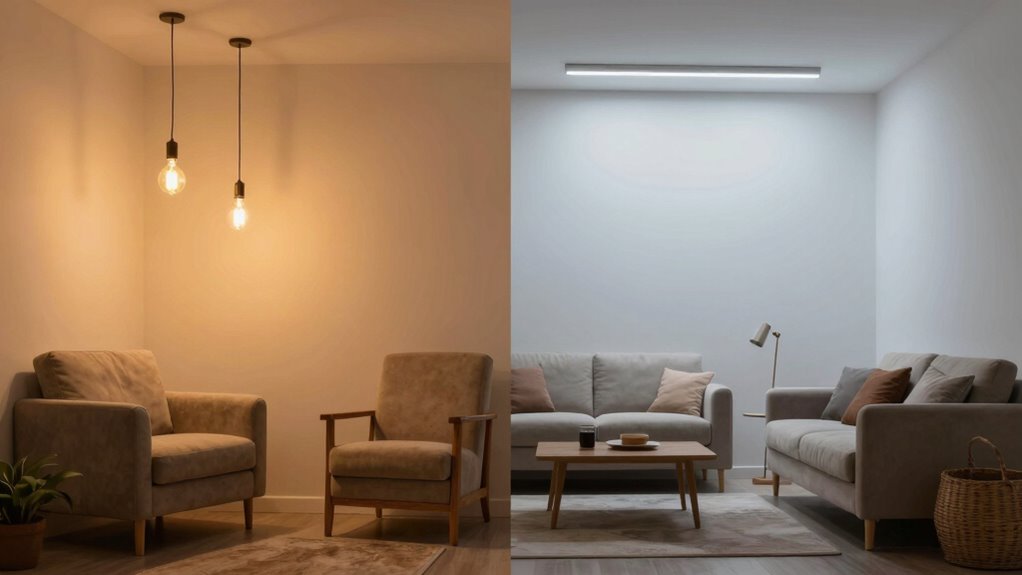
Deciding between warm and cool lighting depends on how you want your space to feel and function. Consider the color temperature, which influences the lighting ambiance. Warm lighting, with lower color temperatures around 2700K to 3000K, creates cozy, inviting spaces ideal for relaxing areas like living rooms or bedrooms. Cool lighting, with higher color temperatures around 4000K to 5000K, provides a crisp, energizing atmosphere suited for kitchens, workspaces, or offices. Think about the mood you want to establish and how the lighting interacts with your decor. If you prefer a calming vibe, lean toward warm lighting. For a bright, focused environment, cool lighting often works best. Matching the lighting style to your space’s purpose guarantees a harmonious and functional environment. Lighting ambiance can significantly impact your overall well-being and productivity. Understanding lighting color temperature helps you make more informed choices to enhance your space.
When Should You Use Warm Lighting to Make Your Home Cozy?
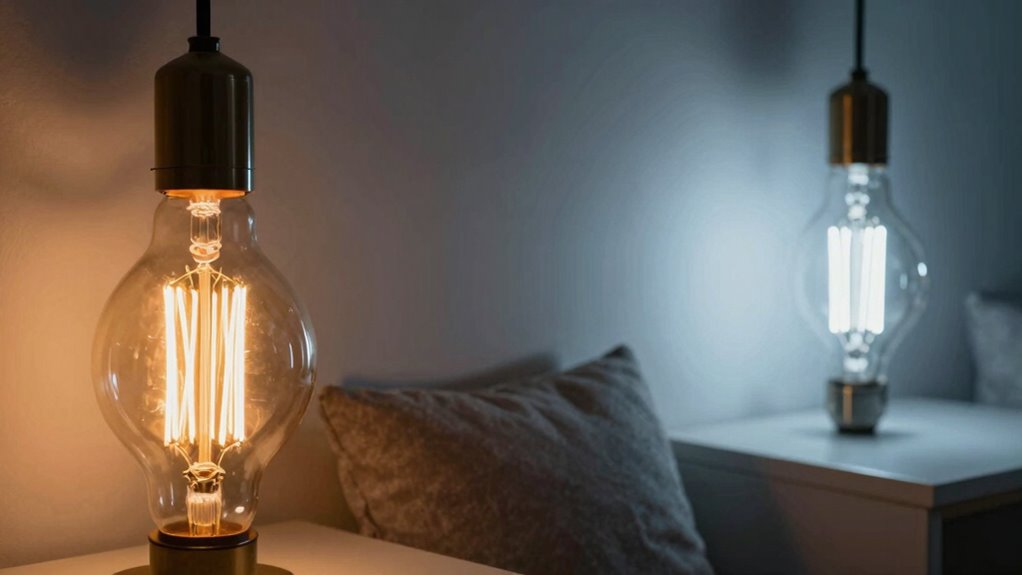
Warm lighting is perfect when you want to create a cozy, inviting atmosphere in your home. It enhances ambiance by adding a soft, gentle glow that makes spaces feel more intimate and relaxing. Use warm bulbs in living rooms, bedrooms, or reading nooks to foster comfort and tranquility. Warm lighting also plays a key role in seasonal lighting, helping you craft a welcoming environment during fall and winter months when you crave extra warmth. This type of lighting encourages relaxation and socialization, making it ideal for evenings spent unwinding or entertaining guests. When your goal is to make your home feel more inviting and snug, warm lighting is your best choice to achieve that comforting, homely vibe. Additionally, incorporating Free Floating design elements can enhance the flexibility and ambiance of your lighting setup, creating a more dynamic and soothing environment. Understanding how lighting temperature influences mood can help you tailor your lighting choices for specific occasions and settings. Moreover, selecting the right connected lighting options can further optimize your home’s atmosphere and energy efficiency. For example, lighting control systems can give you the ability to easily adjust warmth and brightness to suit different moods and activities. Recognizing the impact of color temperature can help you choose the most suitable lighting for any room or event.
Best Settings for Cool Lighting to Stay Energized and Focused

To stay energized and focused, choosing the right cool lighting settings can make a significant difference in your environment. Opt for a higher color temperature, around 5000K to 6500K, to create a crisp, invigorating lighting ambiance. This setting mimics daylight, boosting alertness and concentration. Adjust your lighting to be bright but not harsh, avoiding flickering or dimness that can cause eye strain. Consider these tips:
- Use cool white or daylight bulbs for a clean, energizing effect
- Keep lighting uniform across your workspace for consistent illumination
- Incorporate task lighting for specific activities requiring focus
- Ensure your lighting setup includes safety considerations to prevent flickering or glare that could lead to eye fatigue and human-centered design principles to enhance comfort and productivity. Additionally, selecting appropriate color temperatures can further optimize your environment for alertness and well-being. Incorporating proper lighting placement can also help minimize shadows and glare, creating a more comfortable workspace. Properly managing lighting distribution can improve overall illumination and reduce fatigue, supporting sustained focus.
How Warm and Cool Lights Affect Your Skin Tones and Decor

Since lighting can dramatically influence how your skin tones and decor appear, choosing the right warmth or coolness is essential. The color temperature of your bulbs affects how warm or cool your environment feels, impacting your skin tone’s appearance. Warm lights, with lower color temperature, enhance golden and peach undertones, making skin look healthier and more vibrant. Cool lights, with higher color temperature, tend to wash out warm tones, giving skin a slightly pale or bluish cast. Your decor also reacts to this, with warm lighting creating a cozy, inviting atmosphere and cool lighting producing a sleek, modern vibe. Selecting the appropriate color temperature guarantees your space complements your skin tone and enhances your overall mood. Thermal behavior also plays a role in how light interacts with surfaces, influencing the overall ambiance. Understanding color rendering index can help you choose bulbs that best replicate natural light and improve visual clarity. Additionally, considering the spectral composition of a bulb can further optimize how colors and textures appear under different lighting conditions. Being aware of light spectrum variations can help you fine-tune your lighting choices for specific settings and tasks, especially with the help of smart lighting systems that allow for customizable color temperatures and brightness levels.
Should You Mix Warm and Cool Lighting? Tips for a Balanced Look
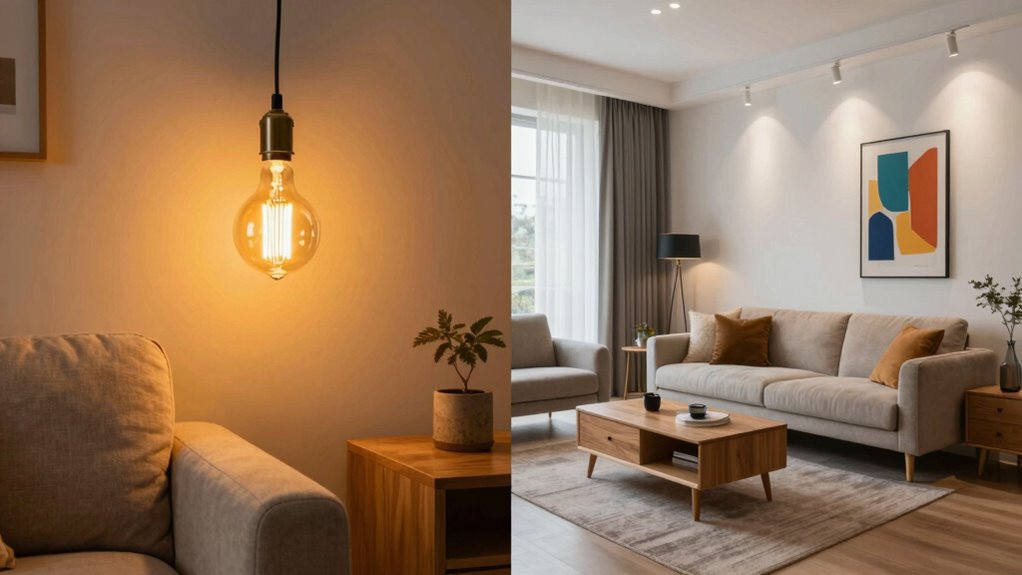
Blending warm and cool lighting can create a dynamic and inviting environment, but it requires a careful approach to avoid visual discord. Achieving lighting harmony depends on understanding how different color temperatures work together. To balance warm and cool bulbs effectively:
- Use warm lighting for cozy, relaxing spaces and cool lighting for task areas.
- Limit mixing to two or three different color temperatures to prevent cluttered visuals.
- Pay attention to the placement of fixtures to maintain a cohesive flow.
- Recognizing lighting temperature differences helps you make smarter choices for a balanced look. It’s also helpful to consider lighting zones within your space to enhance functionality and mood.
- Understanding color temperature variations can help you design a more harmonious lighting scheme that aligns with your intended atmosphere. Additionally, being aware of visual harmony ensures your lighting choices contribute positively to the overall ambiance.
Keep in mind that consistency in color temperature helps create a unified look, while strategic mixing adds visual interest. When done thoughtfully, mixing warm and cool lighting enhances the ambiance without sacrificing harmony, making your space both functional and inviting.
Common Mistakes to Avoid When Choosing Warm or Cool Bulbs
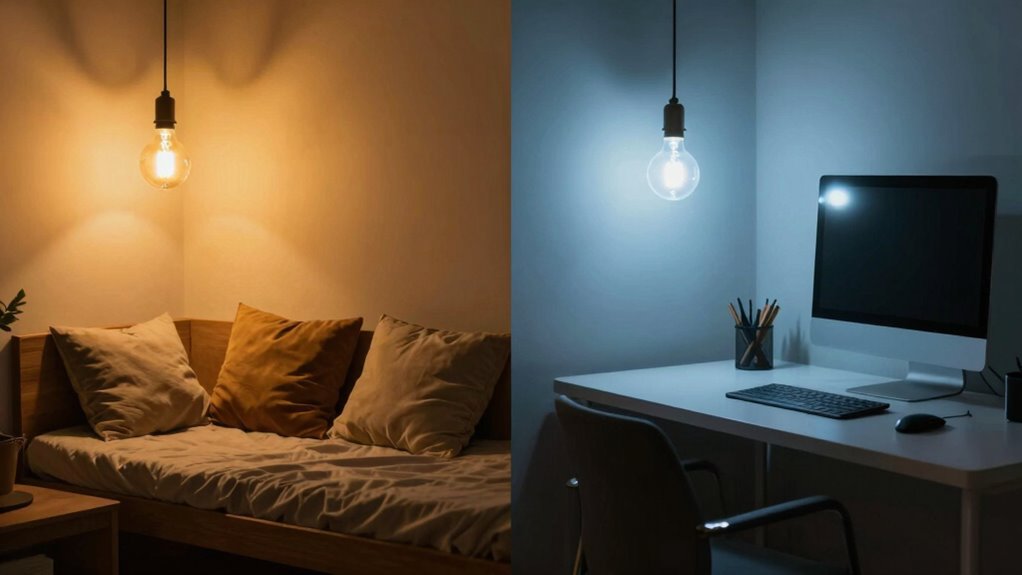
One common mistake is choosing bulbs that don’t match the room’s function, which can affect the mood and usability. Ignoring the importance of light color temperature can lead to spaces feeling off or uninviting. Make sure to take into account how each room’s purpose influences your lighting choices to avoid these errors.
Mismatch Room Functions
Choosing the wrong type of lighting for a room’s function can quickly undermine its purpose and your comfort. When selecting bulbs, consider how the room’s decor style and size influence your choice. Using cool light in a cozy bedroom can feel sterile, while warm light in a workspace may seem dull. Be mindful of these common mistakes:
- Ignoring the room’s primary use, like using cool bulbs in relaxation areas.
- Overlooking decor style; modern spaces often suit cool tones, while traditional decor benefits from warm lighting.
- Not considering room size; large rooms might need brighter, cooler bulbs, whereas smaller spaces can feel more inviting with warm light.
Matching lighting to room function ensures the space feels right and supports its intended mood and activity.
Ignoring Light Color Temperature
Many people overlook the importance of light color temperature when selecting bulbs, which can lead to mismatched atmospheres and reduced comfort. Ignoring this aspect affects your color perception, making colors appear dull or overly harsh. If you choose the wrong temperature, your aesthetic preferences may clash with the room’s overall style, undermining the desired mood. Warm bulbs create cozy, inviting spaces, while cool bulbs promote alertness and modernity. Failing to take into account color temperature can result in a space that feels inconsistent or unbalanced. To avoid this mistake, think about how the light’s tone complements your decor and mood goals. Paying attention to light color temperature ensures you achieve the right ambiance, blending functionality with visual harmony.
Are Warm or Cool Bulbs More Energy-Efficient and Cost-Effective?
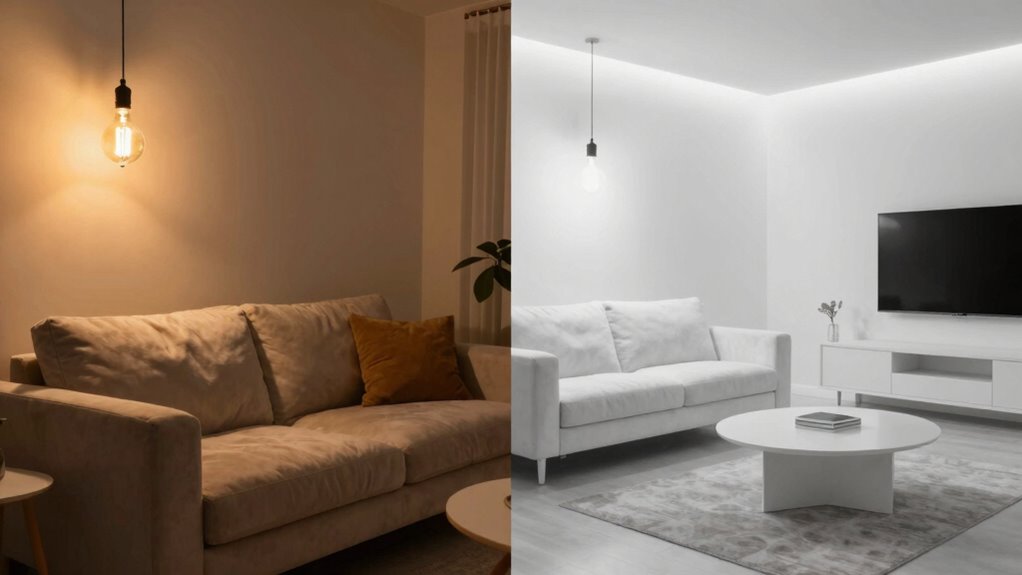
When comparing warm and cool bulbs regarding energy efficiency, the type of bulb itself plays a more significant role than its color temperature. LED bulbs, regardless of warmth or coolness, generally offer the best energy savings and long-term cost benefits. Incandescent bulbs are less efficient and cost more over time. Fluorescent bulbs fall between LEDs and incandescents in both efficiency and cost.
Consider these points for your cost comparison:
- LEDs consume less power and last longer, saving money over time.
- Warm-toned LEDs often cost slightly more upfront but pay off in energy savings.
- Cool bulbs tend to be marginally more efficient than warm ones, but the difference is minimal.
Ultimately, choosing energy-efficient bulb technology yields better energy savings and cost-effectiveness than focusing solely on warmth or coolness.
Easy Tips for Installing and Adjusting Your Lighting for the Perfect Mood
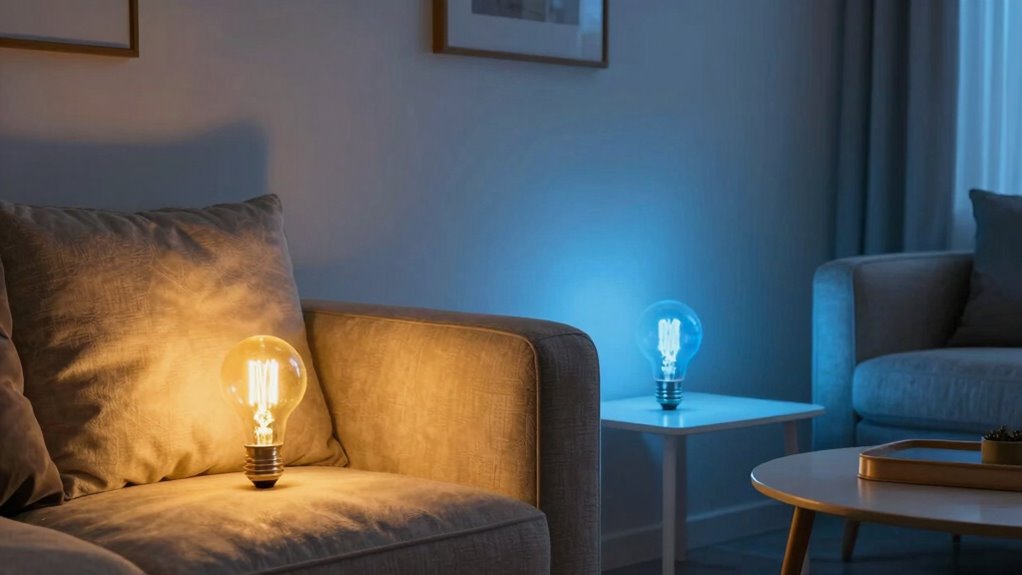
Choosing the right bulb is key to setting the mood, so pick warm or cool lighting based on your space. Once installed, adjust the brightness levels to create the perfect ambiance for any occasion. Small tweaks can make a big difference in how your room feels.
Choose the Right Bulb
Selecting the right bulb is essential for setting the perfect mood in your space. First, consider the color temperature—warm tones create coziness, while cool tones promote alertness. Look for bulbs with a suitable color temperature that matches your desired ambiance. Additionally, check the bulb’s longevity to guarantee your lighting stays consistent without frequent replacements.
To make your choice easier, keep these tips in mind:
- Opt for LED bulbs for longer bulb longevity and energy efficiency.
- Choose a color temperature that complements your room’s purpose.
- Select the right bulb shape and base for compatibility and aesthetic appeal.
Adjust Brightness Levels
Adjusting the brightness of your lighting is key to creating the right mood in any space. Using dimming options and brightness controls allows you to customize the atmosphere easily. If you want a cozy, relaxing vibe, lower the brightness; for lively gatherings, increase it. When installing new fixtures, choose ones with adjustable dimmers or invest in smart bulbs that let you control brightness via apps or voice commands. Always test your lighting after installation to ensure smooth dimming and consistent light levels. Modifying brightness isn’t just about visibility—it sets the tone. Play with different settings until you find the perfect balance that complements your space and mood. With simple brightness controls, you’ll have the flexibility to change your environment instantly.
Frequently Asked Questions
How Do I Identify the Color Temperature of My Current Bulbs?
To identify your bulb’s color temperature, start by checking the bulb’s packaging or base for labeled details. If it’s not there, look for a printed number, usually in Kelvin (K), like 2700K for warm light or 5000K for cool. You can also compare the bulb’s hue—warm tones lean yellowish, while cool tones appear bluish. This helps with bulb identification and choosing the right lighting for your space.
Can Switching Between Warm and Cool Lighting Improve Productivity?
Switching between warm and cool lighting can boost your productivity by creating the right environment for different tasks. Use lighting automation to seamlessly shift between lighting options, adapting to your needs throughout the day. Cool lighting helps you stay alert during work, while warm lighting relaxes you afterward. Explore decorative lighting options to enhance your space’s ambiance and support your focus, making your environment more functional and inviting.
Are There Health Benefits Associated With Warm or Cool Lighting?
Warm lighting can promote better circadian regulation, helping you wind down and improve sleep quality. Cool lighting, on the other hand, can reduce eye strain during daytime activities by mimicking natural daylight. Both types have health benefits; warm light supports relaxation and sleep, while cool light keeps you alert. Choosing the right lighting based on your activity can optimize your overall health and comfort.
How Does Lighting Color Impact Sleep Quality and Circadian Rhythms?
Lighting color markedly impacts your sleep quality and circadian rhythms. Cool lighting suppresses melatonin more, making it harder to fall asleep and disrupting circadian alignment. On the other hand, warm lighting supports melatonin production, helping you relax and maintain a natural sleep cycle. To improve sleep, use warm lighting in the evening and avoid bright, cool lights before bedtime. This simple change can promote better sleep and overall health.
What Are the Best Bulbs for Outdoor Ambient Lighting?
You should choose outdoor ambient lighting that balances practicality and atmosphere, like solar lanterns and LED string lights. Solar lanterns provide eco-friendly, soft glow, perfect for cozy evenings, while LED string lights add charm and versatility. Both options are durable and energy-efficient, creating inviting spaces without harsh glare. By selecting these bulbs, you enhance your outdoor experience, making your space welcoming and functional day or night.
Conclusion
Now that you know how warm and cool lighting can transform your space, the real question is—are you ready to create the perfect mood? Whether you want cozy comfort or energizing focus, choosing the right bulbs can make all the difference. But there’s one essential detail you haven’t considered yet—something that could completely change your lighting game. Curious? Keep exploring, and you might just discover the secret to lighting magic you never knew existed.