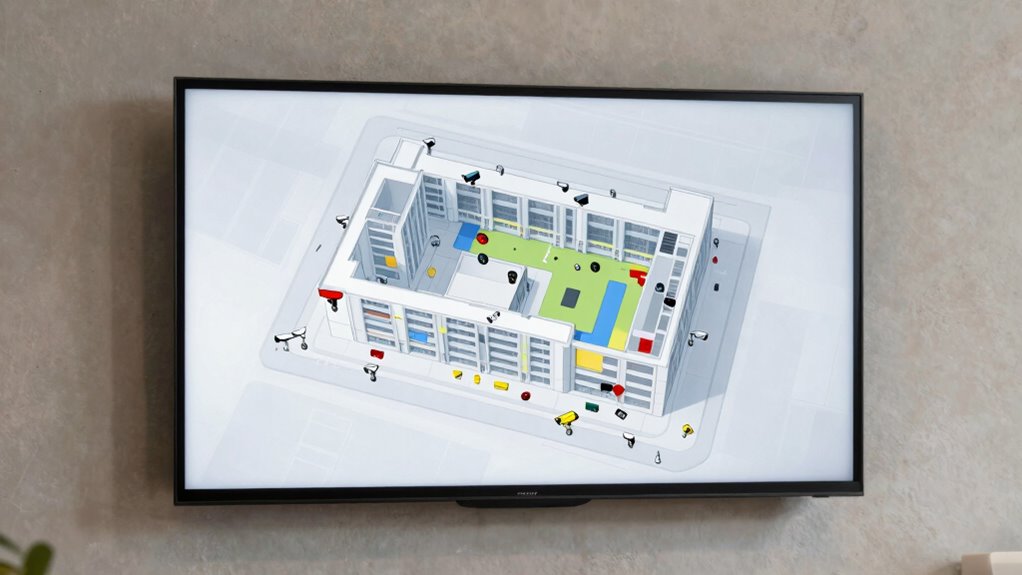

To create a placement map that truly covers blind spots, start by identifying high-traffic areas like entries, driveways, and potential hiding spots. Position cameras at strategic heights and angles, avoiding glare and weather exposure. Regularly check and adjust their placement to adapt to lighting changes and property modifications. Proper maintenance and thoughtful positioning prevent blind spots effectively. Continue exploring to discover how proper camera placement can maximize your security coverage and prevent intrusions.
Key Takeaways
- Strategically position cameras to cover all entry points and high-traffic areas, minimizing blind spots.
- Use overhead mounting and wide-angle lenses for broad coverage and weather protection.
- Regularly review and adjust camera angles to adapt to changing lighting and property layouts.
- Avoid placing cameras near bright lights or reflective surfaces to prevent glare and visibility issues.
- Conduct routine inspections and maintenance to ensure continuous coverage and identify blind spots promptly.
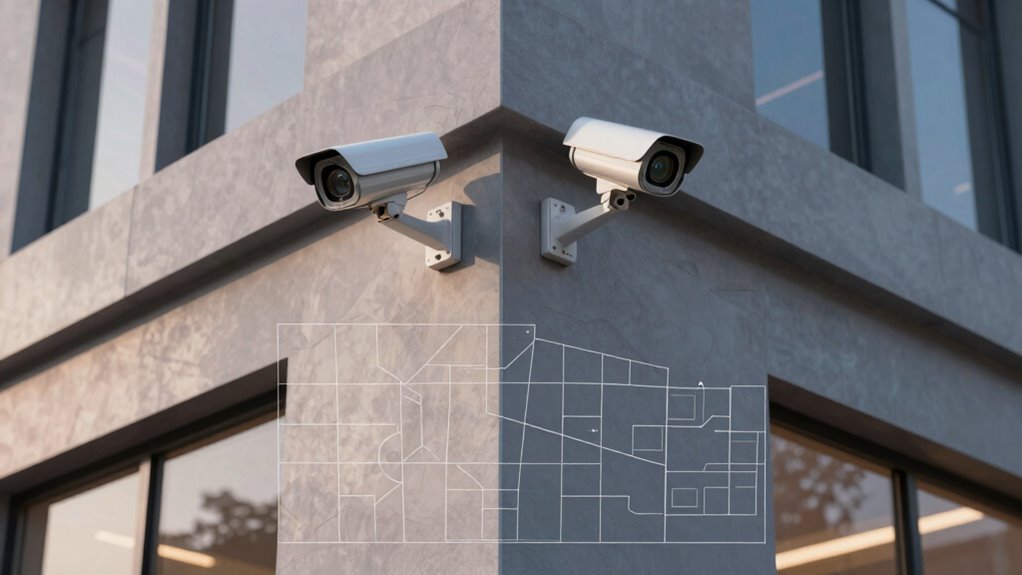
Have you ever wondered how security cameras can protect your home or business? The key isn’t just in installing them randomly but in creating a well-thought-out placement map that covers all blind spots. Cameras are most effective when positioned correctly, so it’s essential to consider factors like lighting issues and regular camera maintenance to guarantee optimal performance. Poor lighting can create shadows or glare, making it difficult for your cameras to capture clear images. If a camera faces direct sunlight or harsh artificial lighting, its footage might be washed out or distorted, leaving gaps in your security coverage. To prevent this, you need to evaluate the lighting conditions at different times of the day and adjust your camera angles accordingly. Installing cameras with adjustable lenses or filters can also help mitigate lighting issues, ensuring clear visuals regardless of changing light conditions. Additionally, understanding the navigation and mapping capabilities of modern security cameras can help optimize their placement for comprehensive coverage. Another vital aspect of maintaining effective security cameras is regular camera maintenance. Dirt, dust, spider webs, or condensation can obstruct your camera lenses, reducing image quality and creating blind spots. Over time, cables and connections can become loose or damaged, leading to outages or poor footage. Setting a routine maintenance schedule helps you identify and fix these issues before they compromise your security. Cleaning the lenses with a soft cloth and inspecting the mounting points keeps your cameras functioning at their best. Additionally, updating firmware and software guarantees your cameras are protected from vulnerabilities and operate smoothly. Proper maintenance isn’t just about avoiding technical glitches; it’s about ensuring your entire security system is reliable and always ready to capture critical moments. When planning your camera placement, think about the common blind spots around your property. High-traffic areas like entrances, driveways, and backyards should be prioritized. Position cameras at strategic angles and heights to maximize coverage while minimizing the chance of vandalism or tampering. Avoid placing cameras directly facing bright lights or reflective surfaces, which can interfere with image clarity. Instead, aim for locations that provide a broad field of view, preferably with some overhead coverage to protect against weather elements. Remember, the best placement map isn’t just about coverage—it’s about creating a seamless security net that’s resilient to lighting issues and easy to maintain. When you regularly check and adjust your setup, you’ll have peace of mind knowing your security system is consistently working to keep your property safe.
Frequently Asked Questions
How Do I Choose the Best Camera for My Specific Blind Spots?
To choose the best camera for your blind spots, consider camera resolution for clear images and night vision for 24/7 coverage. Measure the area carefully to determine the right field of view, and opt for cameras with adjustable angles to cover tricky spots. Look for models with motion detection, so you’re alerted to activity, and make certain they have reliable night vision to see in low-light conditions.
What Are the Legal Considerations for Security Camera Placement?
You need to consider privacy laws and consent requirements when placing security cameras. Make sure your cameras don’t infringe on neighbors’ privacy or capture private areas like bathrooms or bedrooms. Inform people if they’re recorded, especially in public or shared spaces, to stay compliant. Check local regulations to avoid legal issues, and always respect individuals’ privacy rights while maintaining effective surveillance.
How Often Should I Update or Upgrade My Security Cameras?
You should update or upgrade your security cameras every 3 to 5 years to guarantee ideal camera placement and technology. Regular camera upgrades keep your system current with new features, better resolution, and enhanced security. As technology advances, older cameras may become less effective, creating blind spots. Stay proactive by evaluating your setup annually, and consider upgrades whenever you notice gaps in coverage or outdated equipment.
Can Security Cameras Detect or Prevent Theft Actively?
Think of your security cameras as vigilant guardians that actively detect and prevent theft. With features like motion detection and night vision, they can alert you to suspicious activity in real-time, acting as your digital watchdogs. While they don’t physically stop theft, their alerts enable quick responses, reducing chances of loss. Regular updates improve their accuracy, ensuring they stay sharp and effective in protecting your property around the clock.
What Maintenance Is Required to Keep Cameras Functioning Properly?
You need to regularly clean your camera lens to guarantee clear footage and check your power source to prevent outages. Wipe the lens with a soft cloth, avoiding scratches, and inspect power connections for loose wires or corrosion. Additionally, ensure your camera’s firmware stays updated and test the system periodically. Proper maintenance keeps your security cameras functioning properly, providing reliable surveillance and peace of mind.
Conclusion
By strategically placing your security cameras, you’ll outsmart even the sneakiest intruders, transforming your home into an impenetrable fortress. Remember, a well-planned placement map can cover blind spots that others overlook, making your security system virtually untouchable. Don’t underestimate the power of thoughtful positioning — it’s your best defense against unexpected threats. With the right setup, you’ll have peace of mind, knowing your property is protected by a vigilant eye that’s nearly impossible to evade.