If smoke lingers in your kitchen, it’s often due to airflow issues like improper hood placement, weak fans, or unbalanced vents. When airflow isn’t efficient, smoke and odors don’t get removed quickly, allowing them to settle or cling to surfaces. Ensuring your range hood is correctly positioned, using powerful yet quiet fans, and balancing air intake and exhaust can markedly improve ventilation. Keep exploring to discover practical fixes and optimize your kitchen’s airflow for a fresher space.
Key Takeaways
- Improper placement of range hoods can prevent effective smoke capture, allowing smoke to escape into the room.
- Insufficient airflow or unbalanced ventilation systems cause negative pressure, drawing smoke and odors back into the kitchen.
- Obstructions like cabinetry or poorly designed vents hinder air movement, reducing smoke removal efficiency.
- Ventilation components that are too small or weak fail to generate enough airflow to clear smoke quickly.
- Inadequate fresh air intake or poor system design leads to stagnation, making smoke linger longer in the kitchen.
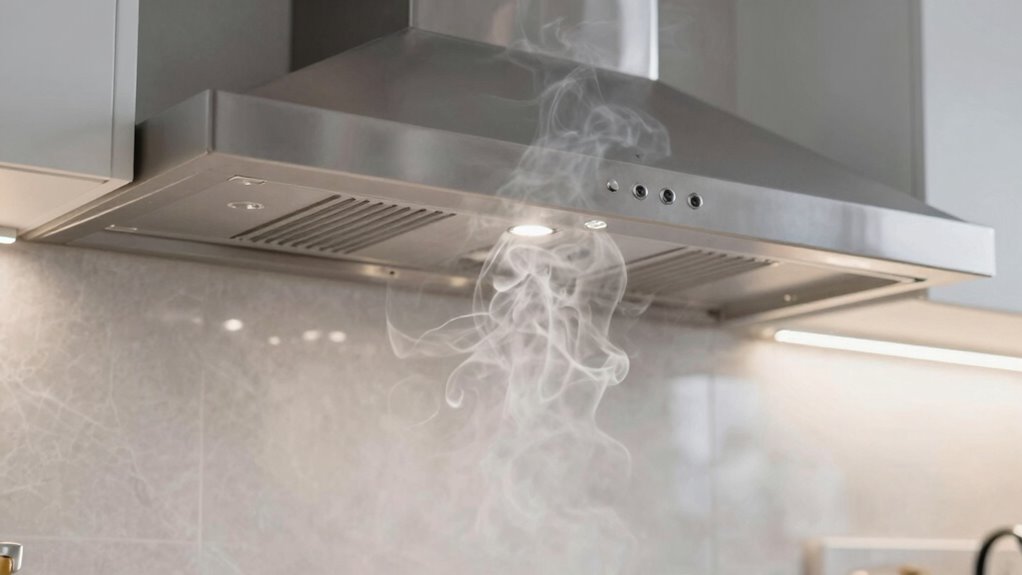
Have you ever wondered how to keep your kitchen fresh and odor-free while cooking? The key lies in understanding airflow efficiency and how your ventilation design impacts it. Proper airflow ensures that smoke, steam, and cooking odors don’t linger, making your kitchen a more pleasant space to work in. Many people underestimate the importance of a well-thought-out ventilation system, but even small adjustments can markedly improve how well your kitchen clears out airborne pollutants.
Optimizing airflow is essential for a fresh, odor-free kitchen.
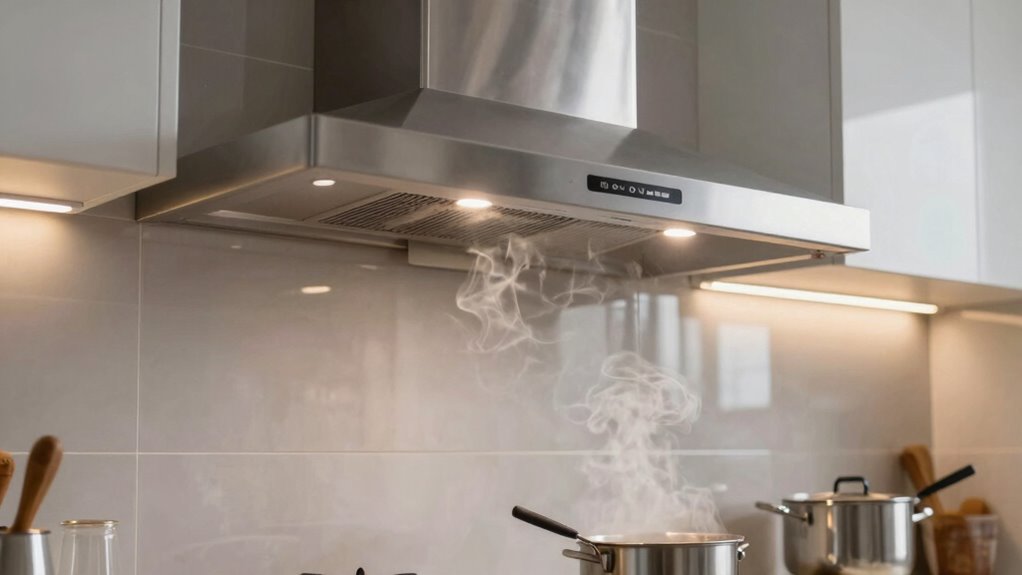
Airflow efficiency refers to how effectively air moves through your kitchen, carrying away smoke and odors. If airflow isn’t optimized, smoke can settle into corners, cling to surfaces, or drift back into the room, leaving behind a lingering smell. The core of good ventilation design is ensuring that air enters and exits your kitchen in a way that maximizes movement and minimizes stagnation. This involves positioning range hoods correctly above your stove, using powerful yet quiet fans, and making sure there are enough air vents to facilitate smooth circulation. When designed properly, your ventilation system pulls in fresh air while pushing out contaminated air, maintaining a steady flow that keeps odors at bay.
A common mistake in kitchen ventilation is underestimating the importance of proper placement. A range hood mounted too high or too low can reduce airflow efficiency, letting smoke escape into the room instead of being captured and vented outside. Similarly, a vent that’s poorly located or obstructed by cabinetry can hinder air movement, causing smoke and smells to linger longer than necessary. Good ventilation design considers the entire kitchen layout, ensuring that air is directed efficiently from the source of pollution to the exhaust. The shape and size of vents, the power of the exhaust fans, and even the placement of windows all contribute to ideal airflow.
Another aspect of effective ventilation design is balancing the inflow and outflow of air. If your kitchen pulls in too little fresh air or vents too much, it can create negative pressure, drawing in unfiltered air from other parts of the house or outside. This not only reduces airflow efficiency but can also bring in unwanted odors or pollutants. Incorporating an appropriately sized exhaust system and ensuring adequate fresh air intake helps maintain equilibrium, allowing your kitchen to clear smoke rapidly and prevent lingering smells. Additionally, understanding airflow efficiency and how it is influenced by system components can help you optimize your ventilation setup for better performance.
Frequently Asked Questions
How Often Should I Clean My Kitchen Exhaust Fan?
You should clean your kitchen exhaust fan at least once every three months to maintain proper exhaust fan maintenance. Regular cleaning prevents grease buildup that causes smoke to linger. Don’t forget to check and replace your kitchen air filters monthly, as they help trap airborne particles and improve ventilation. Keeping both the exhaust fan and air filters spotless ensures your kitchen stays fresh and smoke-free.
Can Indoor Plants Improve Kitchen Air Quality?
Think of indoor plants as nature’s air purifiers, working quietly to improve your kitchen air quality. They absorb toxins and release fresh oxygen, making your space feel lighter and cleaner. Incorporating indoor plants into your kitchen not only adds a touch of greenery but also enhances air purification. So, yes, adding a few plants can help clear out lingering odors and improve overall air quality, making your cooking space healthier.
Do Window Vents Help With Smoke Removal?
Yes, window vents help with smoke removal by providing essential smoke extraction. They allow fresh air to enter and stale, smoky air to escape, improving ventilation in your kitchen. When smoke lingers, opening these vents can quickly reduce it, especially during cooking. Make sure your window vents are unobstructed and properly positioned to maximize airflow. Regularly use them alongside range hoods for ideal smoke extraction and a fresher, healthier kitchen environment.
What’s the Ideal Placement for a Range Hood?
Placing your range hood is like giving your kitchen a gust of fresh air. For ideal kitchen ventilation positioning, install the hood directly above your cooktop, ideally 20-30 inches above the burners. This ensures smoke and fumes are captured efficiently. Proper range hood placement minimizes lingering smoke, improves air quality, and makes cooking more comfortable, so always align it with your cooktop for the best results.
How Do I Know if My Ventilation System Is Working Effectively?
You can tell if your ventilation system works by performing regular airflow testing and a ventilation inspection. Check for strong, consistent airflow when your range is on; if smoke or odors linger, it’s a sign your system might need maintenance. Schedule professional airflow testing to measure exhaust effectiveness, and inspect vents and filters. If issues persist, consider upgrading your system to guarantee proper ventilation and smoke removal.
Conclusion
Understanding kitchen ventilation is essential because poor airflow can trap smoke, odors, and pollutants, making your cooking space uncomfortable. Did you know that inadequate ventilation can increase indoor air pollution levels by up to 50%? By ensuring your exhaust fan works properly, keeping vents clean, and opening windows when possible, you can substantially improve air quality. Remember, a well-ventilated kitchen not only keeps smoke at bay but also promotes a healthier, more enjoyable cooking environment.