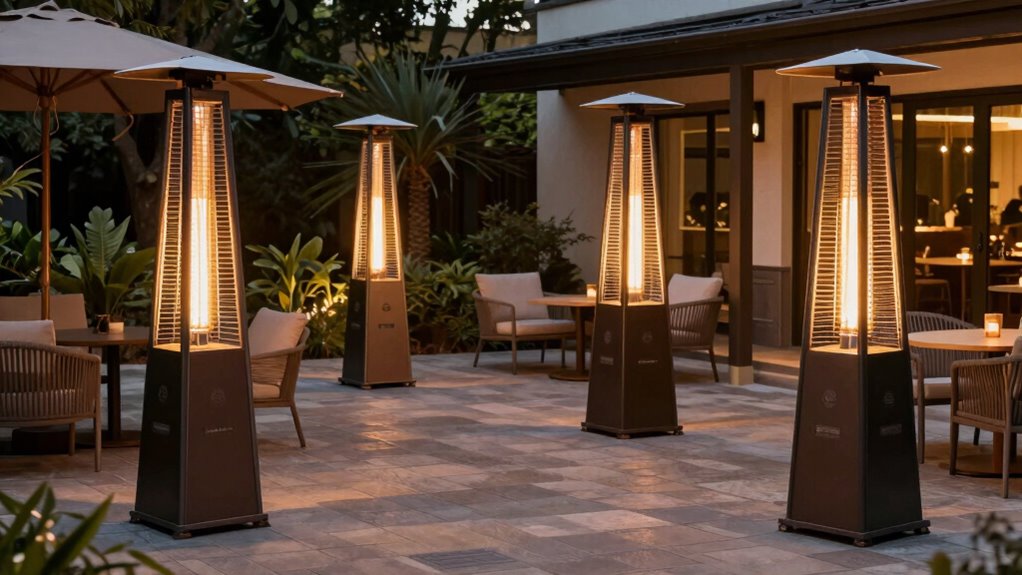

To keep safe with your patio heater, place it on a flat, stable surface away from walls, furniture, and flammable objects—at least three feet apart. Check that cords and fuel connections are secure and free of leaks, and avoid running cords under rugs or furniture. Maintain a clear, open space around the heater to prevent accidents and ensure good airflow. Following these basic rules will help you enjoy warmth safely—there’s more to contemplate for complete protection.
Key Takeaways
- Place patio heaters on flat, stable surfaces to prevent tipping and accidents.
- Maintain at least three feet clearance from walls, furniture, and flammable objects.
- Ensure proper handling and inspection of fuel and electrical connections before use.
- Plug electric heaters directly into grounded outlets, avoiding overloaded extension cords.
- Regularly inspect heaters and store fuel safely to prevent leaks and fire hazards.

Patio heaters can extend your outdoor enjoyment, but safety should always come first. When setting up your heater, proper placement is essential to minimize the risk of fire hazards and ensure electrical safety. Begin by choosing a flat, stable surface where the heater won’t wobble or tip over easily. Uneven ground can lead to accidents and increase the chance of the heater falling, which could cause sparks or damage. Keep the heater away from combustible materials like dry leaves, paper, or fabric. This simple step prevents potential fire hazards that could turn a cozy evening into a dangerous situation.
Choose a stable, flat surface for your patio heater to prevent accidents and tipping.
It’s crucial to maintain a safe clearance zone around your patio heater. Place it at least three feet away from walls, furniture, curtains, or overhanging branches. This distance helps prevent accidental contact with flammable objects and allows proper airflow, which is essential for safe operation. If your heater runs on propane or natural gas, double-check all connections and hoses for leaks before igniting. A small leak can lead to a fire hazard, so handling fuel with care and following manufacturer instructions is non-negotiable. For electric models, ensure that cords are not frayed or damaged, and that they don’t create tripping hazards. Avoid running cords under rugs or furniture, as this can cause overheating and electrical safety issues.
Another key aspect is the placement in relation to electrical outlets. Never overload extension cords or power strips, as this can lead to overheating and increase the risk of electrical fires. Instead, plug your electric patio heater directly into a grounded outlet that matches the heater’s power requirements. Keep the cord away from high-traffic areas to prevent accidental tripping or pulling the heater off its surface. When outdoors, use only extension cords rated for outdoor use, and make sure all connections are protected from moisture with weatherproof covers. Moisture exposure can cause electrical shorts, leading to shocks or fires.
Additionally, consider the proper storage of fuel when your heater is not in use, which can help prevent leaks and accidental ignition. Finally, always follow the manufacturer’s instructions regarding placement and operation. Regularly inspect your heater for signs of wear, damage, or loose connections. Proper placement not only enhances your comfort but also plays an essential role in preventing accidents, ensuring your outdoor gatherings stay safe and enjoyable. By paying attention to fire hazards and electrical safety, you’re taking the necessary steps to create a secure environment for everyone to relax and enjoy the outdoors.
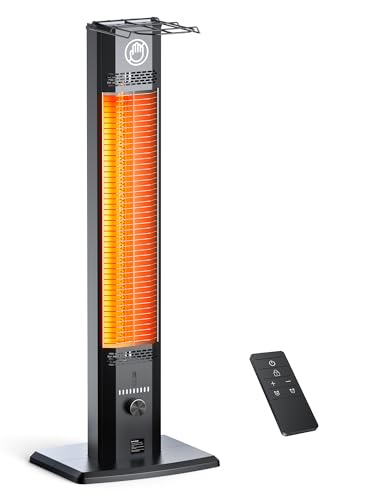
AIRTHRYL 42 INCH Outdoor Patio Heater, 9 Heat Levels & 9 Hour Timer, 1500W, 1S Instant Heat, Infrared Heater with Child Safety Lock, IP65 Waterproof, Tip-Over for Outdoor Indoor Use, Black
🔥【42 Inch for Wide-Area Warming】These 42-inch patio heaters for outdoor use heat up in 1 second
As an affiliate, we earn on qualifying purchases.
As an affiliate, we earn on qualifying purchases.
Frequently Asked Questions
Can Patio Heaters Be Used Indoors Safely?
You shouldn’t use patio heaters indoors because indoor safety is a concern. Most patio heaters are designed for outdoor use and can produce dangerous fumes or excessive heat. If you want to heat indoor spaces, look for models made with heat resistant materials specifically designed for indoor use. Always follow manufacturer instructions, guarantee proper ventilation, and avoid using outdoor patio heaters inside to prevent fire hazards and health risks.
How Often Should I Inspect My Patio Heater for Safety?
You should inspect your patio heater regularly, ideally before each use, to guarantee safety. Conduct maintenance checks for any signs of wear, rust, or damage, and follow safety protocols like checking connections and ensuring proper ventilation. Regular inspections help catch issues early, preventing accidents. Make it a habit to review your heater’s condition, especially during the off-season, so you stay safe and extend its lifespan.
Are There Specific Materials That Prevent Heat Damage?
Did you know that using heat resistant materials can reduce patio heater fires by up to 50%? You should look for fireproof surfaces and heat resistant materials like ceramic, metal with proper coatings, or tempered glass to prevent heat damage. These materials withstand high temperatures, ensuring safe operation and protecting your surfaces from heat-related damage. Always choose equipment built with fireproof surfaces for added safety and longevity.
What Is the Recommended Clearance Distance From Walls?
You should keep at least 3 feet of wall clearance from your patio heater to prevent heat damage. Maintaining this distance guarantees proper airflow and reduces the risk of heat transfer to walls or other surfaces. Always check your heater’s manufacturer guidelines for specific clearance recommendations, as some models may require more space. Proper placement protects your walls and ensures safe, efficient operation of your patio heater.
Can Children or Pets Be Around Patio Heaters Safely?
You shouldn’t leave children or pets around patio heaters unsupervised, as they can easily get burned or knocked over—like a fragile house of cards. Always prioritize child safety and pet protection by keeping them at a safe distance, ideally behind barriers or in separate areas. Never leave them unattended near a hot patio heater, and always make sure the heater is turned off when not in use to prevent accidents.

Ignovate 50,000 BTU Outdoor Propane Patio Heater with Wheels – Durable Powder-Coated Steel Gas Heater with Easy Ignition & Safety Shut-Off for Patio, Backyard, Garden, Restaurant
Powerful Heat Coverage – Generates up to 50,000 BTUs of strong, consistent heat, effectively warming up to a…
As an affiliate, we earn on qualifying purchases.
As an affiliate, we earn on qualifying purchases.
Conclusion
By following these placement rules, you guarantee your patio heater remains a safe centerpiece rather than a hidden danger. Think of it as guiding a delicate dance—each step carefully planned to keep everyone safe and the evening enjoyable. Remember, a little caution goes a long way in preventing accidents. With mindful positioning, you turn your outdoor space into a cozy haven where safety and comfort go hand in hand, like two sides of the same coin.

ThermoMate Outdoor Indoor Electric Patio Heater, 1500W 38.5" Portable Tower Infrared Heaer, IP55 Rated Space Radiant Heater with Remote, Timer, Tip-over Protection for Backyard, Restaurant & Garage
【3s Instant Heat】1500W Infrared Radiant Heating, feel heat in 3 seconds, Carbon Fiber heating element output More Heat…
As an affiliate, we earn on qualifying purchases.
As an affiliate, we earn on qualifying purchases.

16/3 Black Indoor Outdoor Extension Cord 10 Ft Waterproof, Extension Cord with 3 Prong Grounded Plug,13A 1625W 16AWG SJTW, Flexible Weatherproof Power Cable for Offices, Gardens and Lawns
ETL Listed:16 AWG extension cord 10 ft, 125 volts, 13 amps, 1625 watts, 5-15P/R,3 prong extension cord Temperature…
As an affiliate, we earn on qualifying purchases.
As an affiliate, we earn on qualifying purchases.