Understanding your pressure cooker’s safety systems is key to safe and efficient cooking. Safety valves automatically release excess pressure to prevent dangerous build-ups, while pressure indicators show when the cooker is at the right pressure level or safe to open. Regularly inspecting and maintaining these features guarantee everything functions correctly. By mastering these safety components, you reduce risks and get the most out of your cooker—even more tips await if you continue exploring.
Key Takeaways
- Safety valves automatically release excess pressure to prevent dangerous build-up inside the cooker.
- Pressure indicators visually show when the cooker has reached safe cooking pressure levels.
- Regular inspection and cleaning of safety components ensure proper functionality and safety.
- Safety features like valves and indicators work together to prevent over-pressurization and accidents.
- Proper understanding and maintenance of these systems are essential for safe and effective pressure cooker use.
Pressure cookers are versatile kitchen appliances that can substantially reduce cooking times while preserving flavors and nutrients. But to make the most of these benefits, understanding their safety systems is essential. Two key components in ensuring safe operation are the safety valves and pressure indicators. These features work together to prevent accidents and give you confidence while cooking.
Pressure cookers simplify cooking while keeping flavors safe—understand safety valves and indicators for worry-free use.
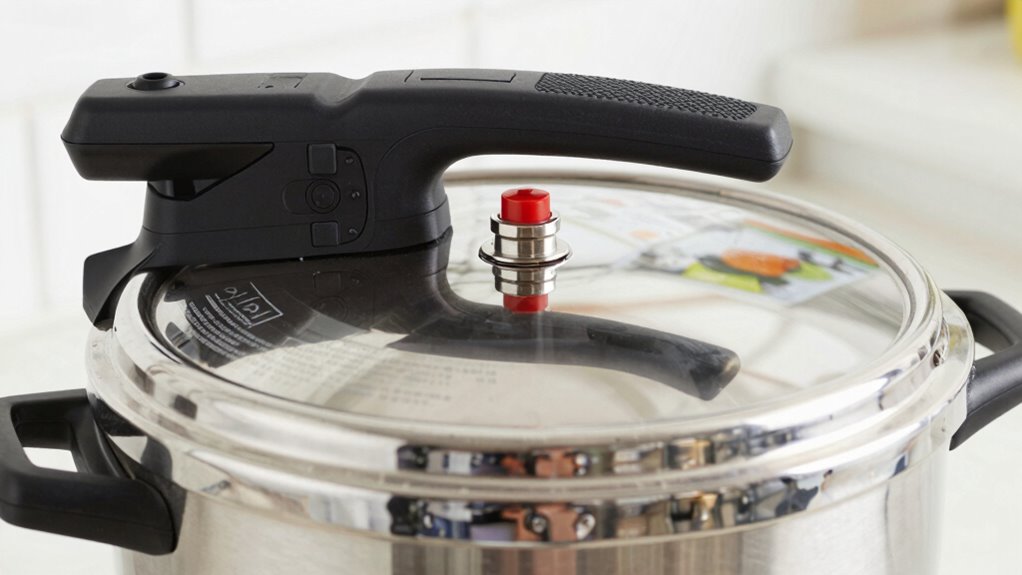
The safety valve is a critical safety feature designed to release excess pressure if it builds up beyond safe levels. It acts like a pressure relief mechanism, opening automatically when necessary to vent steam and prevent the pressure inside from becoming dangerously high. When you’re using your pressure cooker, it’s important to keep an eye on this valve. If you notice it’s releasing steam constantly or if it’s stuck, it might be a sign that something’s wrong. Regularly inspecting and cleaning the safety valve ensures it functions properly, preventing potential over-pressurization that could lead to accidents. Never attempt to disable or bypass this valve, as it’s there for your safety.
Pressure indicators are another essential safety feature. Usually, they’re built into the lid and provide a visual cue of the internal pressure level. When the pressure cooker is heating up, the pressure indicator typically rises or moves to a specific position, showing you that the cooker is reaching the desired pressure level. Once the cooking process is complete, the indicator usually drops or moves back, indicating it’s safe to open the lid. Understanding how your pressure indicator works helps you avoid opening the cooker prematurely, which could lead to hot steam escaping unexpectedly. Always wait for the indicator to signal that it’s safe to open, and follow the manufacturer’s instructions on how to interpret it correctly.
Additionally, proper maintenance and cleaning of these safety features are vital for consistent performance and safety. Combining the use of safety valves and pressure indicators creates a reliable safety system. These components help you monitor and control the internal pressure, reducing the risk of accidents. It’s also a good habit to check these features before each use, ensuring they’re clean and functioning smoothly. Proper maintenance and awareness of these safety systems allow you to enjoy the quick cooking benefits of a pressure cooker without compromising safety.
Frequently Asked Questions
Can Pressure Cookers Be Used on Induction Stovetops?
Yes, you can use pressure cookers on induction stovetops if they are induction compatible. Check the bottom of your pressure cooker for an induction symbol or test it with a magnet—if it sticks, it’s suitable. Using an induction-compatible pressure cooker guarantees stovetop safety and efficient heating. Always follow your manufacturer’s instructions to prevent accidents and maximize performance on induction stoves.
What Are the Signs of a Malfunctioning Pressure Release Valve?
If your pressure release valve malfunctions, you’ll notice it’s not releasing steam properly, and pressure may build up dangerously. You might see the valve stuck, leaking, or making unusual noises. These signs indicate a valve malfunction, which can compromise safety. Always check the pressure release valve before each use, and if you suspect a malfunction, stop using the cooker immediately and get it inspected or replaced to prevent accidents.
How Long Do Pressure Cooker Seals Typically Last?
Your pressure cooker seal typically lasts between 1 to 3 years, depending on usage and maintenance. Regular seal maintenance, like cleaning and inspecting for cracks or stiffness, helps extend its lifespan. Replace the seal at recommended intervals or if you notice signs of wear, such as leaks or difficulty sealing. Proper care guarantees your pressure cooker functions safely and efficiently, preventing potential malfunctions or accidents.
Are There Specific Foods That Shouldn’t Be Cooked in a Pressure Cooker?
You should avoid cooking foods with food restrictions or safety concerns in a pressure cooker. Items like delicate vegetables, certain seafood, or foods with high starch content can clog valves or cause splattering. Additionally, foods that expand markedly, such as beans or grains, may lead to overflows if not cooked properly. Always follow manufacturer guidelines to prevent accidents and guarantee your pressure cooker remains safe and effective.
How Do I Safely Release Pressure After Cooking?
To safely release pressure after cooking, you can use manual venting or natural release. For manual venting, carefully turn the valve to release steam, making sure your hands stay clear of the hot steam. For natural release, just turn off the heat and let the pressure drop gradually on its own. Always wait until the pressure indicator shows it’s safe before opening the lid to prevent accidents.
Conclusion
Now that you understand how pressure cookers work and their safety features, you’re ready to cook confidently. Think of these safety systems as the guardians of your culinary adventures, preventing disasters and ensuring perfect meals every time. With a little knowledge, you can tame this powerful kitchen tool like a seasoned chef, turning it into a magic wand that transforms simple ingredients into a feast. Cook safely, and let your kitchen creations shine brighter than the stars!