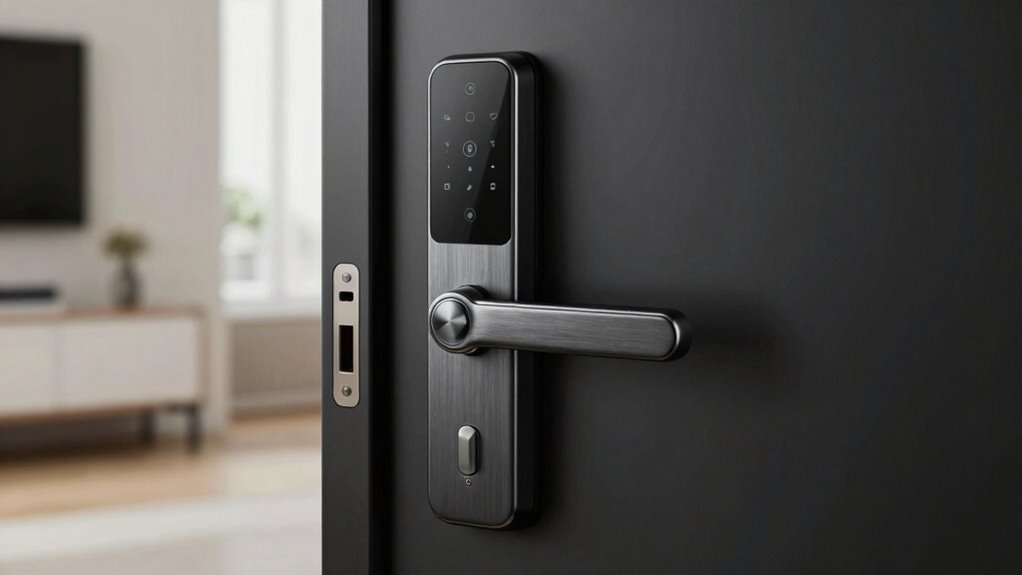
BHMA grade ratings show how strong and secure your smart lock is, based on physical durability and attack resistance. Grade 1 offers the highest security, meaning the lock can withstand more force and forced entry attempts, while Grade 3 is suitable for less critical areas. These grades help you understand the lock’s ability to protect your home physically, but combining this with digital security measures is key. To discover how these grades influence overall safety, keep exploring further.
Key Takeaways
- BHMA Grade indicates a lock’s physical durability and resistance to forced entry, with Grade 1 being the most secure.
- Higher grades (Grade 1) provide greater protection against physical attacks and abuse.
- BHMA grading helps assess the overall security suitability of a lock for different applications.
- Physical security from BHMA grades complements digital security features like encryption and access controls.
- Choosing a higher-grade lock ensures better durability and resistance, enhancing smart lock security.
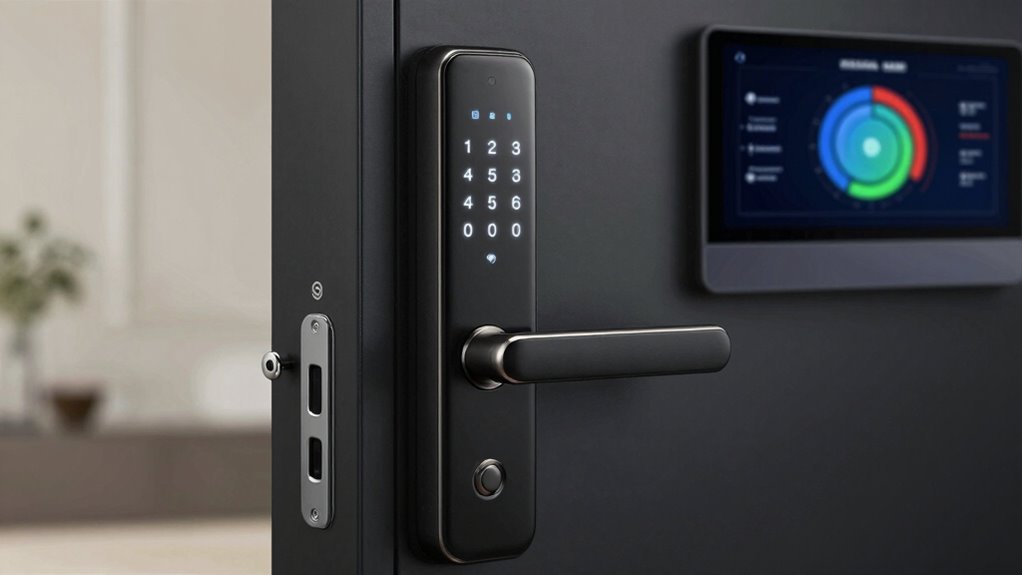
Smart locks have revolutionized home security by offering keyless access and remote control features, but their convenience also raises important safety concerns. One key factor in evaluating their reliability is understanding what BHMA Grade really signifies. When you’re choosing a smart lock, you need to pay attention to its BHMA grade because it indicates how well the lock performs under various conditions and how secure it is against tampering. Higher grades, like Grade 1, are designed to withstand more force and abuse, ensuring your home stays protected even during attempted break-ins. Lower grades, such as Grade 3, may be suitable for interior doors or less critical applications but don’t offer the same level of security.
A vital aspect of a smart lock’s security is access control. This involves who can unlock your door, how they do it, and how easily those permissions can be managed. A high-grade smart lock incorporates sophisticated access control features, allowing you to grant temporary or permanent access to family, friends, or service providers. Many also enable you to revoke access instantly if needed, which is especially useful if someone’s key gets lost or if a trusted visitor no longer needs entry. These controls are only as strong as the underlying security protocols. That’s where encryption protocols come into play. They guarantee that data transmitted between your lock and your smartphone or security system remains confidential and protected from interception. Modern smart locks employ encryption standards like AES-256, making it nearly impossible for hackers to decode the signals and gain unauthorized access. Proper installation and maintenance are also crucial to ensure your smart lock functions securely over time.
Understanding the significance of encryption protocols is essential because even the most advanced access control features can be compromised if the data isn’t securely encrypted. When evaluating a smart lock, check if it uses robust encryption standards, which protect your access credentials from being intercepted or duplicated. This layer of security acts as a barrier, preventing cyberattacks that could otherwise compromise your home’s safety.
In essence, a smart lock’s BHMA grade reflects its physical durability and resistance to forced entry, but its security also depends heavily on solid access control mechanisms and encryption protocols. A high-grade lock with advanced encryption and flexible access controls provides a detailed security solution. It’s not just about preventing physical break-ins but also safeguarding against digital threats. When you’re making your choice, consider these factors carefully—your home’s safety depends on it.
Frequently Asked Questions
How Does BHMA Grading Compare to Other Lock Security Ratings?
You’ll find BHMA grading offers a clear comparison of lock durability and security certification standards. It’s more thorough than basic ratings because it tests locks under rigorous conditions, with Grade 1 being the most durable and secure. Other ratings often focus only on basic features, but BHMA grades ensure you’re choosing a lock that meets strict standards for longevity and safety, giving you confidence in your security choice.
Can a Lock With a Higher BHMA Grade Be More Expensive?
Yes, a lock with a higher BHMA grade often costs more because it offers superior durability and security, which can justify the price. You might worry about installation complexity, but higher-grade locks are designed for easier setup despite their robust build. Investing in a more expensive lock guarantees better durability and peace of mind, especially if you want a reliable lock that withstands daily wear and tear.
Are BHMA Grades Standardized Across Different Lock Manufacturers?
You might wonder if BHMA grades are standardized across manufacturers. They’re not entirely consistent because grading criteria can vary slightly between brands. While BHMA provides a set of guidelines, each manufacturer applies them differently, affecting the overall grade. So, it’s wise to compare locks carefully, checking how each manufacturer’s grading aligns with your security needs, rather than assuming all Grade 1 locks, for example, offer the same level of protection.
Do BHMA Grades Influence Smart Lock Compatibility?
You might wonder if BHMA grades influence smart lock compatibility, and the answer is yes, but subtly. Higher-grade locks often follow stricter installation guidelines, ensuring durability and security. Customer reviews highlight that some smart locks, even with top grades, can vary in compatibility based on your door setup. So, pay close attention to the BHMA grade, installation instructions, and feedback to choose a smart lock that truly fits your needs.
How Often Are BHMA Grade Standards Updated or Revised?
You’ll find that BHMA grade standards are typically revised every few years, around every 3 to 5 years, to keep pace with security advancements and industry needs. During these grade revisions, updates to standards are made to improve safety, durability, and performance expectations. Staying aware of these standards updates ensures your smart lock maintains compliance and provides maximum security, as manufacturers often update products to meet the latest BHMA grade requirements.
Conclusion
So, now you know that BHMA grades aren’t just fancy letters—they’re your ultimate shield against the world’s worst break-ins! Choosing a higher grade isn’t just smart; it’s like arming your door with an unbreakable fortress. Don’t settle for less—because when it comes to your security, a cheap lock is basically an open invitation! Invest in the best, and sleep soundly knowing your home is protected by the strongest, most unstoppable smart lock out there.